
NEWS
The Bundibugyo Outbreak Outran a Zaire-Only Vaccine
Congo’s Bundibugyo Ebola tally is 10,920 cases and 5,323 deaths, with Ervebo still boxed as a research tool and children dying in ordinary wards.

The Democratic Republic of the Congo has recorded 10,920 confirmed Bundibugyo Ebola cases and 5,323 deaths, with no licensed vaccine for the strain. The European Centre for Disease Prevention and Control posted those totals on 9 November from Congolese data through 7 November, 177 days after the outbreak was declared in Ituri.
Ervebo, the only licensed Ebola vaccine, is approved for Zaire ebolavirus. Bundibugyo is a different species, and WHO still confines Ervebo to research protocols while a trial in Bunia tests whether any shot can close the gap.
10,920 Confirmed Cases and No Licensed Vaccine
The 9 November ECDC update, drawing on the Institut National de Santé Publique, counted 10,920 confirmed cases and 5,323 deaths in the DRC as of 8 November. Among people who tested positive, 2,940 had recovered and 1,010 were in isolation. The crude case fatality ratio is 48.7%.
Eight provinces are affected, and 67 of 178 health zones have recorded at least one confirmed case. Ituri still holds 7,614 of those cases and 3,594 of the deaths, across 28 of its 36 health zones. Nord-Kivu is second, with 2,697 cases and 1,478 deaths, and the highest provincial fatality ratio, at 54.8%.
CONFIRMED CASES AND DEATHS BY PROVINCE
| Province | Confirmed cases | Deaths | Health zones with cases |
|---|---|---|---|
| Ituri | 7,614 | 3,594 | 28 of 36 |
| Nord-Kivu | 2,697 | 1,478 | 17 of 34 |
| Haut-Uélé | 486 | 213 | 7 of 13 |
| Tshopo | 96 | 31 | 7 of 23 |
| Bas-Uélé | 13 | 4 | 4 of 11 |
| Nord Ubangi | 9 | 1 | 2 of 11 |
| Sud-Kivu | 3 | 1 | 1 of 34 |
| Sud Ubangi | 2 | 1 | 1 of 16 |
Since ECDC’s 6 November update, another 179 confirmed cases and 93 deaths were added, mostly in Ituri (99) and Nord-Kivu (68). WHO, using data through 3 November, said 1,463 new confirmed cases had been recorded in the preceding 21 days, with Beni, Bunia, and Mandima reporting the most illness and death in that window.
This is the 17th Ebola disease outbreak reported in the DRC, and WHO calls it the largest ever recorded in the country, irrespective of virus species. The 2018-2020 Zaire outbreak in Nord-Kivu, Ituri, and Sud-Kivu ran about 22 months, from 1 August 2018 to 25 June 2020, and finished with 3,470 cases and 2,287 deaths, a 66% fatality ratio. The Bundibugyo count is already more than three times that case total.
The Licensed Shot Was Built for a Different Virus
Outbreak control, WHO says, still rests on finding cases, isolating the sick, tracing contacts, burying the dead safely, and keeping communities on side, because no approved vaccines or specific treatments exist for Bundibugyo virus disease. That sentence is the operational fact behind the 10,920 figure. The tools that ended Zaire flare-ups in these same provinces do not carry a licence here.
Bundibugyo virus disease is a severe Ebola illness caused by one of the Orthoebolavirus species. Fruit bats are suspected as the reservoir. Infection is thought to start through contact with the blood or secretions of infected wildlife, then move person to person through bodily fluids and contaminated surfaces, especially in clinics with weak infection control and at unsafe burials. The incubation period runs from two to 21 days, and people are not infectious until symptoms begin. Early fever, fatigue, muscle pain, headache, and sore throat look like malaria and other local fevers, which delays testing.
WHO puts the fatality ratios of the only two earlier Bundibugyo outbreaks, in Uganda in 2007 and in the DRC in 2012, at 30% and 50%. Those events numbered in the low hundreds or fewer. The 2026 CFR of 48.7% sits at the grim end of that short record, at a scale those outbreaks never reached.
SAGE Kept Ervebo Inside Research Protocols
Ervebo is licensed against Zaire ebolavirus, the species behind the West Africa epidemic and the 2018-2020 Kivu outbreak. In May, and again on 31 August after an extraordinary SAGE meeting, WHO said evidence of cross-protection against Bundibugyo was too thin to support using Ervebo as a public health tool. Animal work and lab immunology hint at a partial heterologous response, but the findings are inconsistent and do not establish protection in people.
The August guidance said Ervebo should be used against Bundibugyo only inside a research protocol, preferably a ring randomised trial around contacts of confirmed cases. Preventive Ervebo use can continue for health and frontline workers in Zaire-priority areas. In Bundibugyo zones, the same product stays on a study protocol unless research is not feasible, and even then WHO wanted tight records tying each dose to later exposure and outcome.
Médecins Sans Frontières has kept pressing for wider Ervebo use, including in children aged one year and older, because the product already has a known safety profile and Congolese teams know how to deliver it. That dispute is live. WHO has not moved Ervebo out of the research box.
Two Bundibugyo-Specific Shots Wait on Approval
THE SHOTS ON THE TABLE
- Ervebo: Licensed for Zaire ebolavirus; first candidate inside the Tumaini ring trial, with no proven protection against Bundibugyo.
- ChAdOx1 BDBV: University of Oxford with the Serum Institute of India; TAG-CVP unanimously recommended it for Tumaini after animal challenge work and early human studies.
- mRNA-1469: Moderna’s Bundibugyo-specific candidate, recommended on the same evidence, still awaiting national approvals before it can enter the rings.
On 4 November, WHO expert groups recommended adding two new Bundibugyo vaccine candidates to the trial. The Technical Advisory Group on Candidate Vaccine Prioritization said both showed protection in ferret and non-human primate studies, induced antibody responses within 14 days, and had acceptable side-effect profiles in early human work. They will enter after Congolese regulators sign off. No efficacy result in people has been posted.
“Vaccines alone will not end this outbreak, but they could become a powerful new tool for bringing it under control,” Tedros Adhanom Ghebreyesus, WHO director-general, said when the recommendation went out.
Children in North Kivu Bear a Heavier Share
Epicentre, the MSF epidemiology centre, found that children under five account for 24% of confirmed cases in Nord-Kivu, against 13% in Ituri. Infants under one year make up 13% of Nord-Kivu cases and 6% in Ituri. The youngest are also more likely to die.
At the Ebola treatment centre in Butembo, MSF teams watched that gap turn into a ward statistic. Between June and September, 24 out of 30 children died in that one centre, most of them under five.
Most of the paediatric cases admitted in our ETC in Butembo, North Kivu, over the summer, had already been hospitalised for other illnesses in several facilities during the days or weeks before their admission. Their family members did not have Ebola themselves, and it is highly likely that these children contracted the disease inside healthcare facilities.
Stéphanie Hoffmann, project coordinator, Doctors Without Borders in Butembo
Dr Guyguy Manangama, an epidemiologist and deputy director of operations at MSF, said primary clinics often lack the skill, kit, and infection control needed to spot and hold suspected cases. He also said paediatric dosing guidance and child-friendly forms of investigational drugs remain scarce. One post-exposure study of the oral antiviral obeldesivir, EBO-PEP, still excludes children under 20 kilograms because no suitable formulation exists; the fallback is a 10-day intravenous course that is hard to run in an outbreak ward.
MSF has trained caregivers, including survivors, to sit with isolated children in full protective gear. Thirteen of those caregivers now work at Kitatumba treatment centre in Butembo. Manangama said vaccines and treatments should be tested in children from the start of a study, not after adult data arrive.
WHO, in its 6 November Disease Outbreak News, flagged the same pattern from the other side of the ledger: a high share of deaths still occur in communities, especially among young children, which points to late detection and slow arrival at proper care. Of 512 deaths recorded after 21 October, 335 happened in communities and 177 in treatment centres.
Ituri Still Holds Most of the Dead
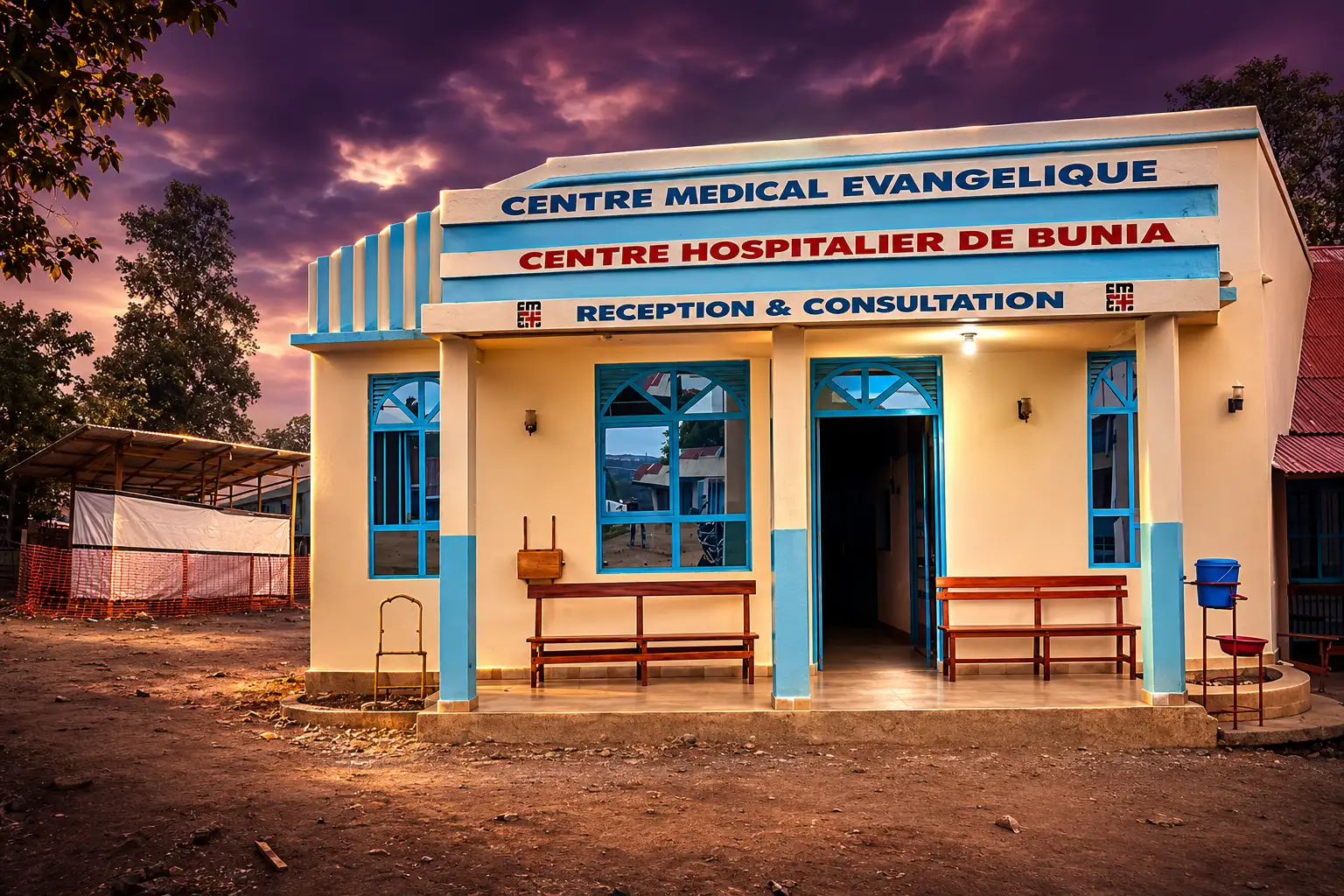
Africa CDC reported the outbreak in Ituri on 15 May after the Institut National de Recherche Biomédicale identified Bundibugyo virus. The DRC health ministry said the index patient was a nurse who died in a Bunia health facility after fever, bleeding, vomiting, and weakness. ECDC notes the epidemic had likely been running for weeks before that death, given how far it had already spread.
On 17 May, WHO determined that the epidemic in the DRC and Uganda was a Public Health Emergency of International Concern. A day later, Africa CDC declared a Public Health Emergency of Continental Security.
Uganda reported 20 confirmed cases and two deaths, then discharged its last patient on 16 July and declared the outbreak over on 27 August after 42 days with no new confirmed case. France’s imported case was controlled from August. The DRC never got that pause. Insecurity and a parallel humanitarian crisis have limited how far surveillance teams can move, and WHO says the detected epidemic may still be smaller than the true one.
FROM THE FIRST ALERT TO 10,920 CASES
- 15 May 2026: Africa CDC reports Ebola disease in Ituri, and INRB names Bundibugyo virus.
- 17 May 2026: WHO declares a Public Health Emergency of International Concern.
- 18 May 2026: Africa CDC declares a continental public health emergency.
- 23 October 2026: Tumaini enrolls its first vaccine trial participants in Bunia.
- 4 November 2026: WHO advisers recommend adding the Oxford and Moderna Bundibugyo candidates to the trial.
- 5 November 2026: The United Kingdom evacuates a confirmed case, a British health and care worker, to London.
- 8 November 2026: Congolese totals reach 10,920 confirmed cases and 5,323 deaths.
On 9 November, INRB’s Pathogen Genomic Lab said it had sequenced 1,526 complete Bundibugyo virus genomes in less than six months, with a next target of 2,500. That sequencing load is a research asset. It is not a vaccine.
Tumaini Opened in Bunia on 23 October
Tumaini means hope in Swahili. The phase 2/3 platform, led by INRB with the University of Antwerp’s Global Health Institute, uses ring vaccination: contacts of confirmed cases, and contacts of those contacts, are offered a candidate shot so investigators can measure safety, immune response, and protection. The first participant was vaccinated in Bunia on 23 October. Ervebo went in first, as a test of possible cross-protection, not as a licensed Bundibugyo product.
The Coalition for Epidemic Preparedness Innovations funds the Bundibugyo vaccine programme behind the trial and backed the Oxford and Moderna constructs now queued to join.
A rare form of Ebola with no approved treatment is spreading across Africa, and health leaders warn it won't stay there.
Dr. Jean Kaseya, director general of the Africa Centres for Disease Control and Prevention, told the Guardian: "We don't want to see the UK and other… pic.twitter.com/IUjAuHIf3R
— Smart Science (@SmartScience) October 30, 2026
There is still no licensed vaccine against Bundibugyo virus, and the cost of that absence is being counted in the DRC every day, in lives lost and in health workers who go to work without protection. Tumaini aims to change that.
Richard Hatchett, chief executive, CEPI
WHO is also backing treatment research, including work on the monoclonal antibody MBP134 and the antiviral remdesivir, and a post-exposure study of obeldesivir. None of those products is an approved Bundibugyo therapy. Until a candidate in Tumaini shows protection in people, the response is the old one: find, isolate, trace, bury, and persuade.
Kenya’s Cluster Stayed Contained After Nine Cases
Cases have been reported in five countries since 15 May: the DRC, France, Kenya, Nigeria, and Uganda. The exported clusters have stayed small. The DRC has not.
Kenya’s total remains nine confirmed cases, including two deaths, all tied to one imported index patient who had been living in the DRC and travelled through Uganda. Eight secondary cases followed, four of them family members and four health and care workers, and all eight were already under quarantine when they fell ill. ECDC said six of the nine had recovered as of 9 November, with one patient still in care. The last confirmed case in that cluster was reported on 20 October. Of 135 contacts identified, follow-up on the remaining 52 was due to end on 11 November. By 5 November, Kenya had screened 760,415 travellers at designated points of entry.
Nigeria reported one laboratory-confirmed imported case in Abuja on 20 October. Switzerland evacuated that patient on 26 October for care in Geneva, and a close contact went into isolation in Zurich. Sixty-two contacts were identified in Nigeria. There has been no evidence of a wider Nigerian chain.
On 5 November the United Kingdom reported the medical evacuation of a British health and care worker who had tested positive in the DRC; the patient is in a London high-level isolation unit. WHO advises against travel or trade restrictions on countries dealing with the event. ECDC still rates the chance of infection for people in the EU as very low. The pressure remains where the virus is actually circulating, in eastern Congo.
Why Contact Teams Still Miss the 95 Percent Target
WHO’s 95% target for daily contact follow-up is the line at which a tracing system is judged to be holding. As of 3 November, the national average of contacts seen each day over the previous 14 days was 86%. Bas-Uélé, Nord-Ubangi, and Sud-Ubangi met or beat 95%. Haut-Uélé sat at 85%, Ituri at 91%, Tshopo at 71%, and Nord-Kivu at 82%.
THE GAPS THAT KEEP TRANSMISSION ALIVE
- Contact follow-up: 86% of contacts were seen on an average day in the 14 days to 3 November, against a 95% target.
- Community deaths: 335 of 512 deaths recorded after 21 October occurred in communities, and 177 occurred in treatment centres.
- Beds still occupied: 1,010 patients were in isolation as of 8 November, while 2,940 people had recovered.
- Active map: As of 3 November, WHO said 51 of 67 affected health zones had recorded at least one new case in the preceding 21 days.
Those four figures explain why a trial named hope can run in Bunia and the graves can still spread on the city’s edge. The licensed shot on the global stockpile was built for a different virus. The Bundibugyo-specific candidates are still waiting on national approvals. Until one of them is shown to protect the people around a case, the count that passed 10,920 on 8 November will keep depending on contact lists that have not yet hit 95%.
Disclaimer: This article is news reporting on an ongoing outbreak and is for information only. It is not medical advice and does not tell anyone whether to travel, vaccinate, or seek a particular treatment. Readers who have symptoms, travel plans, or exposure concerns should consult a licensed physician or their local public health authority. Case counts, deaths, trial status, and travel guidance reflect the cited health agencies as of the dates given in this report and can change as new figures are issued.

Falling Shot Rates Cost the U.S. Measles Elimination Status

NHS Record Snooping Gives Patients a Reason to Withhold

FDA Rejects Ivonescimab After the HARMONi Survival Miss

The Medicaid Work Delay Leaves January Checks Intact

Pelacarsen Cut Lp(a) 78%, and Heart Attacks Did Not Fall

Pennsylvania Measles Deaths Collide With Falling MMR Coverage

FDA Approves XFG COVID Vaccines While the Advice Panel Is Frozen

Progranulin and JAK2 Split the Macrophages That Heal

Alnylam Defends Amvuttra After Wainua’s ATTR-CM Trial Miss

Muscle-Boosting Drugs Near Approval for Children With SMA
-
 NEWS3 months ago
Pennsylvania Measles Deaths Collide With Falling MMR Coverage
-
 NEWS3 months ago
FDA Approves XFG COVID Vaccines While the Advice Panel Is Frozen
-
 NEWS3 months ago
Progranulin and JAK2 Split the Macrophages That Heal
-
 FITNESS3 months ago
Muscle-Boosting Drugs Near Approval for Children With SMA
-
 NEWS3 months ago
Alnylam Defends Amvuttra After Wainua’s ATTR-CM Trial Miss
-

 MENTAL HEALTH3 months ago
After the ADHD Invoice, GPs and Waiters Carry the Cost
-

 NEWS2 months ago
Rasonque’s List Price Shifts the Pancreatic Cancer Bill
-

 NEWS3 months ago
FDA Flagged This Sprout Plant 16 Months Before the Outbreak