
NEWS
FDA Rejects Ivonescimab After the HARMONi Survival Miss
The FDA rejected ivonescimab for EGFR-mutated lung cancer after HARMONi missed overall survival, even as the same antibody is already used in China.

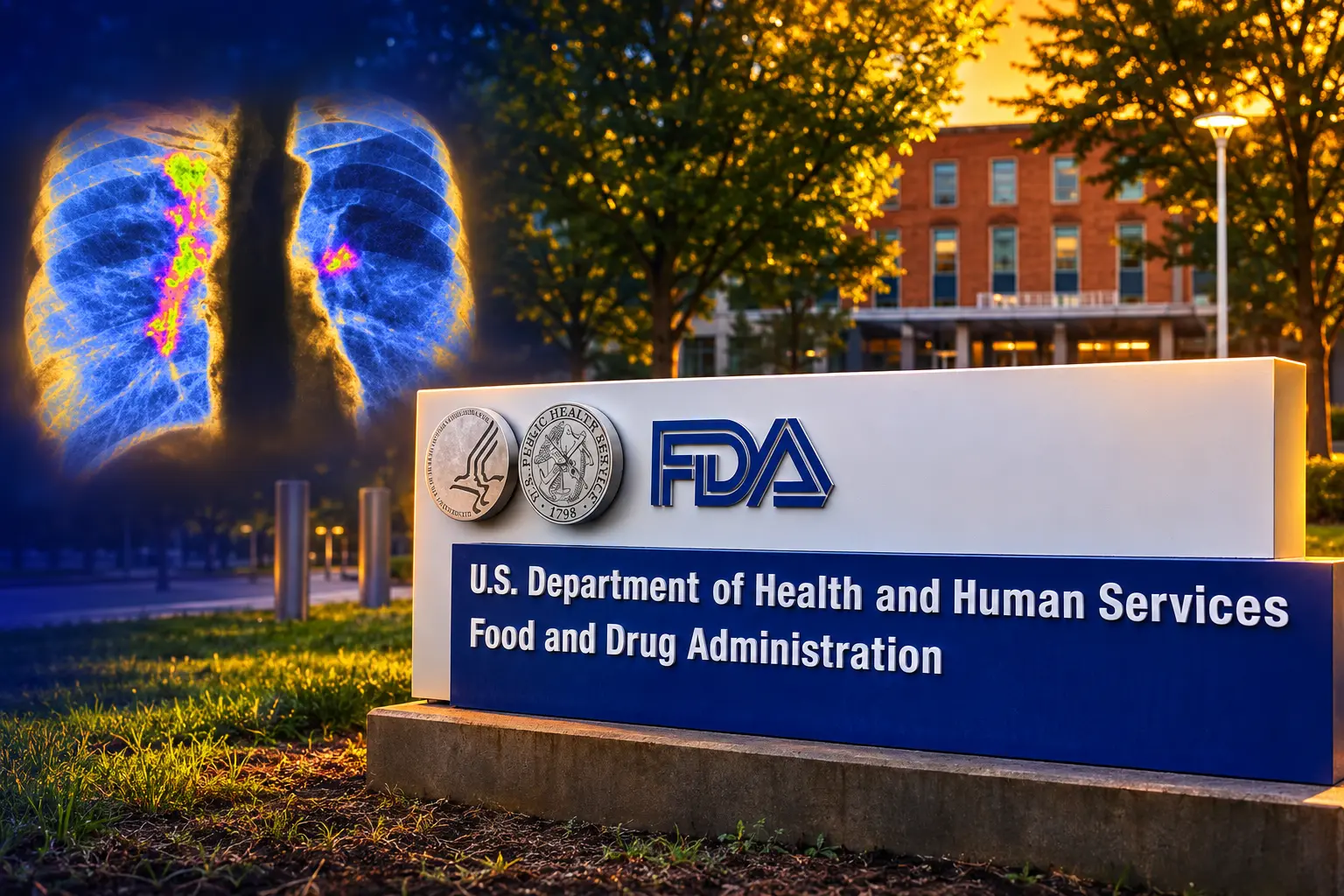
The Food and Drug Administration rejected Summit Therapeutics’ ivonescimab for EGFR-mutated lung cancer on November 15, 2026, after the HARMONi trial missed a survival test. The PD-1 x VEGF bispecific, already sold in China, delayed tumor growth but did not prove people lived longer at the analysis the agency treated as decisive.
Summit, which holds rights outside China, said reviewers found that a progression delay without a statistically significant gain in overall survival did not support approval. The company gave no date for a resubmission.
The FDA Letter Stops Short of a U.S. Launch
Miami-based Summit said Sunday that the agency issued a complete response letter for ivonescimab plus platinum chemotherapy. The filing covered locally advanced or metastatic non-squamous non-small cell lung cancer after an EGFR tyrosine kinase inhibitor, including a third-generation drug such as osimertinib. That notice came one day after a November 14 goal date for the biologics license application.
The letter says the file cannot be approved in its present form because substantial evidence of effectiveness is not established without a statistically significant overall survival improvement. Progression-free survival alone, the agency told the company, does not support a positive benefit-risk profile.
Ivonescimab is a bispecific antibody meant to block PD-1, a checkpoint tumors use to hide from immune cells, and VEGF, a signal tumors use to grow blood vessels. Summit sells it as SMT112 in its territories. Akeso, the Chinese inventor, sells it as AK112. No PD-1 x VEGF bispecific is approved in the United States.
Dr. Maky Zanganeh, Summit’s president and co-chief executive and a cancer survivor, said every extra option matters for people who have already used up targeted therapy. Robert W. Duggan, chairman and co-chief executive, said the firm was disappointed for patients waiting in this setting.
Summit Therapeutics Provides Update Regarding Ivonescimab Biologics License Applicationhttps://t.co/SOerXG1D54
— Summit Therapeutics (@SMMT_TX) November 15, 2026
What HARMONi Measured
HARMONi was a global, randomized, double-blind Phase 3 trial of ivonescimab 20 mg/kg plus pemetrexed and carboplatin versus placebo plus the same chemotherapy. The HARMONi trial on ClinicalTrials.gov (NCT06396065) lists Summit as sponsor. The published study enrolled 438 patients, 219 per arm, at 114 centers in Asia, Europe, and North America, after screening 660 people.
Two hundred seventy-three patients (62%) came from the Asian cohort, which included China patients enrolled from January 25 to November 2, 2022. One hundred sixty-five (38%) came from North America and Europe, enrolled later, from May 4, 2023, to October 1, 2024. That stagger left Western survival data less mature when the first overall survival look was taken.
The trial had two primary endpoints: how long the cancer stayed in check, and how long people lived. It met the first and missed the second.
THE HARMONI PRIMARY CUT
| Endpoint | Ivonescimab plus chemo | Placebo plus chemo | Result |
|---|---|---|---|
| Median progression-free survival | 6.8 months | 4.4 months | HR 0.52 (0.41 to 0.66), p<0.0001 |
| Progression or death risk | Cut by 48% | Met | |
| Median overall survival | 16.8 months | 14.0 months | HR 0.79 (0.62 to 1.01), p=0.057 |
| Stopped for treatment-related side effects | 16 patients (7.3%) | 11 patients (5.0%) | Comparable |
| Deaths from treatment-related side effects | 4 patients (1.8%) | 5 patients (2.3%) | Comparable |
A later, unplanned look after more Western follow-up produced a hazard ratio of 0.76 (0.61 to 0.95) and a nominal p value of 0.0151, with the same medians of 16.8 versus 14.0 months, and Summit said that ratio held in the full trial, in Asian patients, and in Western patients. Nominal means the figure was not the prespecified test. The FDA kept the original miss.
Leerink Partners analysts, in a November 5 note, had put only a 40% chance on approval, because the agency had already said it wanted a statistically significant reduction in deaths.
China Already Has Three Lung Cancer Approvals
The molecule the FDA turned down is not experimental everywhere. China’s National Medical Products Administration first cleared ivonescimab in May 2024 for EGFR-mutated non-squamous disease after a TKI, the same use Summit asked for in the United States. The drug joined the National Reimbursement Drug List in November 2024, with coverage from January 1, 2025.
Akeso says more than 5,000 people have received ivonescimab in trials worldwide, and over 100,000 have received it commercially in China.
THE THREE CHINA INDICATIONS
- May 2024, after EGFR drugs: HARMONi-A, in the same post-TKI setting as the U.S. file, became the first immunotherapy Phase 3 in that group to show both a progression win and a survival win.
- April 2025, first-line PD-L1-positive: HARMONi-2 tested ivonescimab alone against pembrolizumab (Keytruda) and reported median progression-free survival of 11.14 months versus 5.8 months, a hazard ratio of 0.51.
- August 12, 2026, first-line squamous: HARMONi-6, in 532 patients, beat tislelizumab plus chemotherapy on both progression and survival and became the third lung cancer label.
The final overall survival analysis from HARMONi-A, presented at SITC in November 2025 by Dr. Xiuning Le of MD Anderson Cancer Center, showed median overall survival of 16.8 months versus 14.1 months (HR 0.74, p=0.019) after 32.5 months of follow-up. Progression-free survival had already been won at a hazard ratio of 0.46. Subgroup survival ratios were 0.61 with brain metastases and 0.60 in EGFR L858R tumors.
HARMONi-6 later reported median overall survival of 27.9 months versus 23.7 months (HR 0.66, p=0.0017), a 34% cut in the risk of death, and median progression-free survival of 11.1 months versus 6.9 months. About 63% of those patients had centrally located squamous tumors, a group that often cannot take older VEGF drugs. Dr. Xia Yu, Akeso’s founder and chief executive, who also sits on Summit’s board, has tied the program to a wider push beyond lung cancer, including biliary tract disease.
Overall Survival Was the Line the Agency Drew
Summit itself notes that no FDA-approved regimen has shown a statistically significant overall survival benefit in EGFR-mutated lung cancer after a TKI. That sentence is doing two jobs. It argues the unmet need is real. It also explains why reviewers treated a 2.8-month median survival gap that missed p=0.05 as insufficient, even after a clean 2.4-month gain in progression-free survival.
Western patients enrolled up to two years after the China cohort, so their survival clocks started later. Summit told reviewers those data were still catching up, and the June 2026 cut did move the Western ratio in line with the rest of the trial. The letter still hung on the prespecified miss.
WHERE EXPERTS DISAGREE
- The PFS precedent: Toni Choueiri, MD, an oncologist at Dana-Farber Cancer Institute, wrote that, having seen approval in several cancers based on PFS, this was “somewhat a puzzling rejection.”
- The survival insist: Other lung cancer doctors argued the agency was right to wait, after earlier drugs posted early progression gains that never became longer life, and after some of those files were later pulled or tightly boxed.
Masahiro Torasawa, a medical oncologist at Juntendo University, put the same tension in regulatory terms: other drugs for EGFR-mutated disease after a TKI have been cleared mainly on progression-free survival. Patrick Forde, a lung cancer specialist, pointed at HARMONi’s unusual split enrollment as one reason overall survival may have lagged. The letter does not parse those theories. It asks for a survival win the primary analysis did not deliver.
A $5 Billion License Meets Its First U.S. Test
On December 5 and 6, 2022, Summit licensed exclusive rights in the United States, Canada, Europe, and Japan. Akeso’s announcement set an upfront payment of $500 million and a total potential value of up to $5 billion, plus low double-digit royalties, with Akeso keeping China and other regions. A later amendment added Latin America, the Middle East, and Africa. Duggan and Zanganeh financed much of the original check themselves.
That license was a bet that a China-invented bispecific could clear Western regulators and, in time, challenge pembrolizumab. HARMONi was the first global Phase 3 for the class. The Sunday letter is the first U.S. verdict on that bet, and it is a no on this narrow, later-line use.
THE PATH FROM LICENSE TO LETTER
- December 2022: Summit in-licenses ivonescimab for up to $5 billion; Akeso keeps China.
- May 2024: China approves the post-TKI lung cancer use on HARMONi-A.
- April 2025: HARMONi’s primary survival analysis misses statistical significance at p=0.057.
- April 2025: China approves first-line PD-L1-positive use after HARMONi-2 beat pembrolizumab on progression.
- August 12, 2026: China approves first-line squamous use on HARMONi-6 survival and progression wins.
- September 28, 2026: AstraZeneca agrees to buy a stake worth $2 billion; the purchase completed a $2 billion equity investment on October 5, about 12% of Summit’s common shares, plus planned combinations with antibody-drug conjugates.
- November 15, 2026: Summit discloses the FDA complete response letter on the HARMONi-based file.
The AstraZeneca check does not transfer U.S. rights. It funds more trials and pairs ivonescimab with ADCs, including sonesitatug vedotin in gut cancers and datopotamab deruxtecan (Datroway) in lung and breast cancer. Other PD-1/VEGF bispecifics from large drugmakers are already in global Phase 3 studies, so the U.S. first-mover window on this class is narrowing while China treats.
What U.S. Patients Can Use After an EGFR Inhibitor
People whose EGFR-mutated lung cancer has grown through a third-generation TKI are not without options in American clinics. They are without this antibody. In September 2024 the FDA approved amivantamab (Rybrevant) with carboplatin and pemetrexed for EGFR exon 19 deletion or L858R disease after a TKI, on the MARIPOSA-2 trial.
Product data for Rybrevant plus chemotherapy after osimertinib show median progression-free survival of 6.3 months versus 4.2 months (HR 0.48). Confirmed response rates were 53% versus 29%. At a second interim look at overall survival, with 85% of the deaths needed for the final analysis, the difference was not statistically significant: 17.7 months versus 15.3 months (HR 0.73). Final overall survival has not been formally tested on the label.
Those progression numbers sit close to HARMONi’s 6.8 versus 4.4 months. The regulatory outcomes do not. Amivantamab is an EGFR-MET bispecific, not a PD-1 x VEGF drug, and it was reviewed two years earlier. The comparison still leaves a practical fact for patients: the United States already accepts a chemotherapy combination in this exact slot on a progression win, while the dual checkpoint-and-vessel antibody that China uses in the same slot was told to come back with survival.
TROP2 antibody-drug conjugates and other bispecific ADCs are moving through the same later-line EGFR space. None of that puts ivonescimab on a U.S. infusion chair.
First-Line Trials Now Carry the American Case
Duggan said the company would keep going, citing five positive Phase 3 studies run by Summit and Akeso. The U.S. file that just failed was the small door. The large door is first-line metastatic non-small cell lung cancer, where pembrolizumab still sets the standard.
With five positive Phase III studies between Summit and Akeso, nothing changes with respect to our ever-growing belief in the opportunity for ivonescimab and our determination to advance ivonescimab’s development.
Robert W. Duggan, Chairman and Co-Chief Executive Officer, Summit Therapeutics statement, November 15, 2026
HARMONi-3 tests ivonescimab plus chemotherapy against pembrolizumab plus chemotherapy, with squamous and non-squamous groups analyzed apart. A 2026 interim look at squamous tumors missed its progression-free survival target. A final squamous progression readout is due by the end of 2026, with non-squamous data in the first half of 2027. HARMONi-7 tests ivonescimab alone in first-line disease with high PD-L1. Summit is also running or planning Phase 3 work in colorectal cancer, urothelial cancer, and, with cooperative groups, biliary tract and head and neck cancers.
For EGFR-mutated patients in the United States whose targeted pills have already failed, those first-line studies do not fill the gap the November 15 letter left open. The antibody that cut progression risk by 48% in HARMONi, and that already has three lung cancer labels and more than 100,000 commercial patients in China, remains investigational in Summit’s territories until a trial crosses the survival line the FDA would not move.
Disclaimer: This article is news reporting and analysis of an FDA decision and published trial results. It is for information only and is not medical advice, a treatment recommendation, or investment advice. People with lung cancer should talk with a board-certified oncologist about approved options, trial eligibility, and the risks of any unapproved drug. Trial figures, labels, and application status are those given by the companies, the FDA, and the cited study records as of the dates in this piece and can change with new data or a later filing.

Falling Shot Rates Cost the U.S. Measles Elimination Status

NHS Record Snooping Gives Patients a Reason to Withhold

FDA Rejects Ivonescimab After the HARMONi Survival Miss

The Medicaid Work Delay Leaves January Checks Intact

Pelacarsen Cut Lp(a) 78%, and Heart Attacks Did Not Fall

Pennsylvania Measles Deaths Collide With Falling MMR Coverage

FDA Approves XFG COVID Vaccines While the Advice Panel Is Frozen

Progranulin and JAK2 Split the Macrophages That Heal

Muscle-Boosting Drugs Near Approval for Children With SMA

After the ADHD Invoice, GPs and Waiters Carry the Cost
-
 NEWS3 months ago
Pennsylvania Measles Deaths Collide With Falling MMR Coverage
-
 NEWS3 months ago
FDA Approves XFG COVID Vaccines While the Advice Panel Is Frozen
-
 NEWS3 months ago
Progranulin and JAK2 Split the Macrophages That Heal
-
 FITNESS3 months ago
Muscle-Boosting Drugs Near Approval for Children With SMA
-
 MENTAL HEALTH3 months ago
After the ADHD Invoice, GPs and Waiters Carry the Cost
-

 NEWS3 months ago
Alnylam Defends Amvuttra After Wainua’s ATTR-CM Trial Miss
-
 NEWS2 months ago
Rasonque’s List Price Shifts the Pancreatic Cancer Bill
-

 NEWS3 months ago
FDA Flagged This Sprout Plant 16 Months Before the Outbreak