
NEWS
Bayer’s Sunharbo Wins FDA Nod After the AFib Failure
Bayer’s asundexian, written off after a 2023 atrial fibrillation failure, won FDA approval as Sunharbo, the first Factor XIa pill for repeat stroke prevention.

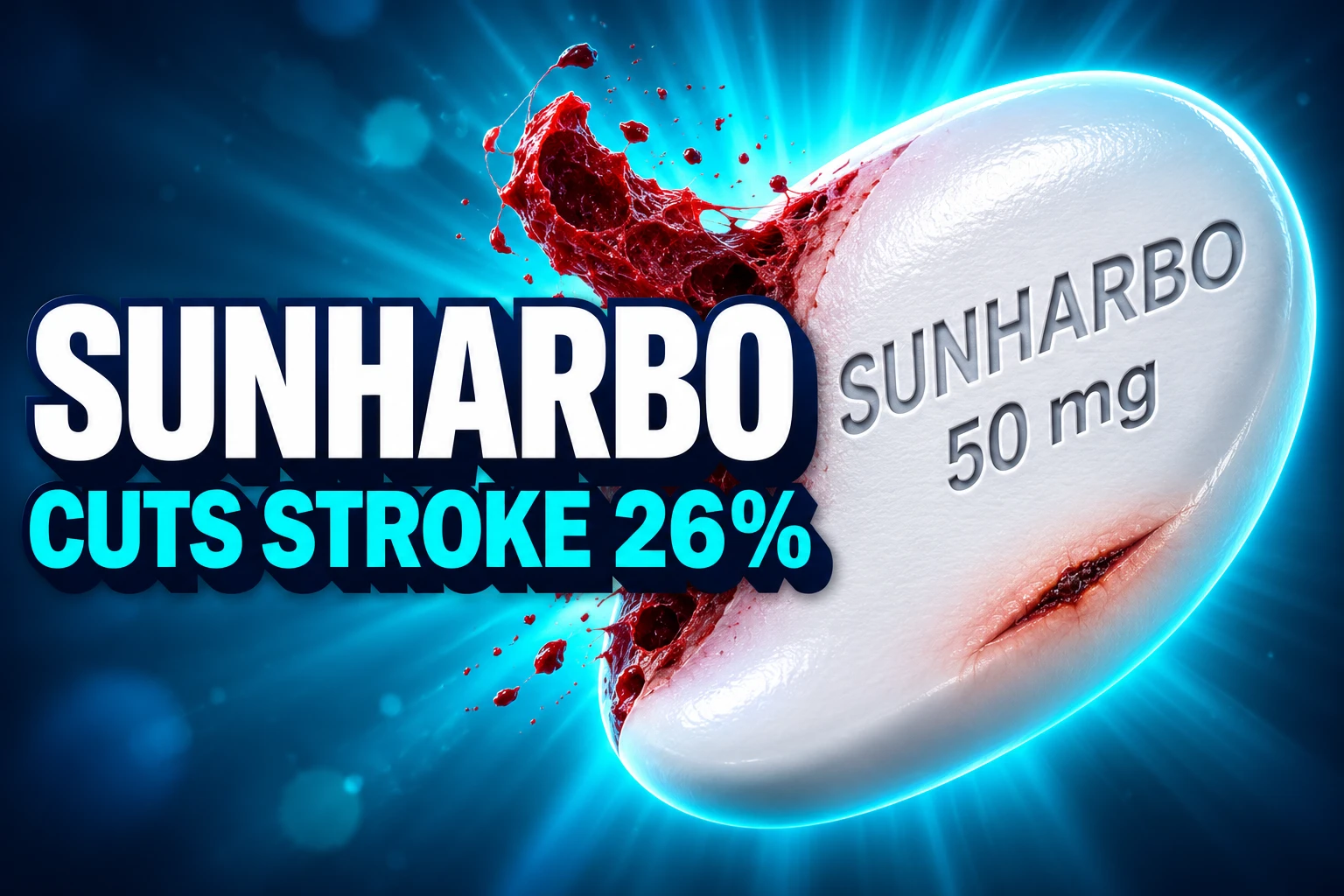
The FDA on November 9 approved Bayer’s Sunharbo, the first Factor XIa inhibitor in the United States, to lower the chance of another clot stroke. The once-daily 50 mg tablet is taken with antiplatelet therapy after a mild-to-moderate ischemic stroke that did not start in the heart, or after a high-risk mini-stroke.
The same molecule, asundexian, was pulled from a head-to-head atrial fibrillation study in 2023 because it prevented strokes less well than apixaban. Bayer left the stroke trial running. That is the bet the agency just paid.
Sunharbo Becomes the First Factor XIa Drug in the U.S.
Sunharbo is indicated, in combination with antiplatelet therapy, to reduce stroke risk in adults with a recent non-cardioembolic ischemic stroke scoring 15 or lower on the NIH Stroke Scale, or a high-risk transient ischemic attack. The dose is 50 mg once a day. The agency gave the file Fast Track and Priority Review. The approval went to Bayer HealthCare Pharmaceuticals in Whippany, New Jersey.
Hylton V. Joffe, M.D., who directs the FDA office that reviews these drugs, put the clinical hole in plain terms.
Stroke is a leading cause of disability and death in the United States, and survivors are at risk of having another stroke. Today’s approval represents a meaningful advance for patients and health care providers seeking a new option for secondary stroke prevention.
Hylton V. Joffe, M.D., FDA Center for Drug Evaluation and Research
Bayer U.S. posted the company note the same day.
Today the U.S. FDA approved our new medicine for secondary stroke risk reduction in adults, continuing our long-standing commitment to stroke care: https://t.co/n1A3rLP4mi pic.twitter.com/3sh90MmdpT
— Bayer U.S. 🇺🇸 (@BayerUS) November 10, 2026
The label does not cover stroke prevention in atrial fibrillation. It also tells doctors to avoid the pill with combined P-gp and strong CYP3A4 inducers such as carbamazepine, and not to use it in moderate or severe liver disease.
U.S. STROKE NUMBERS BEHIND THE LABEL
- Annual events: About 795,000 people in the United States have a stroke each year, Bayer said, citing American Heart Association figures.
- Clot share: About 87% of those strokes are ischemic, meaning a clot blocks blood to the brain.
- Repeat share: About 23% of strokes each year are recurrent.
- Death rank: Stroke is the fifth leading cause of death in the United States.
About one in 10 survivors has another stroke within a year, and about one in five has another within five years, according to Bayer’s briefing on the approval. Secondary events often leave people worse off than the first one.
The Clot Protein Older Blood Thinners Leave Untouched
Eliquis and Xarelto block Factor Xa, a protein deeper in the clotting cascade. Doctors already use those drugs to prevent stroke when clots form in the heart, as they do in atrial fibrillation. They are largely kept off the regimen after a non-cardioembolic stroke because stacking a Factor Xa drug on aspirin or clopidogrel raises bleeding in a way that cancels the benefit.
Factor XIa sits earlier. It helps a clot grow and stick, and it plays a smaller role in the plug that seals a cut. In lab models, blocking it trims harmful clots while leaving ordinary hemostasis more intact. Sunharbo is an oral, direct inhibitor of that protein. Bayer’s pitch has been that this split is finally usable on top of the antiplatelet drugs stroke teams already give.
Ashkan Shoamanesh, M.D., co-principal investigator of the pivotal study and a senior scientist at the Population Health Research Institute in Ontario, said the danger of another event is highest in the days and weeks after the first stroke and does not go away. He called Sunharbo a new addition to post-stroke care that can help patients cut that risk.
Sebastian Guth, chief operating officer of Bayer Pharmaceuticals and president of Bayer U.S., has said about 80% of ischemic strokes are non-cardioembolic, which is the population on this label. He has also said recurrence has barely moved in 20 years, which is why the company kept funding a mechanism that had just failed in a larger heart-rhythm market.
Bayer Halted the Atrial Fibrillation Trial in 2023
On November 19, 2023, Bayer stopped the OCEANIC-AF study early after an independent data monitoring committee found asundexian inferior to apixaban for preventing stroke and systemic embolism in atrial fibrillation. Safety data still looked like the earlier asundexian studies. Efficacy did not.
That trial was a straight fight against a standard anticoagulant. The stroke trial was a different design: asundexian or placebo, both on top of usual antiplatelet therapy, in people whose stroke had not come from the heart. The committee that killed the atrial fibrillation study told Bayer to keep the stroke study going.
Christian Rommel, then Bayer’s global head of pharmaceutical research, said the atrial fibrillation result did not support continuing that study, and that the company would keep testing asundexian in OCEANIC-STROKE while it reassessed other uses. Other evidence, the 2023 note said, pointed to a benefit for anticoagulation on top of standard care in the stroke population, which still lacked good options.
THE ASUNDEXIAN BET, 2023 TO 2026
- November 19, 2023: Bayer stops OCEANIC-AF after asundexian proves inferior to apixaban in atrial fibrillation; the stroke trial continues.
- February 2026: OCEANIC-STROKE results are presented at the International Stroke Conference in New Orleans.
- April 2026: The New England Journal of Medicine publishes the full stroke trial.
- October 26, 2026: China’s National Medical Products Administration approves asundexian, the first Factor XIa clearance worldwide.
- November 9, 2026: The FDA approves Sunharbo 50 mg tablets for secondary stroke prevention in the United States.
Bristol Myers Squibb and Johnson & Johnson’s milvexian, another oral Factor XIa blocker, has finished enrollment in a similar stroke study, LIBREXIA-STROKE, with efficacy results not yet public. Abelacimab, a monthly antibody against Factor XI from Anthos and Novartis, is still being tested in atrial fibrillation patients who cannot take standard anticoagulants. The class is not a settled story. Sunharbo is simply first through the U.S. door, and only in one doorway.
What OCEANIC-STROKE Found in 12,327 Patients
The OCEANIC-STROKE trial of 12,327 adults randomized people within 72 hours of a non-cardioembolic ischemic stroke or high-risk TIA to asundexian 50 mg once daily (6,162 people) or placebo (6,165), with antiplatelet therapy in both arms. Mean age was 68. The primary endpoint was time to first ischemic stroke. Median treatment lasted 14.2 months.
Ischemic stroke occurred in 6.2% of people on Sunharbo and 8.4% on placebo, a hazard ratio of 0.74 (95% CI, 0.65 to 0.84). That is a 26% relative reduction. In absolute terms it is 2.2 percentage points over the trial. A different cut of the same program, described when the results were first presented, found that 53 patients need to be treated for one year to prevent one recurrent stroke.
OCEANIC-STROKE PRIMARY AND SECONDARY RESULTS
| Outcome | Sunharbo 50 mg | Placebo | Hazard ratio |
|---|---|---|---|
| Ischemic stroke | 6.2% | 8.4% | 0.74 (0.65 to 0.84) |
| Any stroke (ischemic or hemorrhagic) | 6.6% | 8.8% | 0.74 (0.65 to 0.84) |
| Cardiovascular death, heart attack, or stroke | 9.2% | 11.1% | 0.83 (0.74 to 0.92) |
| ISTH major bleeding (share of patients) | 1.9% | 1.7% | 1.10 (0.85 to 1.44) |
Mukul Sharma, M.D., and colleagues reported in the New England Journal of Medicine that adding asundexian produced lower risks of ischemic stroke and of major cardiovascular events than placebo, without a higher risk of major bleeding. The all-stroke result was driven by fewer ischemic events. Bayer said the treatment effect on the primary endpoint held across age, sex, stroke subtype, stroke severity, and planned single or dual antiplatelet therapy.
Sharma later told a clinical audience that the drug reduces recurrent stroke more than antiplatelets alone, and that the effect begins early and continues for as long as patients were followed. That is the practical claim stroke units will test once the bottle is on the ward.
Major Bleeding Looked Similar, With Limits After 75
Overall major bleeding, counted as a share of patients, was 1.9% with Sunharbo and 1.7% with placebo. On the label’s person-year scale, the rates were 1.6 versus 1.5 per 100 patient-years. Those two pairs describe the same trial in different units, and neither comparison showed a statistically clear increase. The FDA still wrote warnings into the approval notice for groups in which the curves did separate.
WHERE THE BLEEDING RISK STILL SHOWS UP
- Age over 75: Major bleeding ran at 2.6 per 100 patient-years with Sunharbo versus 1.7 with placebo.
- First 90 days: The rate was 4.5 versus 3.1 per 100 patient-years right after treatment started.
- Gut bleeding: Gastrointestinal bleeding was 2.7 versus 2.1 per 100 patient-years (HR 1.3); 74% of those events on Sunharbo were clinically relevant non-major or minor, often rectal.
- High-risk TIA subgroup: Major bleeding was 2.9 versus 1.0 per 100 patient-years, a wider gap than in the full trial.
Diarrhea was the most common adverse reaction, at 3.4% versus 2.8%. Sunharbo can raise liver enzymes; most of those events were mild, and serious cholestatic injury or jaundice each occurred in less than 0.02% of treated patients. The pill should be held at least 24 hours before elective surgery or invasive procedures, and at least 24 hours after thrombolysis for an acute ischemic stroke.
The 26% relative figure will travel farther than the 2.2-point absolute gap it describes. On a stroke unit, the trade that matters is one extra averted clot stroke against more gut bleeding, more bleeding after age 75, and a busier first three months. That is a different conversation from the one Factor XIa advocates have been having since the atrial fibrillation miss.
A $748.50 List Price for a 2.2-Point Drop
A Bayer spokesperson said a 30-day supply of Sunharbo will list at $748.50, or $8,982 for a year at that sticker price before discounts. What health plans actually pay will depend on rebates and contracts. What patients pay will depend on deductibles and coinsurance. Bayer said it may cover the drug at no cost for eligible people through the Bayer U.S. Patient Assistance Foundation.
Stefan Oelrich, head of Bayer’s pharmaceuticals division, said earlier this year that doctors in acute stroke care should welcome the drug, and that access would be the main limit on the launch if one appears. Guth has said stroke neurologists will drive the early months, with primary care a later focus. For hospital programs, the hard part is starting a new anticoagulant in the inpatient window, then keeping coverage after discharge.
Nelson Ambrogio, president of Bayer U.S. Pharmaceuticals, tied the approval to decades of company work in heart and brain disease and to a record of first-in-class products. Rommel, announcing the U.S. decision from Berlin, called it a step forward in post-stroke care based on OCEANIC-STROKE and said asundexian is the first drug approved in the Factor XIa class. The commercial question sitting under those lines is whether a 2.2-point absolute reduction, on top of aspirin or clopidogrel, is worth nearly $9,000 a year at list.
China Cleared the Pill as Europe Keeps Reviewing
China’s regulator approved asundexian on October 26, two weeks before the FDA. The U.S. label matches that indication. Bayer said the file is still under review at the European Medicines Agency and at Japan’s Ministry of Health, Labour and Welfare. The company expects Sunharbo to begin shipping in mid-to-late November, with hospitals and pharmacies able to order it shortly after.
The atrial fibrillation market, where asundexian already lost to apixaban, stays closed on this label. Rivals still chasing that larger population will have to show that a higher dose, or a different molecule, can do what 50 mg of asundexian could not. Until those readouts arrive, Factor XIa inhibition is a stroke-unit drug, not a replacement for Eliquis.
Shipping starts later this month. The next test is whether stroke teams start the tablet before discharge, whether payers put it on formulary, and whether bleeding in people over 75 looks like the trial once the drug leaves a controlled study.
Frequently Asked Questions
Does Sunharbo Replace Aspirin or Clopidogrel?
No. The approved use is in combination with antiplatelet therapy, not in place of it. OCEANIC-STROKE assigned asundexian or placebo on top of the single or dual antiplatelet regimen already planned for each patient, and Bayer said the stroke reduction was consistent across those plans.
Should Sunharbo Be Stopped Before Surgery?
Yes. The FDA says to withhold Sunharbo at least 24 hours before elective surgery or invasive procedures, and at least 24 hours after thrombolysis given for an acute ischemic stroke, because the drug still interferes with clot formation even if overall major bleeding in the trial was close to placebo.
Can You Breastfeed While Taking Sunharbo?
Bayer says breastfeeding is not recommended during treatment and for 5 days after the last dose, because of the chance of serious adverse reactions in a nursing infant, including bleeding. Untreated recent stroke or TIA also carries risks for the mother, which is why pregnancy decisions belong with the treating neurologist and obstetrician.
Which Other Medicines Can Weaken Sunharbo?
Combined P-gp and strong CYP3A4 inducers, including carbamazepine, can lower Sunharbo levels and may blunt the stroke benefit, so that mix is not recommended. The pill can also raise digoxin exposure; for digoxin and other sensitive P-gp substrates, follow those products’ own labels.
Who Should Skip Sunharbo Because of Liver Disease?
Sunharbo is not recommended in moderate or severe hepatic impairment (Child-Pugh B and C), because those patients can already have clotting abnormalities. The trial also found higher liver-enzyme readings on the drug, most of them mild.
Disclaimer: This article is news reporting and analysis of an FDA drug approval. It is for information only and is not medical advice, a treatment recommendation, or a substitute for care from a licensed clinician. Readers should not start, stop, or change Sunharbo, antiplatelet drugs, or any other medicine based on this article, and should talk with a neurologist, cardiologist, or pharmacist who knows their stroke history, bleeding risk, and other prescriptions before acting. Trial figures, list prices, shipping plans, and label terms come from the FDA notice, Bayer statements, and the published OCEANIC-STROKE results as those sources stood on the dates cited, and they can change with new data, coverage decisions, or label updates.

Falling Shot Rates Cost the U.S. Measles Elimination Status

NHS Record Snooping Gives Patients a Reason to Withhold

FDA Rejects Ivonescimab After the HARMONi Survival Miss

The Medicaid Work Delay Leaves January Checks Intact

Pelacarsen Cut Lp(a) 78%, and Heart Attacks Did Not Fall

Pennsylvania Measles Deaths Collide With Falling MMR Coverage

FDA Approves XFG COVID Vaccines While the Advice Panel Is Frozen

Progranulin and JAK2 Split the Macrophages That Heal

Alnylam Defends Amvuttra After Wainua’s ATTR-CM Trial Miss

Muscle-Boosting Drugs Near Approval for Children With SMA
-
 NEWS3 months ago
Pennsylvania Measles Deaths Collide With Falling MMR Coverage
-
 NEWS3 months ago
FDA Approves XFG COVID Vaccines While the Advice Panel Is Frozen
-
 NEWS3 months ago
Progranulin and JAK2 Split the Macrophages That Heal
-
 FITNESS3 months ago
Muscle-Boosting Drugs Near Approval for Children With SMA
-
 NEWS3 months ago
Alnylam Defends Amvuttra After Wainua’s ATTR-CM Trial Miss
-

 MENTAL HEALTH3 months ago
After the ADHD Invoice, GPs and Waiters Carry the Cost
-
 NEWS2 months ago
Rasonque’s List Price Shifts the Pancreatic Cancer Bill
-

 NEWS3 months ago
FDA Flagged This Sprout Plant 16 Months Before the Outbreak