
FOOD
Starbucks Wants Chipotle While Its Coffee Repair Is Unfinished
Starbucks called Chipotle talks rumors while still funding its coffeehouse repair, even as Chipotle’s protein bowls and no-antibiotics meat are the prize.

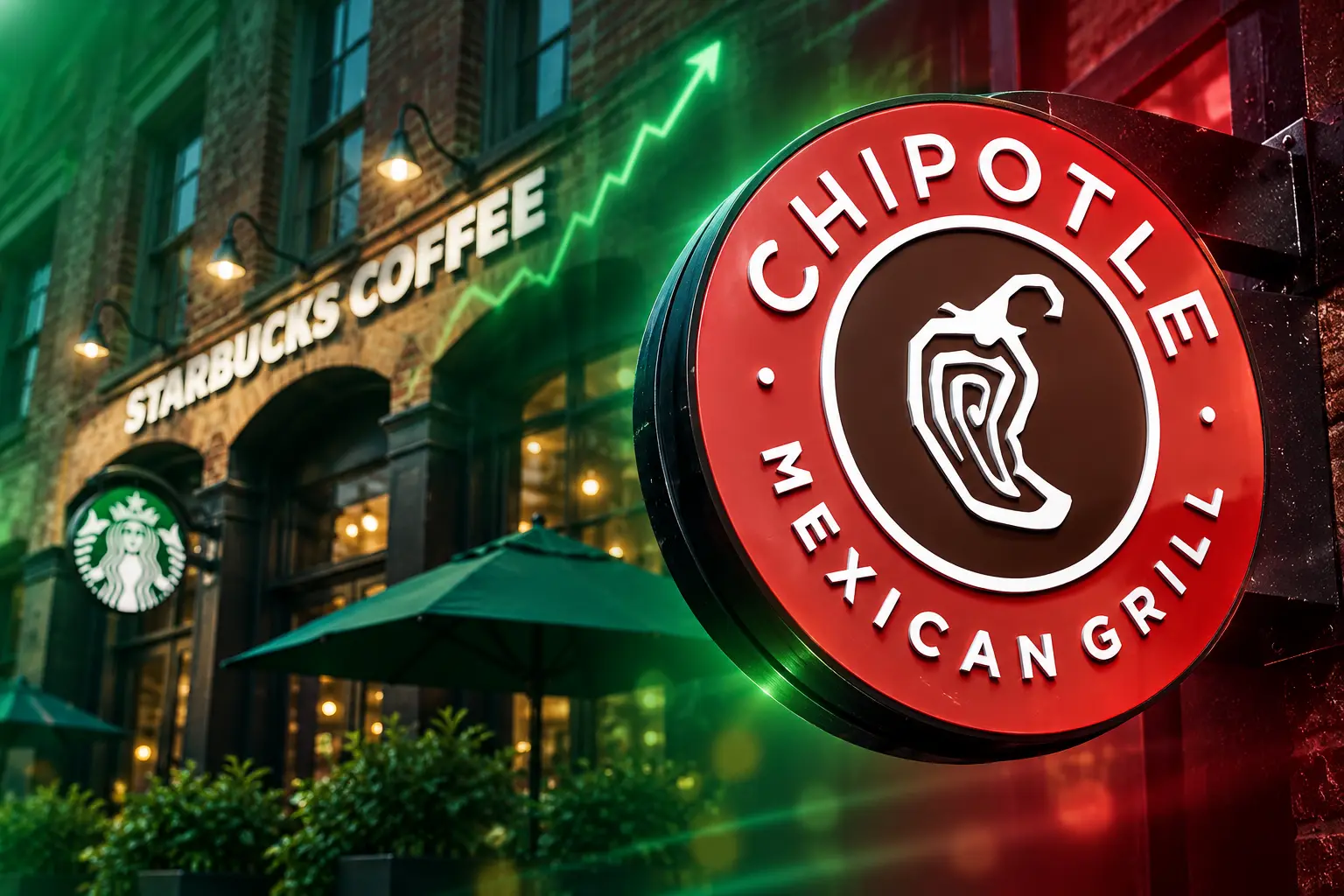
Starbucks spent October 8 batting down a report that it had shopped a takeover of Chipotle Mexican Grill, a chain then worth about $41 billion after a 6.2% jump. A spokesperson called the talk rumors and said the coffee company was locked on its Back to Starbucks repair, even as Chipotle’s protein kitchen is the brand guests still pay a premium to eat.
No formal offer has been confirmed. Chipotle did not answer requests for comment. Until one of those facts changes, the live question for diners is not synergy. It is whether a coffee P&L still trimming stores would fund the no-antibiotics meat, in-store prep, and food-safety machine that Chipotle sells as lunch.
Starbucks Calls the Chipotle Talk Rumors
People familiar with the matter said Starbucks had worked with advisers in recent months on a possible proposal. Chipotle’s equity was nearly $39 billion before Thursday’s pop. Starbucks itself is worth about $107 billion. Neither board has described a bid, a price, or a timetable.
The coffee company’s public line was blunt. It does not comment on rumors and speculation, a spokesperson said, and the team is “laser focused” on executing Back to Starbucks, with “strong momentum and confidence in our long-term growth potential.” The same statement pointed to earnings later in October, not to a burrito chain.
Brian Niccol, chairman and chief executive, took that job on September 9, 2024, after about six years running Chipotle. On his second day he told partners the brand had drifted. Two years later, on the plan’s anniversary, he argued the other way.
We’ve made tremendous progress. What we set out to do was give people the best of Starbucks, the Starbucks experience they know and love. I think our partners have stepped up. I think they’ve delivered on the fundamentals.
Brian Niccol, chairman and CEO, Starbucks two-year Back to Starbucks note
The operating tape backs part of that claim. In the fiscal third quarter ended June 28, Starbucks posted four consecutive quarters of global comps at 7.9%, with North America up 8.1%. The company says it has put more than $500 million into partner hours, bigger rosters, and more people on shift. Ceramic mugs, free refills, and cup writing came back. More than 1,000 coffeehouses in the United States and Canada have been “uplifted.”
The bill shows up in the other column. Operating margin in that quarter was 12.9%, against 15.8% two years earlier. In late September the board approved about 250 more North American closures, with roughly $300 million in charges, and cut fiscal 2026 net new stores to about 440 from a prior 600 to 650. As of June 28 the chain still had 18,371 North American stores, inside a global network of about 40,000. Lale Akoner, global market strategist at eToro, said a Chipotle deal could require heavy borrowing or issuing shares, and that without a compelling financial case investors may view it as an expensive distraction.
Logan Reich at RBC Capital Markets wrote that the rationale is not apparent given limited overlap, and that investors would treat a bid as competing for management time while North America still needs work. Jim Sanderson at Northcoast Research sketched the bull case the other way: Starbucks licensed partners in Europe could move Chipotle overseas faster than Chipotle has moved itself. Chipotle shares closed up 6.2% on October 8. Starbucks finished 0.4% lower after an early slide.
The Bowl on the Block Is a Protein Menu
If advisers really did run numbers on Chipotle, they were not pricing a coffee adjacent snack. They were pricing a made-to-order line that now sells itself to people tracking macros and to guests on GLP-1 medicines. In late 2025 Chipotle rolled a High Protein Menu, including bowls it labels GLP-1 friendly, built around a protein-fat-fiber mix it calls PFF.
The chain’s own builds show how wide the calorie gap is between a snack cup and a double-meat burrito. A 4-ounce High Protein Cup of Adobo chicken is 180 calories and 32 grams of protein, at a national weighted average of about $3.82. A single Adobo chicken taco is 190 calories and 15 grams of protein, starting at $3.50 in some restaurants. Load the same kitchen into a Double High Protein Burrito and the ticket becomes 840 calories and 79 grams of protein.
CHIPOTLE HIGH PROTEIN BUILDS
| Item | Protein | Calories | Other |
|---|---|---|---|
| High Protein Cup (Adobo chicken) | 32 g | 180 | About $3.82 average |
| Adobo Chicken Taco | 15 g | 190 | From $3.50 at some sites |
| High Protein-Low Calorie Salad | 36 g | 470 | 10 g fiber; GLP-1 label |
| High Protein-High Fiber Bowl | 46 g | 540 | 14 g fiber; GLP-1 label |
| Double High Protein Bowl | 81 g | 760 | 11 g fiber |
| Double High Protein Burrito | 79 g | 840 | 6 g fiber |
Scott Boatwright, Chipotle’s chief executive, told investors extra-protein orders rose 35% after the push, and that a double-protein promotion set a record digital sales day. Digital already made up 38.3% of food and beverage revenue in the second quarter of 2026. Starbucks, for its part, put Protein Lattes and Protein Cold Foam on its own menu in September 2025. The coffee company did not need a burrito chain to sell protein foam. It would need Chipotle to own the grill line, the ranchers, and the customizable bowl that diet-tracking guests already treat as a meal.
Niccol Already Rebuilt This Kitchen Once
The rumor has a human plot because Niccol already did the hard tour at Chipotle. Chipotle hired him from Taco Bell in February 2018, after the 2015 illness clusters had smashed traffic and the stock. He spent six years on digital ordering, a tighter operating rhythm, and a public return to “Food with Integrity.” Then he left in August 2024 for Starbucks. Chipotle named Boatwright, then the operations chief, as interim boss that month and dropped the interim tag in November 2024.
Chipotle’s share price has fallen by about half since that exit, and about 20% over the past year, a stretch of softer traffic and higher food and labor costs. RBC’s Reich noted that Chipotle holders would likely treat a Niccol return as a plus. That is a stock-market story. It is also a food-safety story. The man who marketed Chipotle as recovered is now the man whose coffee company would have to keep paying for the recovery.
Boatwright’s own pitch has stayed close to Niccol’s: best ingredients, prepped in the restaurant, at a price that is supposed to undercut sit-down Mexican without sliding into commodity QSR. Scale makes that promise harder. Chipotle ended 2025 with 4,056 restaurants, opened a record 334 that year, and plans 350 to 370 more in 2026, including 10 to 15 international partner sites, on a long-run target of 7,000 in North America. Almost every one of those units is company-owned, so every wage spike and every beef invoice hits the same P&L.
Chipotle’s First Sales Drop Since the Outbreak Years
The chain Niccol would be buying is not the one he left at a peak. 2025 was Chipotle’s first full year of negative same-store sales since 2016, the hangover year after the E. coli crisis. Same-store sales fell 1.7% for the year, with transactions down 2.9% and average check up 1.2%. The fourth quarter was worse: comps down 2.5%, transactions down 3.2%.
CHIPOTLE’S 2025-26 TAPE
- Full-year 2025: Same-store sales down 1.7%, the first annual drop since 2016, on 2.9% fewer transactions.
- Restaurant count: 4,056 at year-end after 334 openings, with 350 to 370 more planned for 2026.
- Q2 2026 rebound: Revenue $3.3 billion, up 9.3%; comps up 2.2% as transactions finally turned positive.
- The cost stack: Restaurant-level margin 25.2%, down 220 basis points; food, beverage, and packaging 29.7% of sales on beef and freight; labor 25.0%.
Guidance for 2026 started at about flat comps, then moved to low-single-digit growth after the first half. Net income in the second quarter still fell to $403.5 million from $436.1 million a year earlier. Loyalty membership reached more than 21 million active accounts in 2025. Boatwright has said about 30% of sales already run through that program, but only about 20% of in-store tickets use it, against nearly 90% of app tickets. The next loyalty reboot is due in spring, aimed at the guests who still pay at the salsa bar.
Those figures are why a coffee buyer would see a discount, and why a coffee buyer is a strange fit. Chipotle is already spending to look cheaper, with a $3.50 taco and a $3.82 chicken cup, while beef inflation eats the margin on the bowls that actually pay the rent. Starbucks is already spending to look slower and warmer, with more partners on the floor. Both bets raise labor. Combining them does not cancel the bill.
What the 2015 Outbreaks Still Cost the Brand
Chipotle’s premium is a food-safety premium as much as a spice-rub premium. Guests pay for meat raised without routine antibiotics because they remember when the opposite story led the news. Between 2015 and 2018 the company was tied to at least five foodborne outbreaks. In April 2020 it agreed to a $25 million criminal food-safety fine, then the largest in a U.S. food-safety case, and a three-year deferred prosecution deal over charges of adulterating food.
The Justice Department said more than 1,100 people were sickened. Store-level failures, not a single mystery ingredient, drove most of the file: sick workers kept on the line, weak reporting, food held at the wrong temperature.
OUTBREAKS IN THE 2020 DEFERRED PROSECUTION FILE
- Simi Valley, August 2015: 234 consumers and employees reported illness; the restaurant delayed passing along word of a sick worker.
- Boston, December 2015: 141 people sickened by norovirus after an ill apprentice manager was told to keep working, then packed a Boston College catering order.
- Powell, Ohio, July 2018: About 647 people reported Clostridium perfringens illness; inspectors found time-and-temperature violations on lettuce and beans.
- Staffing pressure: Some employees from those years described thin crews, thin training, and pressure to work while sick, against written exclusion rules.
Niccol’s Chipotle years were the cleanup of that record: more testing, more training, a Food Safety Council, and ads that named avocados and lime juice instead of mystery seasoning. Laurie Schalow still sits as chief corporate affairs and food safety officer. A coffee company that just closed 250 stores and cut its new-unit plan is not an obvious guardian of that stack. Food safety is a staffing system. Starbucks is still buying staffing for espresso, not for a salsa line that cannot sit out.
A Coffee P&L Would Have to Fund Fresh Lettuce
The menu Chipotle would bring across the table is costly on purpose. On its Real Foodprint pages the chain says 100% of its chicken, beef and pork without antibiotics also carries no added hormones and is humanely raised, with a 100% vegetarian diet for those animals. Dairy cows that supply sour cream and shredded cheese are supposed to get daily pasture access, weather permitting. Pork comes from sows outdoors or in open barns with deep bedding, not crates. HowGood, an independent food-impact researcher, scores those ingredients against industry averages on antibiotics avoided, water, carbon, soil, and organic land.
Chipotle’s 2025 sustainability update said 100% of ingredients sold in U.S. restaurants met Food with Integrity standards, including no artificial colors, flavors, or preservatives. The same year’s proxy said the company bought more than 50 million pounds of local ingredients, up 3.0 million pounds from 2024, and finished a $5 million farming-support goal. Digital orders in 2025 were credited with avoiding 10,060 metric tons of carbon emissions and saving more than 616 million gallons of water under that sourcing model. Those are marketing numbers. They are also invoices. Antibiotic-free chicken, pasture-access dairy, and local produce do not get cheaper because the parent company also sells pumpkin spice.
WHAT STARBUCKS WOULD BE UNDERWRITING
- The proteins: No sub-therapeutic antibiotics, no added hormones, humane-raised claims on chicken, beef, and pork, plus vegetarian feed.
- The produce: In-restaurant wash, cut, and same-day use, with a local-produce spend already above 50 million pounds a year.
- The safety net: A post-2015 compliance machine the Justice Department forced into a deferred prosecution program after more than 1,100 illnesses.
- The diet pitch: GLP-1-labeled bowls and a High Protein Cup aimed at guests who will leave if the chicken starts tasting like commodity grill meat.
That is the irony the deal math keeps missing. Chipotle’s remaining premium after a halved stock is not a logo. It is a supply chain that refuses commodity shortcuts, plus a protein menu aimed at people eating less often and more carefully. Starbucks is a licensed-store giant that just sold control of its China business, closed hundreds of cafes, and told its own partners the job is still coffee, chairs, and wait times. Reich’s limited-overlap point is the diner’s point too. A latte and a barbacoa bowl do not share a grill, a cold chain, or a sick-worker rulebook.
Guests Already Treat the Bowl as a Splurge
The first public argument after the report was not about ranchers. It was about the check. People who already call a custom Starbucks drink a daylight robbery immediately priced a future bowl in the mid-20s or higher, as if coffee-ticket habits would transfer down the salsa line. No price list has changed. The flinch is still information. Chipotle spent 2025 watching traffic fall, then answered with a $3.50 taco and a snack cup of chicken, because fast-casual had started to look like a luxury to the same young guests who once treated a burrito bowl as a default lunch.
Boatwright has said the brand will not advertise from a giant dollar figure the way burger chains do. That stance is harder under a parent famous for upselling foam, pumps, and seasonal red cups. A combined company could, on paper, put Chipotle into European licensed sites faster than Chipotle’s 10 to 15 partner openings will. It could also teach Chipotle’s pricing muscle the wrong lesson: that guests who swallow a $7 drink will swallow a loaded bowl at whatever the app asks.
For now the tape is still hypothetical. Starbucks goes to earnings later in October with a coffeehouse plan it will not publicly pause. Chipotle goes on selling 32-gram chicken cups and 81-gram bowls from a kitchen that has to stay cleaner than a typical QSR line. Until a proposal hits a board packet, the only merger on the menu is the one in the rumor, and the people eating the food are the ones who would notice first if the chicken changed.
Disclaimer: This article is news reporting and analysis for general information. It is not investment advice, not a recommendation to buy or sell Starbucks or Chipotle securities, and not medical or diet advice for people using GLP-1 medicines or following a high-protein plan. Readers making money decisions should consult a licensed financial adviser who can review their own holdings, and readers changing how they eat on a prescription should consult the clinician who manages that prescription, plus a registered dietitian if they want a meal plan. Market values, menu calories, restaurant counts, and deal rumors are taken from company statements, filings, and the dated sources above and can change without notice.

Europe’s Heat Killed 50,391 in Cities Official Counts Still Miss

Caesarean Surge Puts 20 England Maternity Units at Risk

The Protective Ring Around Care Homes Never Existed

Cooper Prioritises Children’s Corridor Care Without an Age Count

Oxford’s Ebola Vaccine Reaches Uganda as Doses Sit Unused

Pennsylvania Measles Deaths Collide With Falling MMR Coverage

Muscle-Boosting Drugs Near Approval for Children With SMA

FDA Approves XFG COVID Vaccines While the Advice Panel Is Frozen

Progranulin and JAK2 Split the Macrophages That Heal

After the ADHD Invoice, GPs and Waiters Carry the Cost
-
 NEWS2 months ago
Pennsylvania Measles Deaths Collide With Falling MMR Coverage
-
 FITNESS2 months ago
Muscle-Boosting Drugs Near Approval for Children With SMA
-
 NEWS2 months ago
FDA Approves XFG COVID Vaccines While the Advice Panel Is Frozen
-
 NEWS2 months ago
Progranulin and JAK2 Split the Macrophages That Heal
-
 MENTAL HEALTH2 months ago
After the ADHD Invoice, GPs and Waiters Carry the Cost
-
 NEWS2 months ago
Rasonque’s List Price Shifts the Pancreatic Cancer Bill
-
 NEWS2 months ago
Pennsylvania’s Two Measles Deaths Follow a Long Coverage Slide
-
 NEWS2 months ago
FDA Flagged This Sprout Plant 16 Months Before the Outbreak