
NEWS
OpenAI Claims a Navier-Stokes Win, Then Skips the Prize
OpenAI posted a Navier-Stokes blow-up proof and declined Clay’s $1 million prize, while the institute still requires a journal and two years of assent.

OpenAI says an internal AI system proved that the Navier-Stokes equations can blow up in finite time, then said it will not take the US$1 million Clay prize. The company posted the write-up and a Lean check on 8 September 2026. The Clay Mathematics Institute still requires a journal paper, two years, and broad assent before it will weigh an award.
That is a strange kind of win. The problem that made Navier-Stokes famous came with a purse, a waiting period, and a culture of named credit, and the claimed solution arrived with none of those attached.
OpenAI Walks Away From the Million-Dollar Prize
The 8 September research note is blunt about the money. After describing a vortex that tightens until speed grows without bound, OpenAI says it does not intend to claim the prize for this result. The stated aim is to show how fast its models are moving, not to collect Clay’s cheque.
We do not intend to claim the Millennium Prize for this result.
OpenAI, research note, 8 September 2026
The company posted the same claim on its official account that afternoon, with a short thread on the vortex and the agent run.
We’re sharing a solution to the Navier-Stokes Millennium Prize Problem, one of the deepest problems at the frontier of mathematics.
The proof was produced by a group of agents, using an OpenAI next-generation model significantly more capable than GPT-6 Astra.
The problem… pic.twitter.com/8zol3BPTL4
— OpenAI (@OpenAI) September 8, 2026
A first reply in that thread asked, as a joke, whether the solution had been sitting in the training data. That joke is now the live argument in the field. The scarce thing is no longer the last page of algebra. It is the unpublished path that told the agents where to look.
OpenAI says the finding came from an internal model it has been training since 28 August 2026, a system it puts well ahead of GPT-6 Astra. On 1 September, after rumours that two Millennium Prize problems had been resolved, it launched a multi-agent run on the open Clay list and a few nearby questions. The Navier-Stokes group used on the order of 10,000 agents at once, with a cached copy of the internet and the ability to run code.
THE RUN IN PLAIN FIGURES
- Agents: On the order of 10,000 working at once on Navier-Stokes.
- Clock: About 88 hours to a resolution on 5 September, then 17 hours of Lean checking via GPT-6 Astra.
- Traffic: 2.7 million messages and about 130 billion output tokens on Navier-Stokes; 4.9 million messages and about 300 billion tokens across every problem tried.
- Purse: OpenAI says it will not claim Clay’s $1 million.
The agents reached a candidate on Saturday, 5 September. Lean checking finished on 6 September. The public post followed on the 8th. In prize terms, none of that starts Clay’s clock.
What the 10,000 Agents Proved
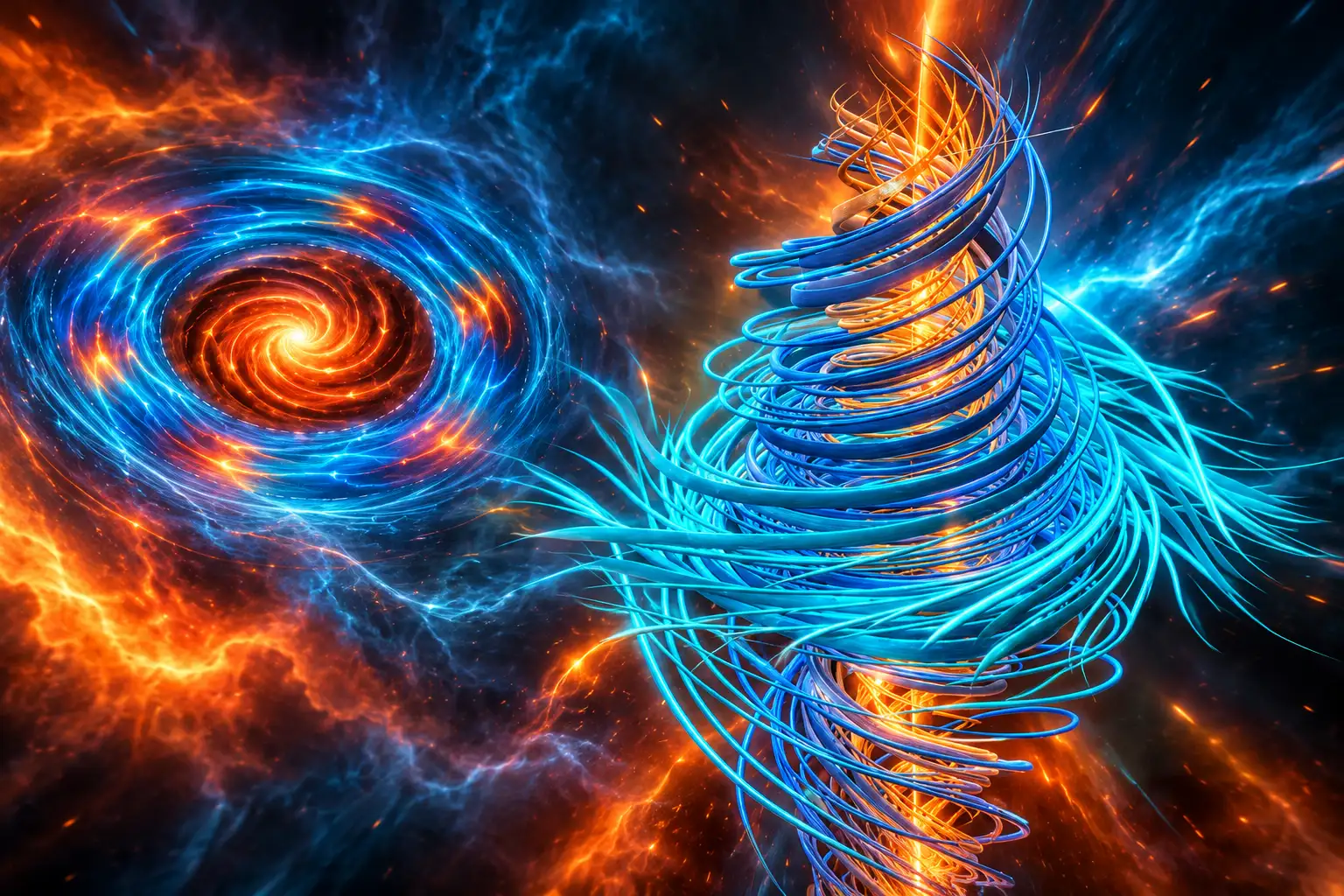
The claimed result is a finite-time singularity for three-dimensional incompressible Navier-Stokes with a smooth external force and finite energy, which OpenAI says settles Clay statements C and D. It is a disproof of global smoothness, not a proof that every smooth flow stays smooth forever. The write-up describes a vortex that spirals inward and stretches like spaghetti, with a core that shrinks and speeds up while energy stays finite.
Claude-Louis Navier and George Gabriel Stokes wrote the equations in the nineteenth century as Newton’s second law for a fluid treated as a continuum, not as a pile of molecules. OpenAI notes that the same system is used in aircraft design, weather forecasts, and the study of blood flow. In 1934, Jean Leray showed that solutions exist in a weak sense and left smoothness open. Clay put that gap on its Millennium list in 2000. OpenAI describes the open smoothness question as unresolved for roughly 90 years.
A singularity here means the maths produces unbounded speed in finite time even though viscosity usually damps wild motion. A real fluid cannot move infinitely fast, so the continuum model would fail and a modeller would have to track particles one by one. The hard part, OpenAI says, is that the blow-up must come from the fluid’s own motion. Acceleration, pressure, momentum transfer, and viscosity have to grow large and cancel so the external force stays smooth while velocity does not.
THE FOUR WAYS TO SETTLE THE PROBLEM
- Statement A: Every admissible smooth initial flow on ordinary 3-D space stays smooth for all time, with no extra force.
- Statement B: The same global smoothness claim, but on a periodic box.
- Statement C: There is some smooth initial state and some admissible smooth force on ordinary space for which smoothness fails in finite time.
- Statement D: The same breakdown, on the periodic box.
Clay’s official write-up by Charles Fefferman treats a proof of any one of the four as a resolution. OpenAI says it hit C and also D. It does not claim A, the unforced case many analysts still treat as the physically natural question. A warm-up run with nearly 100 agents, lasting about 50 hours, produced a related blow-up for the Euler equations (Navier-Stokes with viscosity removed) with no external force. The company posted a Lean formalization of the Navier-Stokes proof and the Euler file in the same public repository.
On 18 September 2026, Scott Armstrong, a mathematician at NYU’s Courant Institute and at CNRS, wrote that a new paper by Constantin, Ignatova, and Vicol argues the OpenAI construction cannot produce an analytic forcing term and does not work with zero forcing as in statement A. That is one expert reading of a new preprint, not Clay’s verdict. It is the sort of objection the two-year window was built to host.
Clay Still Needs Two Years and a Journal
Clay does not take proofs by email. The revised rules, adopted by its board on 26 September 2018, say a proposed solution must appear in a qualifying outlet, that at least two years after publication must pass, and that the result must win general acceptance in the global mathematics community. Only then will the scientific board even decide whether to form a special committee.
A company blog post and a Lean file are not that outlet. Machine checking can confirm that each coded step follows, which is a real filter human referees do not have. It does not replace the journal, the wait, or the fight over who did what.
THE CLAY PRIZE CHECKLIST
| Condition | Clay rule | Status of the 8 September release |
|---|---|---|
| Where it appears | A qualifying journal, not a direct submission to Clay | Company research note and a public Lean repo |
| Time | Two years after that publication | The wait has not started |
| Assent | General acceptance, in Clay’s sole judgment | Still contested |
| The $1 million | Paid only after that process, with credit assigned by Clay | OpenAI says it will not claim it |
On 11 September 2026, Clay issued its own note. It said it shares the excitement as it contemplates the announcement that the Navier-Stokes problem has apparently been settled, and that it hopes new human understanding will follow once the methods are taken apart. The same note points at the rules for evaluating the work and assigning credit, and says the process is deliberately unhurried.
Martin Bridson, Clay’s president, had already called 8 September an exciting day for human understanding of mathematics. Excitement is not an award. The seven Millennium problems were unveiled in Paris in 2000, each with $1 million attached, to mark hard questions that had stood for years. Until this claim, only one of those seven had been treated as solved.
The Forced-Vortex Path Almost Nobody Else Was On
The credit fight is not about whether a vortex can be drawn. It is about who opened the route through a smooth force, Clay’s options C and D, and who then poured compute onto that route.
Tristan Buckmaster, a mathematician at New York University, and Levent Alpöge, a Harvard mathematician who works at Anthropic, had spent about a year on an aspect of the same landscape, using tools from OpenAI and Anthropic. They built on work by Diego Córdoba at the Institute of Mathematical Sciences in Madrid and Luis Martínez Zoroa at CUNEF University, also in Madrid. Researchers who study these equations have said a large part of the credit should go to those four names. OpenAI, in its own note, recognizes the pair’s priority on forced Euler and congratulates them.
Buckmaster wrote that the smooth-force road to C and D was the road Córdoba and Martínez Zoroa opened, and the one he and Alpöge had quietly chosen to attack. When he heard OpenAI was on a forced problem, he treated that as a warning flag. He had put the project’s drafts into Codex for months. He asked whether the model had been trained on those sessions, or had access to them. He wrote that he was told the model did not look up user data, asked again about training, and did not get an answer.
OpenAI’s fetched note says the researchers and the agents did not see the pair’s work through any means until it was released publicly, and that no specific user data was accessed to solve the problem. A 10 September update says Buckmaster’s Codex prompts over the two months before 8 September could not have influenced the system, including through training. A spokesperson also said that after an investigation, no user inputs past 3 July could have influenced the system in any way. Those are two different cutoffs: a July training wall, and a later Codex review. Buckmaster told interviewers he had three ChatGPT accounts and had turned off training on only two of them.
OpenAI says it reached out after Lean checking, on 6 September, to offer a joint announcement, then learned the other team had resolved forced Euler, not Navier-Stokes. Buckmaster has described other proposed arrangements, including one that would have left Alpöge off a Navier-Stokes write-up because he works at Anthropic. He declined. OpenAI has called the broader misconduct claims false. Buckmaster, for his part, was careful on the data point itself.
I do not know whether our data was used. I am not accusing anyone of anything. I am stating what I was told, when, and what was proposed to me.
Tristan Buckmaster, public statement, 8 September 2026
THE SEPTEMBER SPRINT
- 28 August 2026: OpenAI begins training the new internal model it later uses on the Clay list.
- 1 September 2026: After rumours of resolved Millennium problems, the company launches the agent run.
- 5 September 2026: The Navier-Stokes group reaches a resolution, about 88 hours after the first agents started.
- 6 September 2026: Lean checking finishes; OpenAI contacts Buckmaster and Alpöge.
- 8 September 2026: Buckmaster and Alpöge post their Euler-side work; OpenAI posts the Navier-Stokes claim.
- 10 September 2026: OpenAI updates the concurrent-work section of its note.
- 11 September 2026: Clay says the problem has apparently been settled; 25 Fields Medalists publish their letter.
If a small group finds a promising path, and the mere fact that the path is promising can send on the order of 10,000 agents after it, then the person who still talks in the open is doing unpaid scouting for a private cluster. That is the incentive the next year of fluid dynamics will have to live with, prize or no prize.
Twenty-Five Fields Medalists Call the Race a Misalignment
On 11 September 2026, the same day as Clay’s note, Terence Tao posted a declaration signed by 25 Fields Medalists and titled “A Severe Misalignment of AI in Mathematics.” The names run from Pierre Deligne (1978) to Yu Deng (2026), and include Tao, Peter Scholze, Maryna Viazovska, Martin Hairer, and Cédric Villani. They argue that companies are using famous problems as model benchmarks, and that this collides with a field whose real product is understanding, not a true/false bit.
Famous problems, they write, have been landmarks. Solving one used to mean new methods that then moved, slowly, through talks, simplifications, and textbooks. Solutions now arrive in a rush, with no time for a proper write-up, no isolation of what is new, and no full accounting of prior work. That, they say, raises severe attribution and plagiarism questions.
As in all creative professions, this raises severe attribution and plagiarism questions.
25 Fields Medalists, A Severe Misalignment of AI in Mathematics, 11 September 2026
The letter does not call for a ban. It says AI can speed genuine study, and that whether the change helps or wrecks the field will depend on the people who control the tools. A related text, the Leiden Declaration on Artificial Intelligence and Mathematics, had already gone up on 2 June 2026 and asked for real effort on attribution when automated tools cannot name their sources.
Timothy Gowers, who won a Fields Medal in 1998, did not sign. In a 17 September 2026 guest post he wrote that he agreed with much of the letter and still could not put his name on it, because he does not fully share the claim that conceptual understanding is the primary goal and problem-solving only a proxy. The split inside the elite of the subject is now public. Clay has to assign credit in that weather.
Chat Logs Do Not Count as Acknowledgments
Mathematicians already have a habit for borrowed insight. If someone sits in your office and you later write the paper, you thank them. Andreas Thom, a mathematician at the Dresden University of Technology, spent about a year brainstorming with ChatGPT about group theory, including a strategy for building a non-sofic group, an object many people had thought could not exist. In August, OpenAI posted a preprint with the first example of such a group, using a similar strategy. The paper cites his published work. Until late June he had not opted out of training.
“If a human had sat in my office and then had written that paper, I would be angry if he had not given credit to our discussions and explanation,” Thom said, while stressing it is not established that the model used those chats. OpenAI did not answer that case directly. A spokesperson said users choose whether conversations help improve models, and that once someone opts out, the company does not use that data to improve them.
Luke McDonagh, who studies intellectual-property law at the London School of Economics and Political Science, put the wider risk in one line: academic researchers may not have grasped what it means to upload knowledge to a personal AI account. The toggle that says the chat may train the next model is now sitting under a Millennium-scale result. Lean will not print an acknowledgments section for a year of private prompts.
Perelman Also Left the Money on the Table
The only previous Millennium Prize solution followed a slower script. Grigori Perelman posted papers on the Poincaré conjecture in 2002 and 2003, declined a Fields Medal in 2006, and in 2010 was awarded Clay’s $1 million. On 1 July 2010 he refused the money. He said the main reason was disagreement with the organized mathematical community, and he argued that Richard Hamilton deserved as much credit as he did.
Perelman walked away after years of community checking. OpenAI walked away on the day of the post, before a qualifying journal, before Clay’s two-year wait, and in the middle of a fight about whose route the agents followed. The purse that was supposed to settle priority is, in both cases, the part nobody will cash.
Clay can still, years from now, name who gets the Navier-Stokes prize, or decline to name anyone. Until a qualifying paper exists, that decision has no object. The Lean repo is public. The forced-Euler priority is on the record. The $1 million is not going to OpenAI. The vortex is in the write-up, stretching like spaghetti, and the medal is still in Oxford’s in-tray.

Europe’s Heat Killed 50,391 in Cities Official Counts Still Miss

Caesarean Surge Puts 20 England Maternity Units at Risk

The Protective Ring Around Care Homes Never Existed

Cooper Prioritises Children’s Corridor Care Without an Age Count

Oxford’s Ebola Vaccine Reaches Uganda as Doses Sit Unused

Pennsylvania Measles Deaths Collide With Falling MMR Coverage

Muscle-Boosting Drugs Near Approval for Children With SMA

FDA Approves XFG COVID Vaccines While the Advice Panel Is Frozen

Progranulin and JAK2 Split the Macrophages That Heal

After the ADHD Invoice, GPs and Waiters Carry the Cost
-
 NEWS2 months ago
Pennsylvania Measles Deaths Collide With Falling MMR Coverage
-
 FITNESS2 months ago
Muscle-Boosting Drugs Near Approval for Children With SMA
-
 NEWS2 months ago
FDA Approves XFG COVID Vaccines While the Advice Panel Is Frozen
-
 NEWS2 months ago
Progranulin and JAK2 Split the Macrophages That Heal
-
 MENTAL HEALTH2 months ago
After the ADHD Invoice, GPs and Waiters Carry the Cost
-

 NEWS2 months ago
Rasonque’s List Price Shifts the Pancreatic Cancer Bill
-

 NEWS2 months ago
Pennsylvania’s Two Measles Deaths Follow a Long Coverage Slide
-

 NEWS2 months ago
FDA Flagged This Sprout Plant 16 Months Before the Outbreak