
FOOD
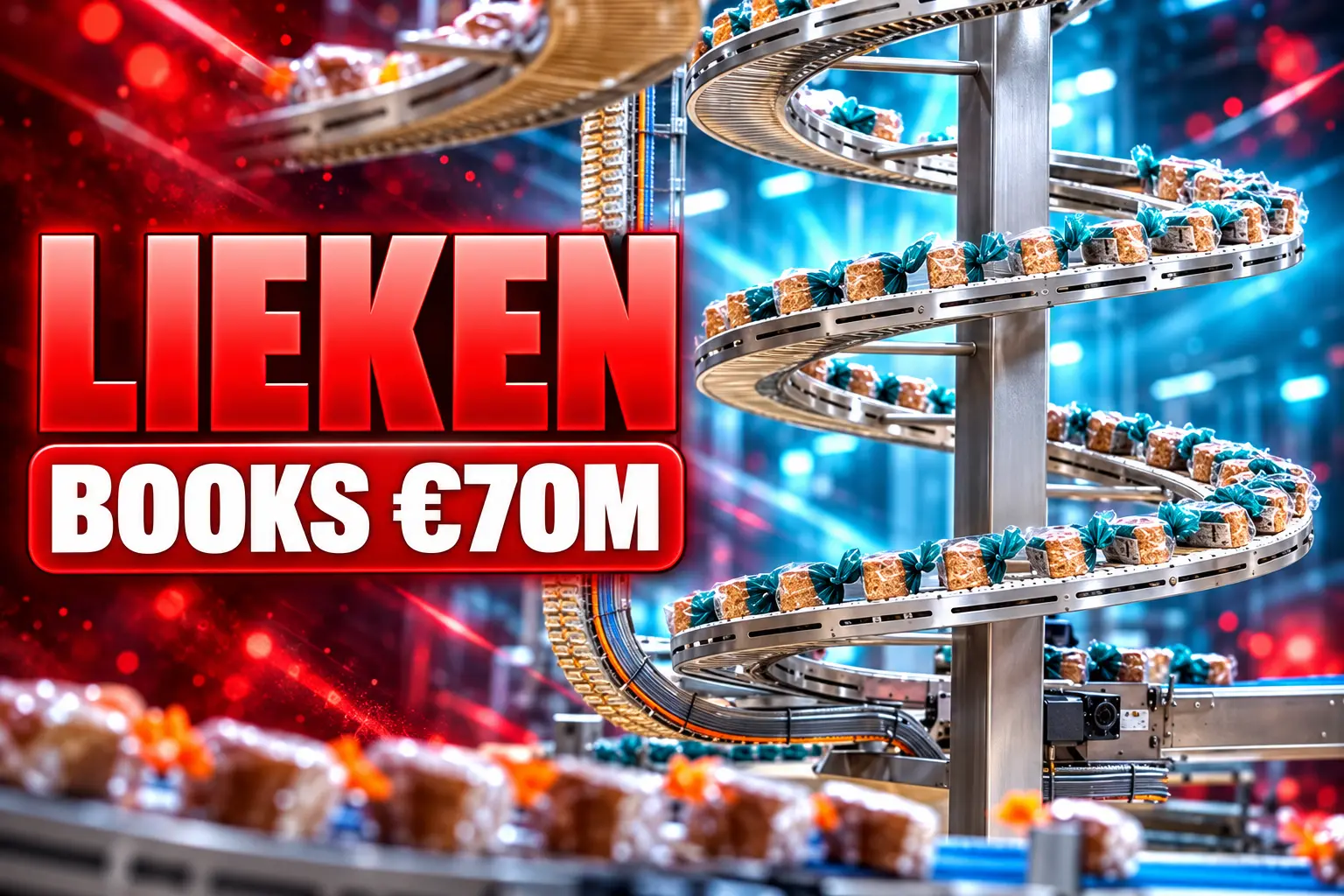
Lieken Pours €70m Into Wittenberg as Essen Closes
Lieken’s approved €70m Wittenberg toast plan lands as Essen-Borbeck prepares to close and Agrofert faces a fresh EU farm-aid freeze.

Lieken has set a triple-digit million-euro modernisation plan through 2030, with €70m ($81.2m) already approved for its Wittenberg toast plant. The Czech owner Agrofert is steering that cash at toast, sandwich bread and sliced bread. Four months earlier, the same baker told staff at Essen-Borbeck that production there will end on 31 December 2026, at a cost of about 120 jobs.
Lieken will not say whether the new spending creates work. Details on other sites, it said on 3 September 2026, will come in due course.
Lieken Has Booked €70m for Wittenberg Toast Lines
The approved slice is the only hard number the baker has put on the programme. It includes support for expanding capacity at Wittenberg, the headquarters town in Saxony-Anhalt where Lieken already runs its newest industrial bakery. New lines and upgrades to old ones are both in the plan, with a push toward more automation.
The company said the measures are meant to raise efficiency, capacity, quality and sustainability, and to put money into the products where it already has plants, brands and German retail customers. Asked about jobs, it answered with a closed door.
The aim is to strengthen our competitiveness, ensure reliable supply for our customers and create the conditions for sustainable and profitable growth.
Lieken, statement, 3 September 2026
That sentence is the whole public brief. There is no site-by-site budget, no capacity target and no hiring figure. Operational targets for future output exist, Lieken said, and it will not share them.
THE APPROVED SLICE
- Programme size: A triple-digit million-euro plan running through 2030, described by Lieken as modernisation rather than a new market bet.
- Cash cleared: About €70m already approved, including Wittenberg capacity, with other locations still unnamed.
- Product focus: Toast, sandwich bread and sliced bread, plus more automation on new and existing lines.
- Jobs answer: “At this stage, we are not making any statements regarding specific employment effects.”
The September notice also sits beside a larger Wittenberg package the parent was already discussing in the spring. Agrofert has talked of about €120m across two sites in the town, €70m at the bakery and €50m at sister firm SKW Stickstoffwerke Piesteritz, and it has asked Saxony-Anhalt about investment aid for both the chemical and the bakery work.
Essen-Borbeck Will Go Dark on 31 December
On 8 May 2026, managers at Lieken Brot- und Backwaren told a staff meeting that the Essen-Borbeck factory will stop production at the end of the year. About 120 people work there. Golden Toast and Lieken Urkorn come off those lines today; the company said those products will move to other German plants, among them Lünen in the same state.
Lieken blamed a tough market, high energy, operating and maintenance costs, and a heavy repair bill. The toast and sandwich market, it said, is stagnating or slipping. That is the same category the September plan now calls a core segment. The louder fight around Golden Toast this year has been that shutdown, not the capital budget. Energy prices and a product that remains on sale while a plant dies were the argument, months before Wittenberg’s €70m was framed as a long-term upgrade.
Uwe Binder, who has worked at the Essen plant for 37 years, said the local bread industry now has only one rival employer nearby. The food union NGG attacked the way staff were told. Lieken said it would hold personal talks and offer severance. Essen still bakes until 31 December 2026. After that date the toast stays in the aisle from other ovens.
A Toast Plant on a Fertilizer Campus
Wittenberg was not a random pin on the map. Lieken’s headquarters has sat there since May 2018, on the Agro-Chemiepark beside SKW Piesteritz, the nitrogen works Agrofert bought about twenty years ago. Petr Cingr, Agrofert’s deputy board chair, told MDR’s Umschau that the group bought Lieken to tie farmers, fertilizer plants and food makers into one chain from field to plate, and that this was the reason for the takeover.
Jennifer Staats, the Wittenberg plant manager, said the site already forms, bakes and packs 12,000 toast loaves an hour. Golden Toast leaves those lines as standard toast and as sandwich loaves, including whole grain, butter toast and spelt toast. Six lines run with eight people on each per shift. Muffins and other loaves share the hall. Frozen pretzel plaits already go to retailers, and Staats said an unused hall next door is meant for cheese pretzel plaits, with the €70m paying for a second pretzel line, floor work, kit and, she stressed, the oven. In that May 2026 interview she hoped to start floor work by early June, bring in heavy kit by the end of October, and have two pretzel lines shipping by the end of 2027.
THE WITTENBERG LINE
- Throughput now: 12,000 toast loaves an hour on six lines, eight people per line each shift.
- What it bakes: Golden Toast and sandwich formats, plus muffins, other breads and frozen pretzel plaits.
- The extra hall: Planned cheese pretzel plaits on two lines, funded from the approved €70m.
- Headcount on site: About 330 people at Wittenberger Bäckerei, which bakes only for Lieken.
SKW Piesteritz is Germany’s largest ammonia producer, with about 2,500 staff and about 5 million tonnes of chemical products a year. Managing director Carsten Franzke said some 80 percent of its costs sit on natural gas and that Agrofert has put €1.6bn into the Wittenberg chemical site over ten years. Cingr said talks with the federal government on the gas-storage levy were saving SKW €40m a year. Saxony-Anhalt premier Sven Schulze, who visited Agrofert in Prague, has said much of what happens in the state’s economy is decided there. That is not bread dough, but it is why the toast plant is on that land.
Headcount Has Fallen From 4,700 to 1,843
Lieken’s 2024 group accounts list 1,843 employees and €629.8m in sales. When Barilla signed a deal in February 2013 to sell Lieken to Agrofert, the baker had about 4,700 people and about €780m in 2012 sales. That is 2,857 fewer jobs, a 61 percent drop in staff, and a 19 percent drop in sales.
Barilla had bought the old Kamps group in 2002 for about €1.8bn, then sold the Kamps shop chain in 2010 and spent years trying to exit industrial German bread. Guido Barilla, the group’s chairman, said at the time that Barilla wanted to grow pasta, sauces and ready meals and to keep branded bakery only in core countries. Agrofert, already a baker in the Czech Republic, Slovakia and Hungary, took the German plants.
The Golden Toast and Lieken Urkorn brands stayed with the industrial baker, which also makes private-label loaves and bake-off goods for retailers. Lieken still describes itself as a leading packed-bread supplier and, on its own figures, bakes about 500,000 tonnes of bread and baked goods a year.
HOW THE BAKER SHRANK
- 25 February 2013: Barilla signs the sale of Lieken to Agrofert for an undisclosed price; the deal later clears the European Commission.
- November 2014: Lieken announces plans to close five of its twelve German plants and begins a multi-year site cull.
- 2015 to 2018: A new Wittenberg bakery is built on SKW land to take production from Weißenfels, where about 250 jobs went; the 2015 plan talked of €200m and 300 Wittenberg jobs, and headquarters moves to the town in May 2018.
- 8 May 2026: Essen-Borbeck is told it will close on 31 December 2026, with about 120 jobs at stake.
- 20 May 2026: Agrofert’s €70m bakery plan and €50m SKW plan at Wittenberg are laid out, with talks on state aid.
- 3 September 2026: Lieken puts a triple-digit million-euro programme through 2030 around the already approved €70m.
Christian Hörger, Lieken’s chief executive, told MDR that the Czech owner had given the baker more financial weight, access to raw materials and a route into other European markets. That is the corporate case for another round of kit. It does not reverse the long cut in the payroll.
Why the Cash Is Going Into Toast
Toast is the industrial loaf. It is packed, sliced, cheap to ship and easy for discounters to copy as a house brand. In 2024, every fourth loaf sold in 2024 was toast, almost all of it from big bakeries. By 2025 toast held about 28 percent of German bread volume, up 6.4 points from 21.6 percent in 2010, after a peak of 29.3 percent in 2022. Mixed bread, once the default, was down to 24.9 percent in 2025.
Those figures explain the product list in the 3 September plan. They do not make the category easy money. Felix Neuberger, Lieken’s marketing chief for Golden Toast, has described weaker toast volumes after the pandemic as a return to normal, not a collapse, and has leaned on brand campaigns to keep the loaf interesting. Lieken’s own May note on Essen still called the toast and sandwich market stagnant or slightly down. Putting €70m into that aisle is a bet that machines, not shop-floor headcount, will hold the shelf.
Four supermarket groups take about 88 percent of German grocery sales, and a Heinrich Böll Foundation briefing on industrial baking found that only 55 firms hold 36 percent of the bakery market. Craft shops lose when the packed aisle gets cheaper and more automated. Lieken’s plan is written for that aisle.
Over 40% of Packed Bread Belongs to Harry-Brot
The German packed-bread fight is already lopsided. Harry-Brot of Schenefeld is the baker Lieken has to live with. On 15 April 2025 the Federal Cartel Office cleared Harry-Brot to take Glockenbrot’s Bergkirchen plant from REWE and to set up two joint property firms with the retailer, after REWE decided to leave in-house bread baking. Andreas Mundt, president of the office, said Harry-Brot is by far Germany’s leading bread and bakery producer and that the deal would strengthen that lead, while Glockenbrot had until then baked only inside REWE.
Harry-Brot posted about €1.3bn of sales in 2024 from ten plants, selling both branded loaves and private label. In self-service packed bread, the office said Harry-Brot already held more than 40 percent of packed bread. Bergkirchen’s 320 staff transferred on 1 November 2025. Harry-Brot called the Bavarian site a hub for the south. REWE’s Frankfurt Glockenbrot plant is slated to close, with a new Harry-Brot bakery planned at Erlensee.
| Baker | 2024 sales | Packed-bread position | 2026 move |
|---|---|---|---|
| Harry-Brot | About €1.3bn | Over 40% of self-service packed bread | Took Glockenbrot Bergkirchen; building in the south |
| Lieken | €629.8m | Second industrial baker, Golden Toast and Urkorn | €70m at Wittenberg; Essen-Borbeck closes 31 December |
Harry-Brot’s 2024 sales were about twice Lieken’s. The Cartel Office still found other suppliers for retailers, which is why it let the Glockenbrot deal through. For Lieken, the comparison is the point of the Wittenberg kit: keep up on toast and private label, or cede more of the packed shelf to Schenefeld.
Farm Aid to Agrofert Sits on Hold
The parent around that kit is under a separate watch in Brussels. On 8 September 2026 the European Commission confirmed it had stopped some reimbursements from the European Agricultural Fund for Rural Development to Agrofert companies. Czech paying agency SZIF put the withheld sum at €3.18m. A Commission spokesperson said the Czech prime minister is in a potential conflict of interest on cohesion and farm funds, and that the trust he set up does not fix it. The hold can run six months, with a possible extra three.
Andrej Babiš, the Czech prime minister, founded Agrofert in 1993, became its sole shareholder again on 15 October 2025, then placed the shares in the RSVP Trust on 20 February 2026 after returning as prime minister on 9 December 2025. He says he has cut the tie.
I do not own Agrofert, I will never own it again and I do not have any benefit from it.
Andrej Babiš, Czech prime minister, quoted by CTK, 8 September 2026
Radio Prague also recorded him saying he had no interest in the Commission’s move. Agrofert said it meets the legal tests. The frozen farm reimbursements are Czech agricultural and cohesion money, not the Wittenberg bakery budget. They are still the weather around the owner that is writing Lieken’s cheques and asking Magdeburg about investment aid.
Essen-Borbeck keeps baking until 31 December 2026. Wittenberg already runs 12,000 toast loaves an hour, with the approved €70m aimed at more lines on the same campus. Lieken has still not said whether that spending adds a single job, and it has still not named the other German plants that will share the rest of the triple-digit million-euro programme.

Presley Gerber Was Cremated With the Cause Still Blank

Pennsylvania Ties CDC Measles Help to Four Counted Deaths

NHS Trusts Told to Lock Out Staff on Snooping Suspicion

Heidi Overton Affirms MMR Safety and Inherits Three FDA Files

Zanvastro’s All-Ages Nod Rests on a Small Walking Trial

Muscle-Boosting Drugs Near Approval for Children With SMA

The New Heart Attack Definition Recodes Women’s Missed Cases

Pennsylvania’s Two Measles Deaths Follow a Long Coverage Slide

Progranulin and JAK2 Split the Macrophages That Heal

Roche and Lilly Wager Alzheimer’s Care on a Blood Test
-
 FITNESS1 month ago
Muscle-Boosting Drugs Near Approval for Children With SMA
-
 NEWS4 weeks ago
The New Heart Attack Definition Recodes Women’s Missed Cases
-
 NEWS1 month ago
Pennsylvania’s Two Measles Deaths Follow a Long Coverage Slide
-
 NEWS2 months ago
Progranulin and JAK2 Split the Macrophages That Heal
-
 NEWS1 month ago
Roche and Lilly Wager Alzheimer’s Care on a Blood Test
-

 NEWS1 month ago
Pennsylvania Measles Deaths Collide With Falling MMR Coverage
-

 MENTAL HEALTH1 month ago
After the ADHD Invoice, GPs and Waiters Carry the Cost
-

 NEWS1 month ago
FDA Flagged This Sprout Plant 16 Months Before the Outbreak