
NEWS
Six Food Giants Admit Paper Snack Packs Still Fail
Nestlé, PepsiCo and four peers launched PaperFlex after admitting paper snack packs still lack the grease and oxygen barrier food needs at scale.

On 16 September 2026, Nestlé, PepsiCo and four other consumer goods firms formed PaperFlex to build paper-based packaging that still cannot keep snacks fresh at scale. Colgate-Palmolive, Mars, Procter & Gamble and Unilever joined them as founding members, with the Ellen MacArthur Foundation convening the group and (RE)SET running the work.
Sander Defruyt, the Foundation’s strategy lead for plastics, said the responsible paper pack they want does not yet exist at the performance, scale and cost required. For anyone who eats chips, chocolate or a stock cube, that gap sits in the coating that has to stop oil, air and steam without bringing back the grease-proofing chemistry regulators have already pushed off paper.
Six Food Giants Admit the Paper Snack Pack Still Fails
The PaperFlex Consortium is an open, voluntary R&D club. Members say they will shape, fund and run collaborative trials covering biodegradable coatings, plus other materials meant to protect products, hold shelf life and run on factory lines. Each firm still sets its own packaging strategy. No shared SKU was announced.
The target is small-format film: sachets, wrappers and pouches used on confectionery, snacks and personal-care goods. The Foundation calls that the fastest-growing type of plastic packaging worldwide, and one of three systemic barriers in its 2030 Plastics Agenda for Business. Scaled recycling for it is still not widely available.
Responsible paper-based flexible packaging solutions don’t yet exist at the performance, scale and cost required. This consortium signals strong demand for them, and real ambition from six consumer goods companies to help scale them.
Sander Defruyt, Strategy Lead for Plastics, Ellen MacArthur Foundation press release
Frank Gana, CEO and co-founder of (RE)SET, a consultancy that has run similar R&D groups since 2019, said the structure is meant to develop and scale options faster and at lower cost. Allison Lin, global VP of Healthy Planet and chief circularity officer at Mars, said the setup uses legal oversight, clear guardrails on what members may discuss, and an independent convenor. Gilles Demaurex, Nestlé’s head of global packaging development, said the club should help paper innovations reach scale faster and cheaper.
Foundation data for 2024 put flexible plastic at 49% of Mars packaging, 68% at Mondelez International and 25% at Ferrero. Those shares explain why confectionery sits at the centre of the brief even though toothpaste and shampoo are in the same room.
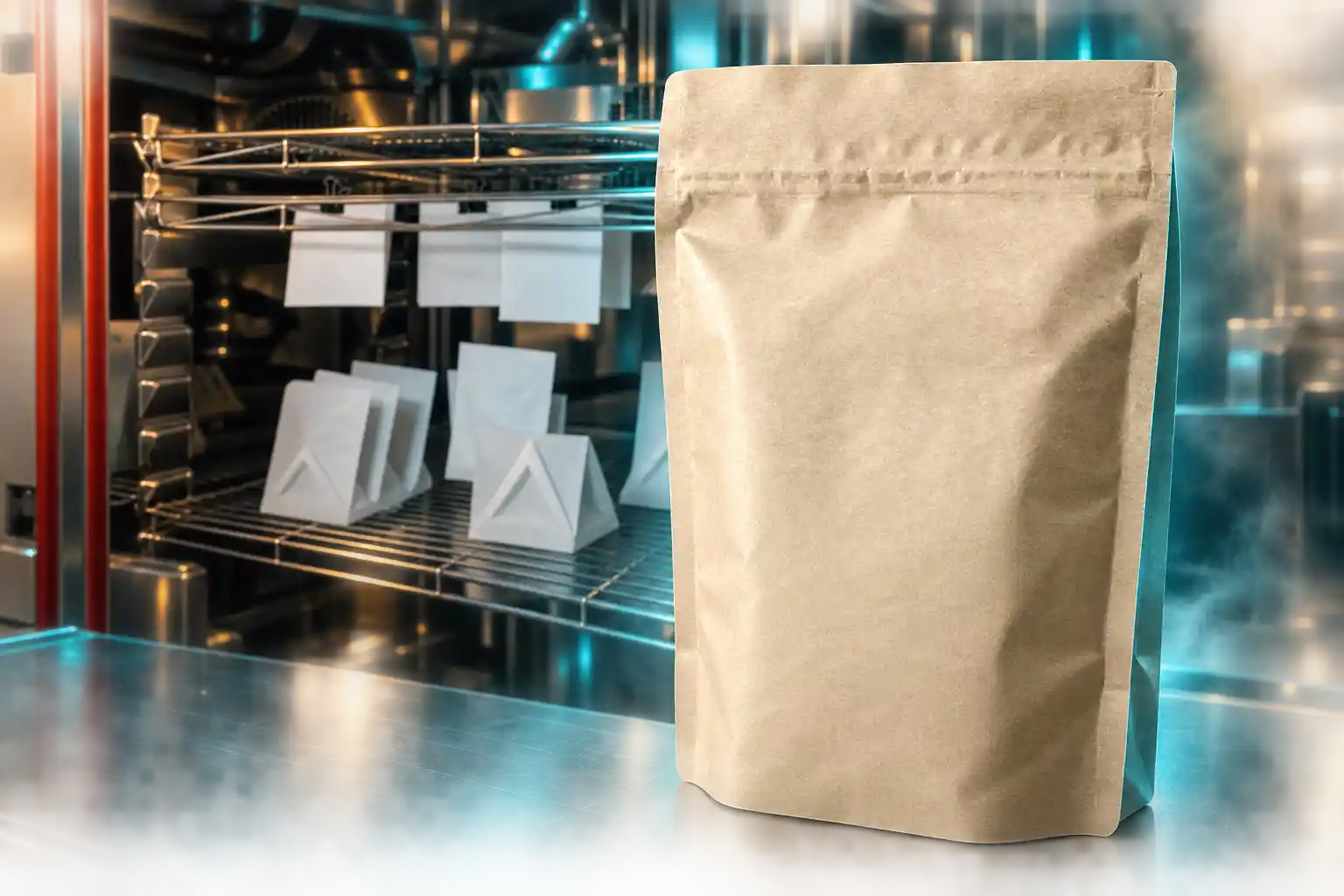
The Grease, Oxygen and Seal Problem
Pablo Costa, Unilever’s global head of packaging, digital and transformation, said flexible packs have to protect products, preserve shelf life, survive long supply chains and run on high-speed lines. That mix, he said, makes paper one of the hardest packaging problems his teams face. Unilever has more than doubled packaging R&D spend in recent years and now has more than 60 materials scientists on next-generation paper and barrier coats. The company says it has assessed over 3,000 materials and technologies, including ideas borrowed from pharmaceuticals and electronics.
Costa’s own briefing is blunt about why a paper crisp packet still fails if you leave the sheet alone.
WHERE BARE PAPER STILL LOSES
- The barrier: Paper has low barrier properties and rips easily, so oil, oxygen and moisture move through it unless something else is added.
- The seal: Paper does not melt, so heat-sealing a pack on a fast line is extra hard without a coating or a second layer.
- The hidden film: Many paper packs on sale still use a thin plastic film to block grease, hold a seal and protect what is inside, especially liquids such as shampoo and detergent.
Engineering paper to behave like plastic, Costa said, is one of the most technically complex materials jobs Unilever’s R&D groups now run. Soap left in a humid bathroom is a different brief from a dry biscuit. Fat in a stock cube is another again.
Why Coatings Sit Against the Food You Eat
A fried snack leaks oil. Chocolate and coffee stalemate if oxygen gets in. Powdered drinks clump if moisture moves either way. Plastic film handles those jobs at low weight and high line speed. Paper does not, unless a coating, a laminate or a second ply does the work that the fibre cannot.
PaperFlex’s public brief therefore spends less time on pulp and more time on biodegradable coatings that must also leave the pack recyclable as collection improves. That dual end-of-life aim (recyclable if systems catch up, able to break down if a sachet is dumped) is the test the March report set. It is also the part that touches food.
WHAT A SNACK PACK HAS TO STOP
| Job | Why it matters in food | Bare paper | Typical plastic film |
|---|---|---|---|
| Grease | Oil stains the sheet, weakens it and shortens shelf life | Soaks through | Holds |
| Oxygen | Chips go stale and fats turn rancid | Poor shield | Holds |
| Moisture | Snacks go soggy and powders clump | Absorbs water | Holds |
| Heat seal | The pack has to close on a fast factory line | Does not melt | Melts to a seal |
Unilever says the replacements it is screening include plant-based proteins and ultra-thin plastic-free coats made from abundant minerals such as silica. Those are food-contact layers, not branding. If they fail, the pack stains, the product goes off, or the line tears the web. If they work, they become the surface a chip or a cube sits against for months.
The Factory Line That Paper Still Jams
Unilever already put a version of this problem on a British shelf. Recyclable paper wrappers for Knorr stock cubes had to stop grease soaking through or staining the sheet, because the cubes contain fat. The company said that was not a simple material swap. Factory kit had to be adjusted so folded paper would run without tearing, and the wider supply chain had to change with it.
That is the specimen, not the press release. A cube that weeps fat will print a grease map on paper within days. A coating that blocks the fat has to survive a fold, a heat jaw and a warehouse, then sit next to food. Costa said early launches like Knorr are there to teach the lines and to watch how shoppers handle the new packs, not to claim the full dual-end-of-life brief is done.
On 16 September Unilever asked the same question in public that the consortium was formed to answer.
Can flexible plastic packaging be replaced by paper-based alternatives?
Unilever R&D is working to drive the transition as part of the new PaperFlex Consortium, convened by the Ellen MacArthur Foundation and powered by (RE)SET.https://t.co/rI2mbDGnvR#UnileverInnovation pic.twitter.com/cCeftfYsjA
— Unilever (@Unilever) September 16, 2026
Costa also said no single company can clear the cost, infrastructure and scaling barriers alone. That is the commercial case for pooling trials. It is also an admission that the paper snack bag people imagine when they hear “paper packaging” is still a lab and factory problem, not a finished grocery item.
India, Indonesia and the Sachet Leak
PaperFlex will not start in markets with kerbside film recycling. The group says it will focus where flexible plastic is widely used and where weak collection raises the chance that a wrapper ends up outdoors. A Foundation report published on 10 March 2026 named India, Indonesia, the Philippines, Thailand and Vietnam as the kind of markets where that leak is worst.
In those countries, the Foundation said, flexibles including sachets, wrappers and pouches make up 80% of the plastic packaging that ends up in oceans. Defruyt said in March that an estimated 20 trillion items were expected to enter oceans over the following 15 years. The report, later cited by the consortium as endorsed by 48 businesses, NGOs, investors and academics, warned that a careless paper swap could trade plastic pollution for forest loss or new chemical harm.
THE LEAK THE GROUP WANTS TO CUT
- Ocean share: Flexibles account for 80% of plastic packaging that ends up in oceans, per the Foundation’s March 2026 report.
- Fifteen-year load: Defruyt put the ocean inflow at an estimated 20 trillion items over 15 years from that March briefing.
- First markets: The report is aimed at high-leakage countries such as India, Indonesia, the Philippines, Thailand and Vietnam.
- Design test: Paper is only treated as a benefit if it meets six design criteria for paper packs, including chemical safety and local recycling.
The six tests are: responsible sourcing so forests are not degraded; responsible production that limits climate and water pressure; real technical, cost and shopper performance; local recyclability backed by collection; avoidance of hazardous chemicals and persistent plastic pollution; and a fit with a broader, socially inclusive circular strategy. The September launch note said work will proceed in interim steps toward all six, while food safety, product quality, consumer protection and the law still bind each pack.
Paper that is heavier than film can also drop out of a formal waste stream more readily. The Foundation’s own report flagged that leaked paper can add more mass at first, even if it does not persist like plastic. That is why the group keeps repeating “responsibly designed” rather than “paper.”
Greaseproof Paper Carried a PFAS History
The chemical-safety test is not theoretical. For years, the cheap way to stop grease on paper and paperboard was a fluorinated coating. Those per- and polyfluoroalkyl substances, or PFAS, resist grease, oil, water and heat. They were used on fast-food wrappers, microwave popcorn bags, take-out paperboard and pet-food bags, the exact family of packs that need an oil barrier.
The U.S. Food and Drug Administration found that, among authorised PFAS uses in food contact, grease-proofing agents on paper packaging were the ones that could produce dietary exposure of concern, because the molecules can migrate into food. Exposure to some types of PFAS has been linked to serious health effects, the agency said.
HOW GREASE-PROOFING PFAS LEFT U.S. PAPER
- 2020: After a post-market safety review, the FDA asked makers to stop selling certain PFAS grease-proofers for food contact in the United States.
- February 28, 2024: Jim Jones, then deputy commissioner for human foods, said those materials were no longer being sold for U.S. food packaging, ending the major source of dietary exposure to PFAS from that authorised use.
- January 6, 2025: The FDA determined that 35 food-contact notices for those PFAS grease-proofers were no longer effective because the uses had been abandoned.
- June 30, 2025: Stocks of paper packaging made before 6 January 2025 had to clear the U.S. supply chain.
PaperFlex has not named a chemistry. It has named a job: a biodegradable coat that still keeps oil in and oxygen out, then either recycles with paper or breaks down if a sachet is dropped. That is a food-contact specification with a pollution brief bolted on. Plant proteins and silica are two of the routes Unilever says it is already screening. They have to beat the old fluorinated trick without sending a new residue into a cube of stock or a bag of chips.
Trials Target Coatings, Lines and Shelf Life
Members say the work will run over the next few years, not on a published SKU calendar. Other FMCG firms that use small-format film are invited to join. Innovators, suppliers and investors are being asked to come in as well. The public site for that invitation is paperflexconsortium.org.
WHAT WE KNOW
- The members: Colgate-Palmolive, Mars, Nestlé, PepsiCo, Procter & Gamble and Unilever founded the group on 16 September 2026.
- The brief: Dual end-of-life paper flexibles, with trials on biodegradable coatings, product protection, shelf life, usability and line performance.
- The constraint: Each company still chooses its own packs; the consortium does not set a shared formula.
WHAT IS UNCONFIRMED
- A launch date: No member named a first PaperFlex-qualified snack bag, sachet or pouch.
- The coating: No chemistry, migration limit or food-contact dossier was published with the launch.
- The first country: High-leakage Asian markets are the stated focus, without a named first factory or brand.
Gaurav Goel, a professor at the Indian Institute of Technology Delhi who backed the March report, said the hard part is pairing material choice with data-driven tests so a pack protects both the product and the place it may end up. That is the second-order story inside the launch. Six of the world’s largest makers of snacks, sweets and soap have agreed they cannot get a paper wrapper to behave at grocery speed on their own. The thing they will actually trial is the thin layer that sits against the food.
Disclaimer: This article is news reporting and analysis of a packaging research group and of public food-contact rules. It is informational only and is not medical, nutritional or food-safety advice, and it does not tell readers which packaged foods to buy or avoid. Anyone with questions about chemical exposure, allergies or a personal diet should speak with a qualified physician, dietitian or other licensed clinician before changing what they eat. Figures, membership lists and trial plans reflect the company and regulator documents cited and may change as the consortium publishes results.

Europe’s Heat Killed 50,391 in Cities Official Counts Still Miss

Caesarean Surge Puts 20 England Maternity Units at Risk

The Protective Ring Around Care Homes Never Existed

Cooper Prioritises Children’s Corridor Care Without an Age Count

Oxford’s Ebola Vaccine Reaches Uganda as Doses Sit Unused

Pennsylvania Measles Deaths Collide With Falling MMR Coverage

Muscle-Boosting Drugs Near Approval for Children With SMA

FDA Approves XFG COVID Vaccines While the Advice Panel Is Frozen

Progranulin and JAK2 Split the Macrophages That Heal

After the ADHD Invoice, GPs and Waiters Carry the Cost
-
 NEWS2 months ago
Pennsylvania Measles Deaths Collide With Falling MMR Coverage
-
 FITNESS2 months ago
Muscle-Boosting Drugs Near Approval for Children With SMA
-
 NEWS2 months ago
FDA Approves XFG COVID Vaccines While the Advice Panel Is Frozen
-
 NEWS2 months ago
Progranulin and JAK2 Split the Macrophages That Heal
-
 MENTAL HEALTH2 months ago
After the ADHD Invoice, GPs and Waiters Carry the Cost
-
 NEWS2 months ago
Rasonque’s List Price Shifts the Pancreatic Cancer Bill
-
 NEWS2 months ago
Pennsylvania’s Two Measles Deaths Follow a Long Coverage Slide
-
 NEWS2 months ago
FDA Flagged This Sprout Plant 16 Months Before the Outbreak