
NEWS
Low Vaccination Pockets Carry Pennsylvania’s 903 Measles Cases
Pennsylvania’s measles outbreak has reached 903 cases and four deaths, clustered in counties where kindergarten measles coverage sits below the 95% line.

The Pennsylvania Department of Health said September 28 that 903 measles cases have been confirmed across 39 counties in 2026, with 176 hospitalizations and four measles-associated deaths. Thirteen of those infections were logged after September 25.
Lancaster County still holds 363 of the cases. Four of the 903 were in people fully vaccinated with MMR. The rest of the burden is falling on counties where kindergarten measles coverage is well under the 95% line that usually stops the virus from living in a community.
903 Cases Spread Across 39 Counties
The Monday update moved the state past 900. Cases are now in 39 of Pennsylvania’s 67 counties. State data put 31% of infections in people younger than 18. The largest adult groups are ages 25 to 49, then 18 to 24.
THE STATE TALLY ON SEPTEMBER 28
- Confirmed cases: 903 across 39 counties, with 13 added after September 25.
- Hospital stays: 176 people have been admitted during the outbreak.
- Deaths on the state books: 4 measles-associated deaths, the first in Pennsylvania in 35 years.
- Breakthrough infections: 4 fully vaccinated people, less than 1% of the total.
The department said measles puts nearly 20% of patients in the hospital and that death, though rare, occurs in 1 to 3 patients per 1,000 cases. The virus spreads when an infected person breathes, coughs, or sneezes, and it can stay infectious in air and on surfaces for up to 2 hours. Symptoms can start 7 to 21 days after exposure: fever, cough, runny nose, red watery eyes, then a rash that begins on the head and moves down.
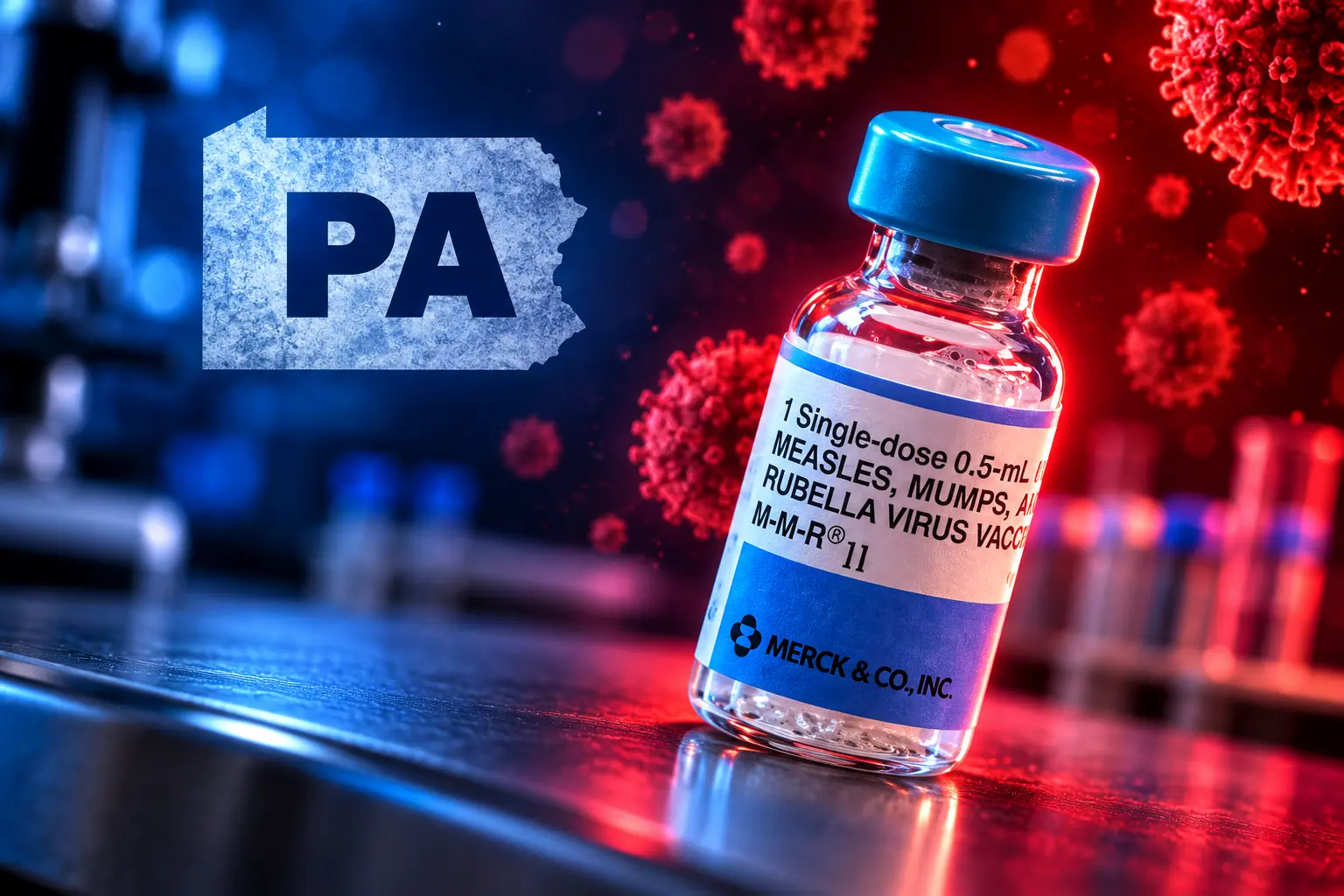
Lancaster County Still Holds the Most Cases
Lancaster remains the center of the Pennsylvania measles outbreak. Mifflin County is second. Chester County, on the Philadelphia suburban edge, has become the third-largest local cluster after tripling since early August.
WHERE THE CASES SIT
| County | Confirmed cases | Share of 903 |
|---|---|---|
| Lancaster | 363 | 40.2% |
| Mifflin | 105 | 11.6% |
| Chester | 83 | 9.2% |
| Other 36 counties | 352 | 39.0% |
Those three counties account for 61% of the state’s confirmed infections. Local doctors have said the true number is higher because some families never call a health department. Claudia Beiler, a Mennonite mother of five, said she knows families whose children had measles and never notified authorities.
Lancaster County is home to about 36,000 Old Order Amish people and 13,070 Old Order Mennonites. A 2019 estimate from state health-center staff put measles vaccination among Amish residents in the Lancaster area at about 25%, and later local estimates have stayed in that range. A 2022 survey found that 29.6% of Amish respondents believed vaccines were safe and effective, and that 30% of Amish children were vaccinated, down from 51.9% in 2014. Old Order Mennonite respondents in the same survey were far more likely to say vaccines work, at 71.6%.
That is not a single opinion. Stacey Pringle, who runs ChildProtect clinics at Lancaster General Health, has said about 80% of the patients who come through those clinics are from Plain communities, and that the idea they never vaccinate is false. Demand for MMR has risen at those clinics as the outbreak has grown. Nurses have also gone into homes, including in Chester County, where some people asked for a shot in private after changing their minds.
Why Kindergarten Shots Fell Below the 95% Line
Public-health agencies aim for about 95% measles coverage to keep the virus from spreading in schools. Lancaster County is not there. School immunization reports for the 2025-26 year put measles coverage among Lancaster kindergartners at 87.6%, down from 95.5% in 2017. Across kindergarten, seventh grade, and 12th grade, 15,709 of 17,794 Lancaster students were vaccinated, or 88.3%. Mifflin County’s student measles rate, at 86.1%, is lower still.
Statewide, Health Secretary Dr. Debra Bogen said in August that more than 93% of kindergartners, more than 94% of seventh-graders, and more than 96% of 12th-graders had both MMR doses. National kindergarten coverage for 2025-26 was 92.4%, per CDC data. The gap is in specific classrooms, not in every school.
MEASLES SHOT COVERAGE IN THE HARDEST-HIT PLACES
| Place | Coverage | Notes |
|---|---|---|
| Herd-immunity target | About 95% | Level used to stop sustained spread |
| Pennsylvania kindergartners | More than 93% | Bogen, 2025-26 school data |
| U.S. kindergartners | 92.4% | CDC, 2025-26 |
| Lancaster County kindergartners | 87.6% | Down from 95.5% in 2017 |
| Ephrata Mennonite kindergarten | 33.3% | 30 students; two pupils had measles in spring |
| Weavertown Mennonite kindergarten | Just over 25% | 23-student class, lowest published in the county |
Pennsylvania lets parents skip school shots for a religious objection or a “strong moral or ethical conviction similar to a religious belief,” in writing, with no doctor’s signature. At Ephrata Mennonite School, half the kindergarten class had administrator approval to attend without being up to date. Dr. Joan Thode, who practices at Roseville Pediatrics in Lancaster, said of the county’s long slide in uptake, “It’s what we knew ultimately would happen at some point. It was just this simmer, and now the pot’s boiling.”
Harrisburg and the CDC Count Different Deaths
Pennsylvania lists four measles-associated deaths. The CDC’s national table, updated September 25, lists 2* measles deaths in 2026, with an asterisk that the number may change, and 3 deaths for all of 2025. The split started with the first two Lancaster files and has not closed.
HOW THE FOUR DEATHS ENTERED THE RECORD
- August 14, 2026: A newborn boy dies at a birthing center in Strasburg Township, Lancaster County. Lung tissue tests positive for measles. The county coroner, Dr. Stephen Diamantoni, says the immediate cause is a traumatic laceration of the spleen and that the pathologist did not treat measles as a cause. Measles is listed on the death certificate as a contributing condition.
- August 25, 2026: The state health department announces two measles-associated deaths in unvaccinated Lancaster County residents, the first in 35 years. Gov. Josh Shapiro says, “This illness and death from measles is completely preventable.” The second death is later described as a girl about 6 weeks old with Amish lethal microcephaly, a severe genetic condition, who also had measles.
- August 26, 2026: U.S. Health Secretary Robert F. Kennedy Jr. writes that the announcement “may even have been altogether fabricated by one of the Governor’s hopeful staffers.” Bogen replies that she has reviewed the case files and can confirm two measles-associated deaths. CDC Director Dr. Erica Schwartz later keeps the two deaths off the public national tally while the agency reviews them.
- September 15, 2026: The state adds two more deaths, both in unvaccinated people. The Jefferson County coroner attributes a 40-year-old woman’s death to respiratory failure as a result of measles; she had COPD and was on oxygen. The Mifflin County coroner attributes an 18-year-old’s death to acute disseminated encephalomyelitis, a rare inflammatory attack on the brain and spinal cord after measles.
Kennedy’s post is the document that turned a county coroner’s doubt into a national argument:
Governor Shapiro's unseemly rush to Lancaster County to convene a national press conference and his giddy delight in announcing two measles deaths was a morose commentary on the contemporary political dialogue. The performance was a replay of the Democrats' COVID playbook:… https://t.co/LvZf3br1dB
— Secretary Kennedy (@SecKennedy) August 26, 2026
I have thoroughly reviewed the case investigation information and sadly can confirm that there were two recent measles-associated deaths in Lancaster County.
Dr. Debra Bogen, Pennsylvania secretary of health, on X
On its measles page, the department publishes a measles-associated death case definition modeled on flu and RSV death rules. A confirmed measles-associated death, under that rule, is a death within 30 days of symptom onset in someone with clinical measles and a positive lab test, and not from an unrelated cause such as a car crash. The department says a death would not count if the person had recovered, if more than 30 days had passed, or if there was no lab evidence of measles. CDC staff are working with the Council of State and Territorial Epidemiologists on a national death definition. Until that exists, Harrisburg and Atlanta are counting with different tools.
In a September letter to Schwartz, Bogen wrote that “the CDC’s choice not to publicly recognize the deaths undermines our response,” and she warned that the state would pull an Epi-Aid request if the federal agency would not communicate the deaths clearly. Dr. Amesh Adalja, an infectious-disease physician and senior scholar at the Johns Hopkins Center for Health Security, said the coroner and the state were often answering different questions, one clinical and one for surveillance, and that Harrisburg left the public to guess which was which.
Infants Too Young for MMR Remain Exposed
Routine MMR starts at 12 months. In an outbreak, a first dose can be given as early as 6 months, with later doses still required on the regular schedule. Both Lancaster infants were younger than that window. Calling them unvaccinated is accurate on a form and easy to mishear as a choice the children made.
The Amish family of the newborn told interviewers they did not hold strong political views on vaccines. The father was the only person in the household who had been vaccinated. The pregnant mother fell ill with measles after other children in the family got sick, went into labor about a month early, and delivered a baby who was not breathing. The midwife told the parents measles had played a role. They learned about the ruptured spleen later, from officials, not from the delivery room.
WHAT WE KNOW
- Lab tests: Both Lancaster infants tested positive for measles, and the state epidemiology team reviewed the files before the August 25 announcement.
- Later deaths: County coroners in Jefferson and Mifflin named measles complications (respiratory failure and ADEM) as the causes in the September deaths.
- Hospital load: 176 measles patients have been admitted in Pennsylvania this year, a figure that does not depend on the death argument.
WHAT IS UNCONFIRMED
- The spleen rupture: Diamantoni and the autopsy pathologist say measles did not cause the newborn’s death; some pediatric infectious-disease doctors say congenital measles can enlarge and thin the spleen and that a rupture in labor is a known risk.
- The CDC asterisk: The federal table still does not match Pennsylvania’s four, and the agency has not said when the review of the infant files will end.
The 6-week-old: Amish lethal microcephaly is usually fatal in early infancy, so how much measles shortened that life is not settled on the public record.
The loudest fight on this outbreak is the death count. Grant the dispute on the two infants and the other numbers do not move: 363 cases in Lancaster, 105 in Mifflin, 176 hospital stays, an 18-year-old dead of ADEM after measles, a 40-year-old dead of measles pneumonia on a background of COPD. Clinicians in those counties are still the ones in the rooms with the rash, the oxygen, and the parents.
A Record August for MMR Doses
State health officials have given more than 5,300 MMR shots at 173 pop-up clinics in affected communities since the outbreak began in late April. Dozens more clinics are on the calendar. State health-center staff have given more than 7,900 MMR doses in Pennsylvania in 2026.
Providers usually give about 25,000 MMR doses in a month. In August they gave more than 49,000. In the first three weeks of September they gave more than 38,000. Bogen has called the MMR shot, after two doses, 97% protection for life. People with two documented doses do not need another. Adults with one dose, or no record, are being told to ask a clinic or pharmacy.
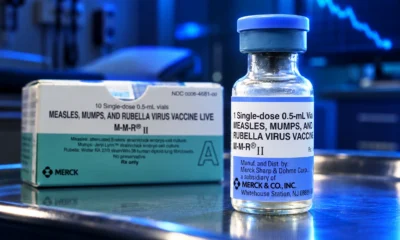
The department’s advice matches the CDC’s: two doses of MMR vaccine give the strongest protection against measles.
WHERE PENNSYLVANIA SAYS TO GET MMR
- Clinics and offices: Pediatric offices, primary-care doctors, pharmacies, and Federally Qualified Health Centers.
- Public sites: County or municipal health departments and Pennsylvania’s 59 state health centers.
- No-cost shots for kids: Children 18 and under on Medicaid, plus uninsured and underinsured children, can get MMR at no cost at state health centers through Vaccines for Children.
- Hotline: Anyone who thinks they were exposed, or who has symptoms, can call 877-PA-HEALTH (877-724-3258).
Most private plans cover MMR at no extra cost, though the department still tells people to check. The shot is the same product that ended endemic measles in the United States in 2000. It has not changed. The map of who has it has.
The National Count Tops All of 2025
As of September 24, the CDC had 3,659 confirmed measles cases in the United States in 2026, already above the 2,289 cases recorded for all of 2025. Forty-seven jurisdictions reported 3,642 of those infections; 17 were in international visitors. There have been 40 outbreaks this year, and 95% of cases (3,478 of 3,659) are outbreak-linked.
Among 2026 cases, 18% are under age 5, 43% are 5 to 19, and 38% are 20 or older. Ninety-five percent are unvaccinated or have unknown status; 2% had one MMR dose and 3% had two. Nine percent (327 of 3,659) have been hospitalized. Those are national shares. Pennsylvania’s own hospital rate, 176 of 903, is higher, and its death file is the one Washington will not fully adopt.
South Carolina and Utah still sit behind Pennsylvania in the national case list. Texas, which had a large 2025 outbreak, is no longer the center of the 2026 map. The virus has the same biology it had when it was declared eliminated in 2000: two hours in a room, a rash a week or two later, and almost no spread when two-dose coverage holds. In Lancaster kindergartens at 87.6%, and in classrooms where only a third of the children have the shot, that biology is doing what it always does.
State clinics are still opening on the calendar. The virus still has room to move in counties where a kindergarten class can sit down with a quarter of the room unprotected, and with infants who cannot get the shot at all.
Disclaimer: This article is news reporting and analysis of a public-health outbreak for general information. It is not medical advice, a diagnosis, or a recommendation about whether any person should receive or delay the MMR vaccine. Readers who have been exposed to measles, who have symptoms, or who need advice about vaccination, pregnancy, or a child’s schedule should speak with a licensed physician, pediatrician, or local health department before acting. Case counts, death classifications, clinic schedules, and vaccination figures reflect the Pennsylvania Department of Health and CDC sources cited here as of September 28, 2026, and those figures can change as investigations continue.

Europe’s Heat Killed 50,391 in Cities Official Counts Still Miss

Caesarean Surge Puts 20 England Maternity Units at Risk

The Protective Ring Around Care Homes Never Existed

Cooper Prioritises Children’s Corridor Care Without an Age Count

Oxford’s Ebola Vaccine Reaches Uganda as Doses Sit Unused

Pennsylvania Measles Deaths Collide With Falling MMR Coverage

Muscle-Boosting Drugs Near Approval for Children With SMA

FDA Approves XFG COVID Vaccines While the Advice Panel Is Frozen

Progranulin and JAK2 Split the Macrophages That Heal

After the ADHD Invoice, GPs and Waiters Carry the Cost
-
 NEWS2 months ago
Pennsylvania Measles Deaths Collide With Falling MMR Coverage
-
 FITNESS2 months ago
Muscle-Boosting Drugs Near Approval for Children With SMA
-
 NEWS2 months ago
FDA Approves XFG COVID Vaccines While the Advice Panel Is Frozen
-
 NEWS2 months ago
Progranulin and JAK2 Split the Macrophages That Heal
-
 MENTAL HEALTH2 months ago
After the ADHD Invoice, GPs and Waiters Carry the Cost
-
 NEWS2 months ago
Rasonque’s List Price Shifts the Pancreatic Cancer Bill
-
 NEWS2 months ago
Pennsylvania’s Two Measles Deaths Follow a Long Coverage Slide
-

 NEWS2 months ago
FDA Flagged This Sprout Plant 16 Months Before the Outbreak