
NEWS
NHS HPV Home Testing Kits Follow a Path Already Measured
England is offering HPV home testing kits to nearly 4 million under-screened women, copying a model Australia, the Netherlands and Sweden have already measured.

NHS England began offering free HPV home testing kits on 25 August 2026 to women aged 30 to 65 who missed earlier cervical screening. Invitations say nearly 4 million women will be offered a postal swab if they skipped previous clinic invites, with the sample checked for high-risk human papillomavirus.
Australia, the Netherlands and Sweden already ran versions of this offer. Their figures show a real lift among never-attenders, and a second, quieter number: how many HPV-positive women then attend the clinic test the kit cannot replace.
Millions of women in England are to be offered HPV self-testing kits, with the service rolling out today.
Those who haven’t attended cervical screening following previous invitations will be offered a kit as an alternative way to take part.
➡️ https://t.co/XKVLe6DiQQ pic.twitter.com/wgUL1xtSme
— NHS England (@NHSEngland) August 25, 2026
A Swab in the Post Is Only the First Test
The kit holds a swab, described by NHS England as similar to a long cotton bud, used to collect a vaginal sample at home. The sample is posted back at no cost and tested in NHS labs for high-risk HPV, a group of sexually transmitted viruses that cause no symptoms in most people and, NHS England’s 2040 plan says, sit behind 99.8% of cervical cancers.
A positive result does not diagnose cancer and does not check the cervix for cell changes. It flags the virus. Those patients are then asked to book a standard cervical screening appointment at a GP surgery or sexual health clinic, where a nurse or doctor takes a sample from the cervix. Dr Sue Mann, national clinical director for women’s health at NHS England, put the offer in those terms: an extra route for people who have not taken up earlier invites, not a swap for the clinic test.
HOW THE HOME PATHWAY RUNS
- The invite: Eligible people are contacted through the NHS App, a text, an email or a letter, and only after that contact can they order.
- The order: The kit is requested through the NHS App or an NHS online account; it is not automatically dropped through the letterbox.
- The sample: A vaginal swab is taken at home in minutes and posted back free.
- The lab: Staff test the swab for high-risk HPV, the same virus target used in clinic screening since HPV became the first-line test in England in 2019.
- The follow-up: High-risk HPV still means a clinician-taken cervical sample to look for cell changes, with colposcopy if those results require it.
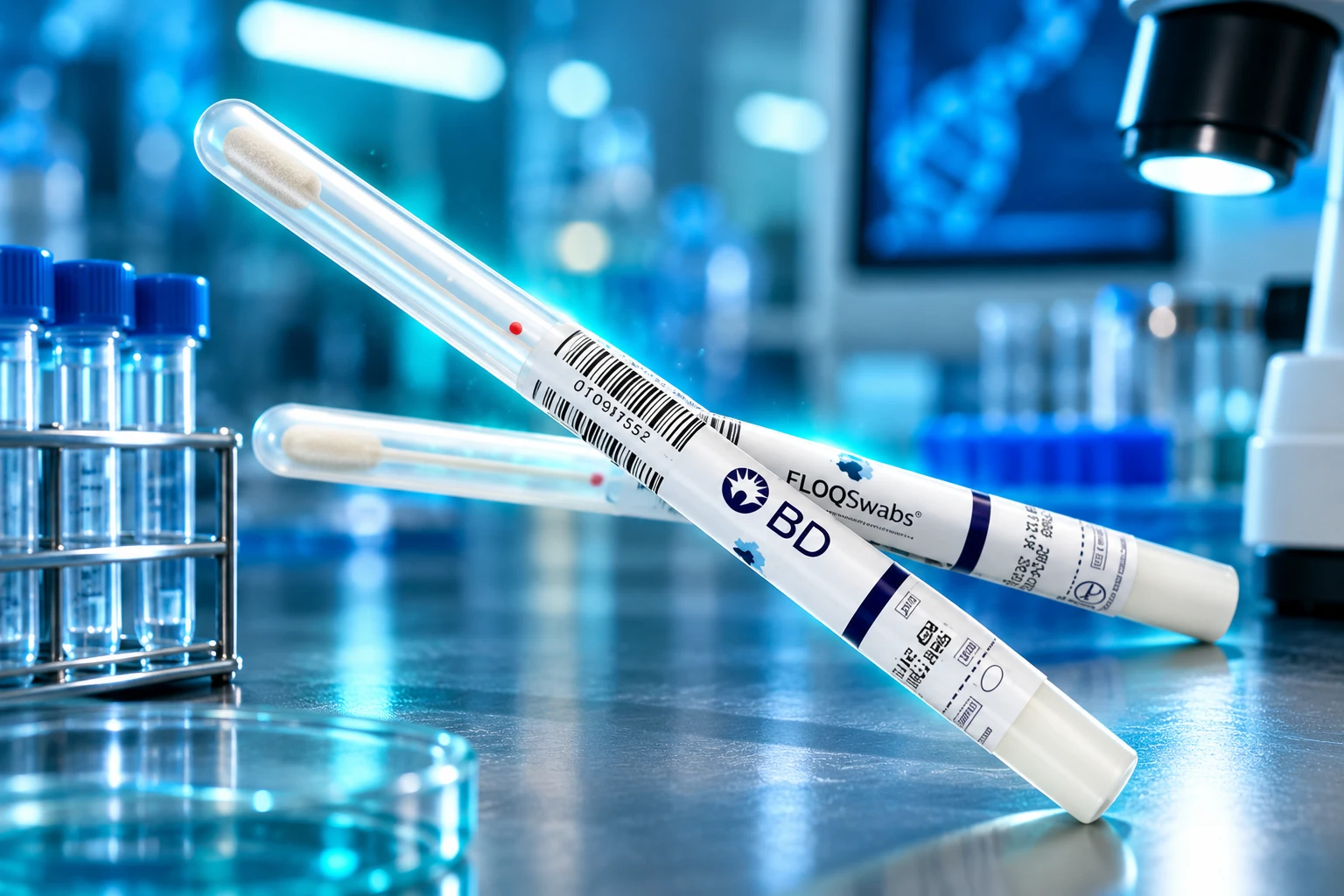
The UK National Screening Committee’s HPValidate study, run in the English programme from 2021 to December 2023, found that four device and test combinations worked well against matched clinician samples, including FLOQswabs with the Cobas HPV assay. More than 6,000 people took part at GP practices and colposcopy clinics. A user survey of 2,320 people who self-sampled at a GP surgery rated the experience as excellent (75%) or good (23%), and 69% said they would choose self-sampling if offered a choice, while 19% would still prefer a clinician.
People who already attend clinic screening on time are told to keep booking as normal. Anyone who has ever been invited can still book a clinic appointment, even if that letter is months or years old. The home offer is invitation-only and is being rolled out in phases.
London’s YouScreen Trial Raised Screening by 1.6 Points
The national decision rests on YouScreen, a 2021 implementation trial in North London run with King’s College London and NHS England. Non-attenders aged 25 and a half to 64 who were at least six months overdue were offered a kit either in the GP practice or by post. NHS England says the UK National Screening Committee used that evidence to recommend a wider rollout, and that the trial implied self-testing could raise the numbers screened in England by about 400,000 a year.
The measured coverage shift inside the trial was smaller. At participating practices, mean intervention time 7.5 months, coverage rose 1.6 percentage points against non-participating practices. Per protocol, the number of non-attenders screened per month rose 22%. On an intention-to-treat reading it rose 12%. Those are the figures a later national programme has to beat, or match, once the novelty of a press launch fades.
| How the kit was offered | People sent or handed a kit | Share who returned a sample |
|---|---|---|
| Opportunistic offer at the GP practice | 9,248 | 65.5% (6,061) |
| Kit sent directly by post | 17,604 | 12.9% (2,777) |
Return rates split hard by channel. A kit placed in someone’s hand at the surgery came back about five times as often as a kit that arrived in the post. England’s national model is closer to the weaker channel: an invite, then an order through the app or an online account, not a swab handed over during an unrelated GP visit. YouScreen still reached the groups the clinic pathway loses. Among those who sent samples, 64% were from ethnic minority groups and 60% lived in the two most deprived national quintiles, matching the overdue population the trial was built to find.
Dr Anita Lim, chief investigator of YouScreen and a visiting senior research fellow at King’s College London, said the London work showed self-sampling could reach people who find it hard to attend usual screening, including those from diverse and underserved groups. That is the strongest case for the kit. The 12.9% mailed return is the operational warning attached to it.
Australia Let Every Eligible Woman Self-Collect
England is offering the swab only to people who have already ignored clinic invites, and only from age 30 in this first phase. Australia went the other way. After July 2022, self-collection through primary care was opened to every eligible participant, not only the overdue. A Lancet Public Health cohort study, reported by CIDRAP, found self-collected samples rose from 1.2% of tests in the second quarter of 2022 to 26.9% in the fourth quarter of 2023. Researchers later noted national data showing self-collection at 46% of all HPV tests by June 2025.
Uptake was highest where clinic screening had already failed. Among women more than 10 years overdue, 51.9% of tests were self-collected. In very remote areas the share was 53.9%. HPV positivity was higher in self-collected samples (16.4%) than in clinician samples (14.8%), which fits a pool that includes more long-term non-attenders. Detection of high-grade lesions and cancers at colposcopy, after adjustment, was similar between the two collection methods.
| Programme | Who can self-sample | Participation change | Follow-up after HPV is found |
|---|---|---|---|
| England (YouScreen, 2021) | Non-attenders aged 25 to 64 | Coverage +1.6 points at trial practices | Clinician cervical sample required |
| Australia (universal from 2022) | All eligible participants | 26.9% of tests by late 2023; 46% by June 2025 | 83.2% had cytology within 6 months (types other than 16/18); 81.3% reached colposcopy for HPV 16/18 |
| Netherlands (kits mailed with the invite) | Everyone invited | Overall participation 42.1% to 49.9% | Reflex cytology 93% to 87%; first-time screeners 84.1% to 70.8% |
| Sweden, Region Skåne | Population programme | 37% of distributed kits returned (208,386 of 557,976) | 81% of HPV-positive women attended follow-up |
The Dutch programme is the closest postal cousin. Direct mailing of self-sampling kits lifted overall participation from 42.1% to 49.9%, and vaginal self-sampling itself jumped from 21.9% to 61.9%. First-time participants, the previous non-attenders, moved from 32.1% to 78.1% self-sampling. Thirty-year-olds, the age group England is not mailing in this phase, showed the largest jump after the primary invite, from 30.6% to 40.3%. Self-sampling can move people who have never been screened. It does it faster when the kit arrives without a second click to order.
HPV-Positive Results Still Send Women Back to Clinic
Every successful home programme creates the same next job. The swab finds HPV. Someone then has to look at the cervix. In England that look is a clinician-taken sample, with colposcopy if needed. In Australia, HPV 16 or 18 on a self-sample can go straight to colposcopy, and types other than 16/18 still need cytology. In the Netherlands, HPV-positive self-samplers must return for reflex cytology. That return is the leak.
There are lots of reasons that may stop women from getting their cervical screening, embarrassment, lack of time, or worries about discomfort, and these kits provide a discreet and convenient option we hope will encourage more women to take up the life-saving test.
Dr Sue Mann, National Clinical Director for Women’s Health, NHS England, 25 August 2026
Embarrassment and discomfort are the reasons NHS England is posting a swab. They are also the reasons a share of HPV-positive women will not book the speculum exam the kit is designed to trigger. After the Netherlands moved to mailed kits, reflex cytology among HPV-positive self-samplers fell from 93% to 87%. Among first-time participants the drop was steeper, from 84.1% to 70.8%. Those are the patients the home kit was meant to rescue, and almost three in ten did not complete the cytology step.
Sweden’s figures sit in the same band. In Region Skåne, 19% of valid self-samples were HPV-positive and 81% of those women attended follow-up. A separate Swedish study of long-term non-attenders found 80.2% of HPV-positive women attended within 12 months, and 9 cervical cancers were found among 6,582 tested, a rate of 137 per 100,000 in that overdue group. The kit finds disease that clinic letters did not. It finds it only if the second appointment happens.
Australia’s own follow-up is the more reassuring end of the range: 83.2% of people with HPV types other than 16/18 returned for cytology within six months, and colposcopy within six months after HPV 16/18 was similar for self-collection (81.3%) and clinician collection (80.5%). Even there, researchers writing in The Lancet Public Health warned that loss to colposcopy was greater for self-collectors when they had to take a cytology step before colposcopy, and that timely follow-up needs clinician support. England has chosen that cytology-first path for self-samples.
The public argument in the first 48 hours of the English launch barely touched that leak. Replies to the NHS’s own posts argued about whether the campaign said “woman.” The sharper clinical question from overseas programmes is how many HPV-positive self-samplers walk into the room they have spent years avoiding. Home kits also serve a group the embarrassment story leaves out: people who cannot physically get to a smear because of illness or disability, for whom a postal swab is access, not discretion.
Why Women Aged 25 to 29 Are Left Out for Now
The main cervical screening programme invites women and people with a cervix from 24.5 to 64. YouScreen used that full overdue range. HPValidate recruited from 24. The national home kit, in this phase, starts at 30 and runs to 65. NHS England calls it a phased rollout for people who have not attended after previous invitations. It has not published a date for 25- to 29-year-olds, or for people who already attend on time and might prefer a swab at home.
That cut sits on the weaker part of the register. Coverage is lowest in the younger band. NHS screening standards for 2023 to 2024 put coverage at 67.5% for ages 25 to 49, against 74.9% for ages 50 to 64. None of the 106 sub-ICBs in England met the 80% acceptable threshold for the younger group. The Dutch mailed-kit data found the largest lift after a primary invite among 30-year-olds, the age England is including, and a sharp rise in self-sampling among 30- to 34-year-olds, from 25.1% to 83.7%. The group just below 30 remains on clinic letters only, in a country where younger coverage has been the soft spot for a decade.
Athena Lamnisos, chief executive of the Eve Appeal, welcomed the focus on audiences who need the offer most in this first stage and said self-testing at home would be a step-change for many, while stressing it is not a replacement for clinician screening. Michelle Mitchell, chief executive of Cancer Research UK, said a test done by a nurse or doctor remains best, and that home HPV kits will help more people take part in a way that works for them. Both are describing an add-on for non-attenders, which is what NHS England has actually launched.
Yvette Cooper, the health secretary, said the kits would be offered to four million women who are behind on screening, and called that the future NHS, acting early to stop preventable deaths. Health officials also still tell vaccinated people to attend. The HPV vaccine does not cover every high-risk type, so a small chance of cervical cancer remains after immunisation. Screening and vaccination are separate pillars, and the home swab sits inside screening only.
Coverage Is 68.8%, and Colposcopy Lists Are Already Long
The latest national snapshot is still the 2023-24 Cervical Screening Programme report from NHS England Digital. At 31 March 2024, 68.8% of eligible people were up to date among those aged 25 to 64, a 0.1 point rise on 68.7% the year before, and well under the 80% target. About 4 million people are not up to date on NHS estimates. Invitations went to 5.12 million people, up 10.7%, while 3.25 million were tested, down 5.3% on the year. More letters, fewer samples.
THE 2023-24 REGISTER
- Overall coverage: 68.8% of eligible 25- to 64-year-olds were adequately screened at 31 March 2024.
- Younger band: 67.5% coverage among 25- to 49-year-olds, with an eligible population of 10,804,705.
- Older band: 74.9% coverage among 50- to 64-year-olds, with an eligible population of 5,431,470.
- Colposcopy load: 251,251 referrals in 2023-24, up 1.8% from 246,762 the year before.
Nuffield Trust analysis of the same series shows total coverage falling from 76% in 2010-11 to 69% in 2023-24, with the younger group dropping from 74% to 66% on that reading. Cervical cancer incidence in England is 65% higher in the most deprived fifth of areas than in the least, NHS England says, citing Cancer Research UK. That is the inequality YouScreen was designed to dent, and the inequality a 12.9% mail-back rate will not wipe out.
If the kits work as intended, more previously unscreened people will test HPV-positive and need a clinician sample, then in some cases colposcopy. NHS England’s elimination plan already flags shortages in colposcopy and pathology, and says demand on that workforce will fluctuate with population growth, vaccine uptake, longer screening intervals, and the introduction of self-sampling. In 2023-24, 77.0% of people received biopsy results within four weeks against an acceptable standard of 90%, and only 73.5% of those referred after two inadequate tests were offered a colposcopy appointment within six weeks against a 99% standard. The second appointment is not a spare room waiting for a wave of home-test positives.
The 2040 Target Still Depends on a Second Appointment
NHS England has pledged to eliminate cervical cancer by 2040, matching the World Health Organization threshold of below 4 cases per 100,000 women. England’s incidence is 9 per 100,000. The disease still kills about 685 people a year in England. Screening, NHS England says, saves about 5,000 lives a year. Modelling published in BMJ Public Health in 2026 estimated that with current screening and vaccination levels, England reaches the 4 per 100,000 mark around 2050 to 2052, not 2040, and that raising uptake in under-screened groups has the single greatest effect, pulling elimination 11 to 13 years closer, if follow-up of abnormal tests also improves.
WHO 90-70-90, AND WHERE ENGLAND STANDS
- Vaccination: 90% of girls fully vaccinated by age 15; in 2023-24, 76.7% of girls in England had been vaccinated by year 10, and 72.9% of year 8 girls had dose 1.
- Screening: 70% of women screened with a high-performance test by 35 and again by 45; 76.9% of women aged 35 to 39 in England have a test recorded before their 35th birthday, while 75.9% of those aged 40 to 44 were screened in the previous 5 years.
- Treatment: 90% of women with cervical disease treated; 88.3% of cervical cancers in England had chemotherapy, radiotherapy or tumour removal in the period NHS England cites, rising to more than 96% at stages 1 to 3.
- Incidence: below 4 per 100,000 by 2040; current rate 9 per 100,000.
The screening pillar is closer to WHO’s 70% than the vaccination pillar is to 90%, and closer than incidence is to 4. London’s year 10 HPV coverage for girls was 64.9% in 2023-24, against 82.7% in the South East, so the vaccine gap is regional as well as national. A home swab cannot close that. It can, if the YouScreen mailed return is beaten, pull some of the 4 million overdue people into HPV testing. Cancer prevention still happens when an HPV-positive woman has cells removed, not when a swab goes back in the post.
Invitations started on 25 August. The next number that will tell whether England is repeating Australia’s rise or the Netherlands’ follow-up drop is not how many kits are ordered this autumn. It is how many HPV-positive self-samplers complete a clinician sample, and how quickly colposcopy can see them.
Disclaimer: This article is news reporting and analysis of NHS England’s cervical screening offer, and it is for information only. It is not medical advice, a screening result, or a recommendation that any reader order a kit, delay a clinic appointment, or interpret an HPV test at home. People with questions about eligibility, symptoms such as unusual vaginal bleeding or pelvic pain, pregnancy, or a previous abnormal screening result should speak to a GP, practice nurse, or sexual health clinician before acting. Figures, age bands and invitation rules reflect NHS England, NHS Digital, UK screening studies and overseas programme data as of 27 August 2026 and will change as the phased rollout continues.

Europe’s Heat Killed 50,391 in Cities Official Counts Still Miss

Caesarean Surge Puts 20 England Maternity Units at Risk

The Protective Ring Around Care Homes Never Existed

Cooper Prioritises Children’s Corridor Care Without an Age Count

Oxford’s Ebola Vaccine Reaches Uganda as Doses Sit Unused

Pennsylvania Measles Deaths Collide With Falling MMR Coverage

Muscle-Boosting Drugs Near Approval for Children With SMA

FDA Approves XFG COVID Vaccines While the Advice Panel Is Frozen

Progranulin and JAK2 Split the Macrophages That Heal

After the ADHD Invoice, GPs and Waiters Carry the Cost
-
 NEWS2 months ago
Pennsylvania Measles Deaths Collide With Falling MMR Coverage
-
 FITNESS2 months ago
Muscle-Boosting Drugs Near Approval for Children With SMA
-
 NEWS2 months ago
FDA Approves XFG COVID Vaccines While the Advice Panel Is Frozen
-
 NEWS2 months ago
Progranulin and JAK2 Split the Macrophages That Heal
-
 MENTAL HEALTH2 months ago
After the ADHD Invoice, GPs and Waiters Carry the Cost
-
 NEWS2 months ago
Rasonque’s List Price Shifts the Pancreatic Cancer Bill
-
 NEWS2 months ago
Pennsylvania’s Two Measles Deaths Follow a Long Coverage Slide
-

 NEWS2 months ago
FDA Flagged This Sprout Plant 16 Months Before the Outbreak