
NEWS
Hospitals Sue to Stop the 340B Rebate Clock
Hospitals sued in Maine to freeze a 340B rebate pilot that would make them pay wholesale first on 21 listed drugs.

The American Hospital Association sued the Trump administration on Oct. 9 to freeze a 340B rebate pilot set for Jan. 1, 2027. Hospitals would still get the statutory ceiling price on 21 listed products. They would pay wholesale first, file claim-level data, and wait for the difference.
That delay is the injury named in court. The filing does not ask a judge to cancel 340B discounts. It asks the U.S. District Court for the District of Maine to stop a model that turns those discounts into rebates on drugs already selected for Medicare price negotiation.
Hospitals Are Suing to Keep the Discount at Purchase
The AHA, the Maine Hospital Association, Eastern Maine Medical Center, Unity Medical Center in Grafton, N.D., Dallas County Medical Center in Fordyce, Ark., and Nathan Littauer Hospital & Nursing Home in Gloversville, N.Y., filed a complaint for declaratory and injunctive relief against HHS, HRSA, Secretary Robert F. Kennedy Jr., and HRSA Administrator Thomas J. Engels. The case is 1:26-cv-00515-LEW.
Hospital analyses put new administrative costs above $1 billion a year. HRSA’s own paperwork estimate is $537.2 million a year, and that figure covers only the work of sending claims data to manufacturers. The complaint says the agency left out rebate reconciliation, startup costs, cash-flow (the “float”), and lost cost-of-goods-sold benefits.
When the government makes a change of this magnitude, it must fully consider what it will mean for the patients and communities that rely on 340B hospitals every day.
Steve Walsh, president and CEO, American Hospital Association
Walsh said member hospitals sent detailed cost evidence and offered other ways to add transparency. “It’s unfortunate that we are back in court challenging the same flawed program,” he said.
Hospitals sue – again – to halt Trump administration’s 340B rebate pilot https://t.co/6A0hbIEJxm via @statnews
— Tara Bannow (@TaraBannow) October 9, 2026
Jeff Austin, president of the Maine Hospital Association, said Maine hospitals “already operate with an average of less than two weeks cash-on-hand.” The complaint, quoting the First Circuit from the last round, calls the float an interest-free loan from hospitals to drugmakers.
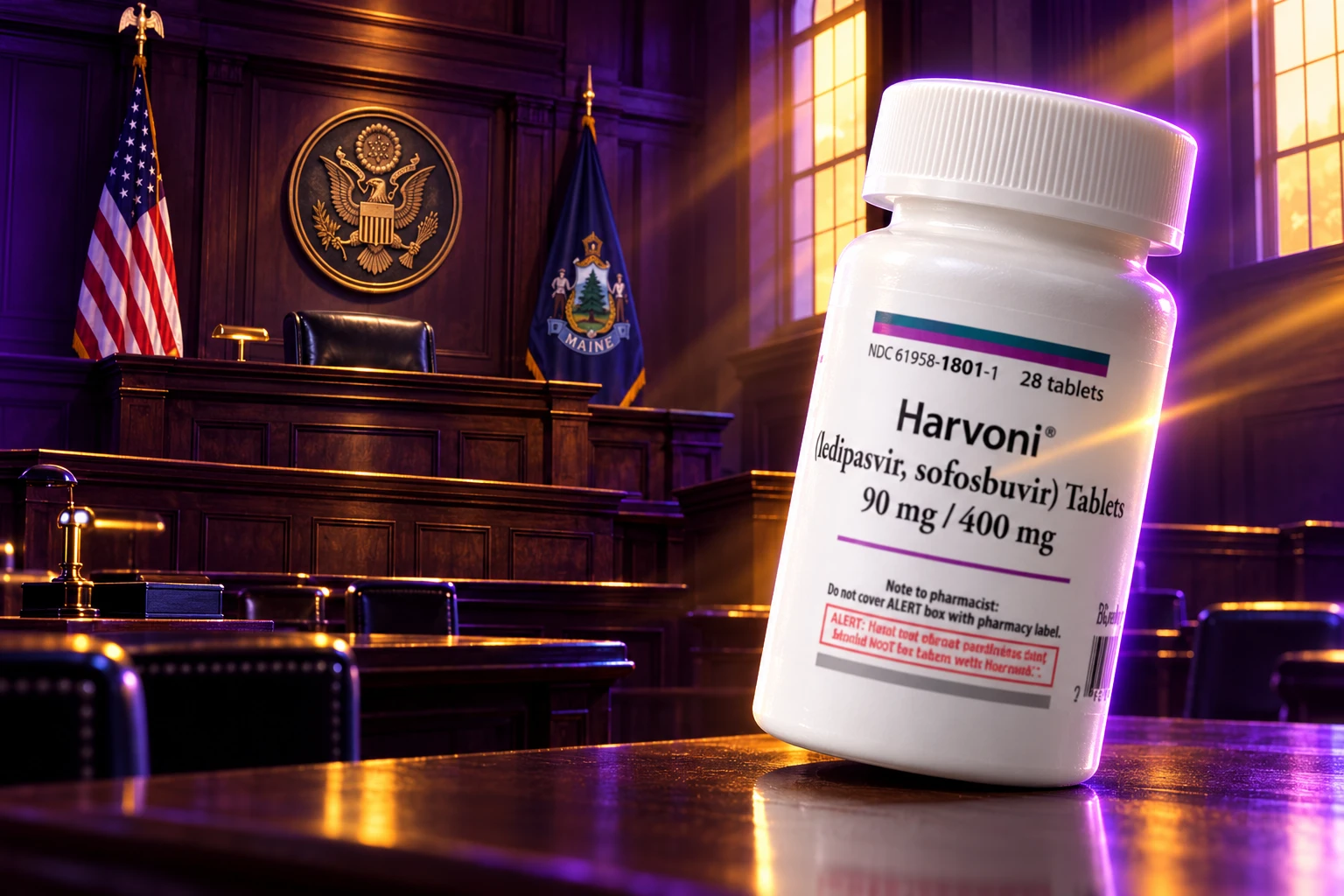
What the Rebate Clock Does to Hospital Cash
Covered entities would keep ordering the listed drugs through their existing 340B wholesaler account. The price loaded into that account would be wholesale acquisition cost, not the 340B ceiling. After a drug is dispensed, the hospital would send claims data to the Beacon Rebate Model Platform, which every approved plan names as the IT system. The manufacturer would then owe a rebate equal to WAC minus the 340B ceiling price on the date of dispense, paid per unit.
THE REBATE CLOCK HOSPITALS WOULD RUN
- Claims window: Covered entities submit data within 45 calendar days of dispense, with some exceptions for 340B-status changes and other delays.
- Pay-or-deny deadline: Manufacturers must pay or deny rebates within 10 days of a complete submission; an incomplete file restarts the clock.
- Who pays for Beacon: HRSA requires manufacturers, not hospitals, to cover the IT platform.
- What denials cannot cite: Plans may not refuse a rebate for covered-entity eligibility, diversion, or Medicaid duplicate discounts; those fights go to HRSA.
- Who must play: Drugmakers opt in. Covered entities that want the statutory discount on a listed drug have to use the rebate path.
HRSA limits the file to listed pharmacy and medical claim fields: dates, NDC-11, quantity, prescriber, service provider, 340B ID, and plan identifiers. Purchasing data and encounter-level records are out. Manufacturers may not reuse the file for other business. HRSA says it will publish a first-year evaluation by April 30, 2028.
The ceiling price does not disappear on paper. The working capital does, until the rebate lands. For a rural hospital buying Eliquis, Jardiance, or Farxiga at wholesale, that gap is cash that used to stay in the account on the day of purchase.
Ten Manufacturers, 21 Listed Products
HRSA posted approved plans on Oct. 1, 2026. All 10 start Jan. 1, 2027. A February information collection had sketched a pool of up to 25 Medicare-negotiated drugs. The posted table is shorter, and it is compulsory for every 340B covered entity that wants the discount on these products, which HRSA pegs at more than 15,000 entities and more than 49,000 sites.
APPROVED 340B REBATE PLANS FOR JAN. 1
| Manufacturer | Listed products |
|---|---|
| AbbVie | Imbruvica, Linzess, Vraylar |
| Amgen | Enbrel, Otezla, Otezla XR |
| Astellas Pharma US | Xtandi |
| AstraZeneca | Farxiga |
| Bristol Myers Squibb | Eliquis, Pomalyst |
| Boehringer Ingelheim | Jardiance, Ofev, Tradjenta |
| GSK | Breo Ellipta, Trelegy Ellipta |
| Merck | Januvia, Janumet, Janumet XR |
| Pfizer | Ibrance |
| Teva | Austedo, Austedo XR |
The list is weighted to oral and retail drugs already in Medicare’s negotiation program, including blood thinners, diabetes pills, inhalers, and cancer capsules. It is not the 340B volume pile led by infused oncology products. Johnson & Johnson’s Stelara and Xarelto and Novo Nordisk’s Fiasp and NovoLog sat in the first, court-blocked cohort and are off this one after leaving the negotiation list.
340B Purchases Reached $100 Billion in 2025
Congress created the 340B program in 1992 so safety-net providers could buy outpatient drugs at a ceiling price and stretch scarce federal money. Manufacturers must offer that price as a condition of Medicaid and Medicare Part B coverage. Covered entities buy low, bill insurers or Medicare a higher amount, and keep the spread. The statute does not require them to pass the discount to the patient at the counter.
That spread is why the clock matters. An upfront discount shrinks the invoice on day one. A rebate leaves the invoice high and promises a later check. In a program this large, even a short wait is a lot of cash.
340B DOLLARS, PER HRSA
- 2025 purchases: Covered entities purchased $100 billion in 340B drugs.
- 2022 baseline: The same series grew from $53.7 billion in 2022.
- DSH hospitals: Disproportionate-share hospitals bought $79.2 billion of the 2025 total.
- Entity mix: The complaint says hospitals are only about 18% of covered entities, even as DSH hospitals dominate the dollars.
HRSA says the program’s size and complexity are why it wants claims-level checks before a rebate goes out. The agency also ties the pilot to Medicare’s non-duplication rules, so a negotiated Medicare price and a 340B discount are not stacked on the same unit in ways the statute forbids.
The louder public fight is older than this docket. Hospitals buy at the ceiling, bill a much higher price, and keep the difference with little duty to show that the spread funded charity care. Manufacturers say some of those same claims also trigger Medicaid or Part D rebates, so they pay twice. The rebate pilot is the government’s attempt to put a claim in front of the manufacturer before the check is cut. Hospitals call that paperwork and an interest-free loan. Both descriptions can be true at once.
A Maine Judge Halted the First Version in Days
This is the second trip to Portland. HRSA’s first rebate pilot, aimed at 10 Medicare-negotiated drugs and a Jan. 1, 2026 start, produced the same plaintiffs and the same court.
THE FIRST 340B REBATE FIGHT
- Dec. 1, 2025: The AHA and allied hospitals file in the District of Maine, case 2:25-cv-600.
- Dec. 29, 2025: Chief Judge Walker grants a preliminary injunction three days before launch, finding HRSA skipped basic Administrative Procedure Act work on costs and reliance.
- Early January 2026: The First Circuit denies an emergency stay and later calls the administrative record “threadbare.”
- Feb. 10, 2026: The district court vacates the first program and remands it.
- Feb. 17, 2026: HRSA issues a new request for information on rebate-model costs and benefits.
- Feb. 26, 2026: An information collection notice sketches an expansion to as many as 25 drugs.
- Aug. 3, 2026: HRSA publishes the revised pilot notice, 91 Fed. Reg. 48,883.
- Oct. 1, 2026: HRSA posts 10 approved manufacturer plans.
- Oct. 9, 2026: The AHA group files the new complaint and asks for another halt.
HRSA took more than 2,400 comments on the second version, including about 1,200 from 340B hospitals and other covered entities and nearly 150 from their associations. Commenters described new full-time jobs, the cost of floating cash, and the same years in which hospitals say they are already absorbing hits from the One Big Beautiful Bill Act. The complaint says the August notice still understated those costs and overstated the benefits, which is the APA claim Judge Walker bought last winter.
The revised notice still calls the project a pilot. It has no clear end date. Participation is voluntary for manufacturers and, for the listed drugs, unavoidable for covered entities that want the discount they are owed by statute.
Manufacturers Call the Claims File Overdue
Drugmakers have asked for a rebate model for years, and HHS used to reject it. HRSA now says an upfront discount gives the agency “limited visibility into individual 340B transactions,” while a rebate lets someone verify the claim before money moves. Duplicate discounts are already illegal. The agency’s complaint, from the manufacturer side, is that it cannot see them in time.
PhRMA, the brand-drug lobby, put the broader charge in public on Oct. 12. “The 340B program started with good intentions, but years of explosive growth with almost no oversight have it out of control,” the group wrote, arguing that tax-exempt hospitals, clinics, and for-profit partners take 340B value with no duty to show a patient benefit.
That is the other half of the docket, even though no manufacturer is a defendant. If the Maine court freezes the pilot again, the ceiling price stays on the invoice and the claim file stays inside the hospital. If the pilot starts, manufacturers get a look at the dispense before they pay, and hospitals finance the wholesale gap. HRSA bars them from using diversion or duplicate-discount suspicions as a reason to sit on a rebate, which blunts the harshest version of the manufacturer wish list and still leaves the float.
A Bipartisan House Bill Would Delay the Pilot
The same day as the complaint, Reps. Rob Bresnahan Jr. of Pennsylvania, Debbie Dingell of Michigan, Lois Frankel of Florida, and Tracey Mann of Kansas introduced the 340B Rebate Model Delay Act. The bill, still unposted when hospital groups described it, would push the model to 2029 so Congress can study the cash and paperwork effects.
Unless a judge or Congress stops it, the Beacon clock starts Jan. 1, 2027, on Imbruvica, Eliquis, Jardiance, and the rest of the posted list. Hospitals would buy at wholesale, send the claim, and wait up to 10 days after a complete file for money they now keep at the register. The ceiling price would still be due. The cash would move later, and the claim file would move with it.
Disclaimer: This article is news reporting on a federal lawsuit and a Health Resources and Services Administration pilot. It is informational only and is not legal, medical, or financial advice. It does not tell hospitals, manufacturers, pharmacies, or patients how to comply with 340B rules, how to plead a case, or how to buy or bill drugs. Readers who must act on 340B pricing, Medicare negotiation, or the Maine litigation should consult a qualified health-care attorney or compliance professional. Figures and case status reflect the complaint, HRSA materials, and public statements available on Oct. 9, 2026, and may change if the court rules or the agency revises the pilot.

Europe’s Heat Killed 50,391 in Cities Official Counts Still Miss

Caesarean Surge Puts 20 England Maternity Units at Risk

The Protective Ring Around Care Homes Never Existed

Cooper Prioritises Children’s Corridor Care Without an Age Count

Oxford’s Ebola Vaccine Reaches Uganda as Doses Sit Unused

Pennsylvania Measles Deaths Collide With Falling MMR Coverage

FDA Approves XFG COVID Vaccines While the Advice Panel Is Frozen

Muscle-Boosting Drugs Near Approval for Children With SMA

Progranulin and JAK2 Split the Macrophages That Heal

After the ADHD Invoice, GPs and Waiters Carry the Cost
-
 NEWS2 months ago
Pennsylvania Measles Deaths Collide With Falling MMR Coverage
-
 NEWS2 months ago
FDA Approves XFG COVID Vaccines While the Advice Panel Is Frozen
-
 FITNESS2 months ago
Muscle-Boosting Drugs Near Approval for Children With SMA
-
 NEWS2 months ago
Progranulin and JAK2 Split the Macrophages That Heal
-
 MENTAL HEALTH2 months ago
After the ADHD Invoice, GPs and Waiters Carry the Cost
-
 NEWS2 months ago
Rasonque’s List Price Shifts the Pancreatic Cancer Bill
-
 NEWS2 months ago
Pennsylvania’s Two Measles Deaths Follow a Long Coverage Slide
-

 NEWS2 months ago
FDA Flagged This Sprout Plant 16 Months Before the Outbreak