
NEWS
Graziers Raw Milk Cheese Outbreak Exposes the 60-Day Rule
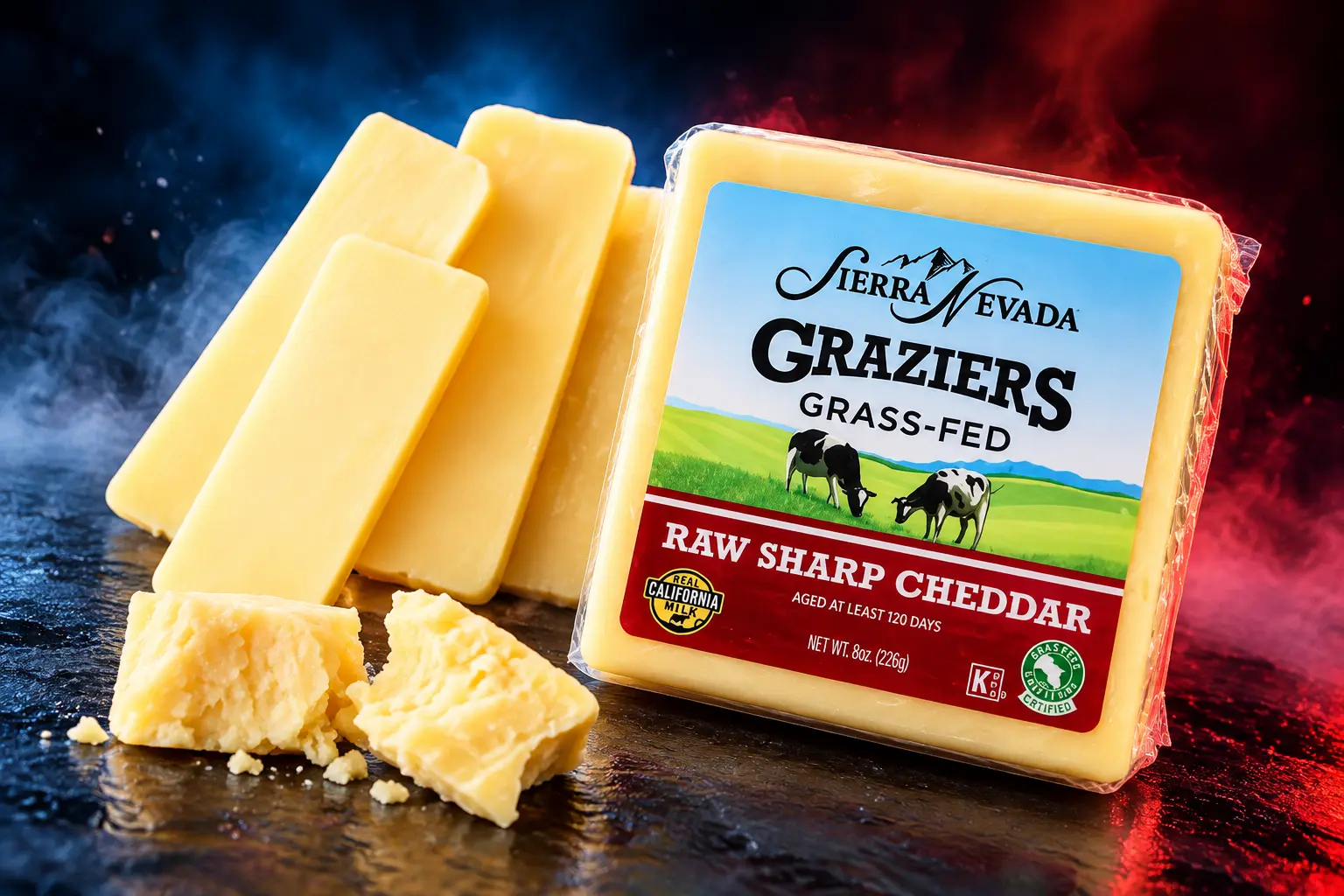
Sierra Nevada Graziers raw milk cheese is tied to 13 E. coli cases, three with kidney failure, the fourth aged-cheese outbreak in 31 months.

Thirteen people in nine states have E. coli O26:H11 after eating Sierra Nevada Graziers raw milk cheese, the FDA and CDC said. Eight were hospitalized and three developed hemolytic uremic syndrome, a form of kidney failure. No deaths have been reported.
The cheese is the kind federal law lets makers sell after a 60-day cure instead of pasteurization. That legal shortcut has now sat at the center of four E. coli outbreaks in 31 months, and most of the people sick in this one are young children.
Thirteen Illnesses Across Nine States
The FDA’s ongoing outbreak investigation of E. coli O26:H11 lists 13 illnesses, 8 hospital stays, 3 cases of hemolytic uremic syndrome, and 0 deaths. Cases are in California, Colorado, Georgia, Kentucky, Michigan, Nevada, Oregon, Tennessee, and Utah. The cheese was sold nationwide and online.
13 people are confirmed sick. 8 of those 13 went to a hospital. 3 developed kidney failure. The last reported illness began on August 26, 2026. CDC figures put the first onset on July 7, 2026, with ages from 1 to 58 and a median age of 5. More than half of the sick are 5 or younger.
THE CASE FILE
- Confirmed sick: 13 people in 9 states, with California and Nevada each reporting 3 cases and the other 7 states reporting 1 apiece.
- Hospital and HUS: 8 people were hospitalized and 3 developed hemolytic uremic syndrome; no deaths have been reported.
- Who ate it: Of 9 people interviewed, all 9 said they ate Sierra Nevada Graziers grass-fed raw milk cheese in the week before they got sick.
- Distribution: Medium cheddar, sharp cheddar, jalapeno jack, and Monterey jack sold in 8-oz and 16-oz retail packs and 5-lb food-service loaves.
That 9-of-9 interview result is the epidemiologic core of the outbreak. As of the FDA’s September 25, 2026 update, investigators had not published a matching test from a package of cheese. The firm recalled every Graziers raw milk cheese anyway, because the inquiry had not narrowed to a lot or a date code.
Federal Rules Still Treat 60 Days as Enough
U.S. cheddar identity rules still let a maker skip pasteurization if the cheese is cured at not less than 35 F for 60 days. The sentence has been in the cheddar standard for decades. It is the legal reason a grass-fed raw cheddar can sit in a grocery case next to pasteurized blocks.
Aging lowers moisture and raises acid. It does not reliably kill Shiga toxin-producing E. coli that entered with the milk. Cattle can carry the bacteria in the gut with no signs of illness, and the germs move onto teats, into pails, and into curd. Food-safety lawyer Bill Marler said the labels the FDA posted for Graziers state the cheese was aged at least 60 days, which is exactly what the cheddar rule asks for.
A CDC review of cheese outbreaks from 1998 to 2011 already flagged the gap. Three of those outbreaks involved unpasteurized cheese aged more than 60 days, two of them E. coli O157:H7 and one Listeria, and the authors wrote that the aging requirement is not enough to make cheese free of pathogens. The Graziers recall is the same finding, in a different decade, with a different brand on the wrapper.
Pasteurization remains the control that actually kills the bacteria. The FDA’s standing FDA advice on food safety and raw milk is to choose pasteurized milk and dairy. CDC used the same line in its last raw-cheddar investigation and added that the choice matters most for children under 5.
Two San Diego Children Under 5 Are Among the Sick
San Diego County health officials said two San Diego County children under 5 are among California’s 3 cases. County Public Health Officer Sayone Thihalolipavan, MD, MPH, tied the risk to the product itself, not to a rare handling mistake in a kitchen.
Raw milk products like unpasteurized cheese can carry dangerous bacteria, including Shiga toxin-producing E. coli. These infections can cause severe illness, especially in young children, pregnant women, older adults and people with weakened immune systems.
Sayone Thihalolipavan, MD, MPH, San Diego County public health officer
The FDA says symptoms can start a few days after a person eats contaminated food, or up to 9 days later. They include severe stomach cramps, diarrhea, fever, nausea, and vomiting. Some infections cause bloody diarrhea and then hemolytic uremic syndrome, which can bring high blood pressure, chronic kidney disease, and neurologic problems on top of kidney failure.
HUS is most common in children younger than 5, which is why a median age of 5 in a 13-person outbreak is the medical stake, not a demographic footnote. CDC guidance is that antibiotics are not recommended for Shiga toxin-producing E. coli infections. People who ate the cheese and have bloody diarrhea, hard abdominal cramps, or signs of dehydration need a clinic, not leftover cheese from the back of the fridge.
Grass-fed raw cheddar is sold as a natural food. The people who got sick are, in the main, small children. That is the mismatch the case ages keep repeating.
Four Outbreaks in 31 Months on Aged Raw Cheese
Graziers is the fourth E. coli outbreak since February 2024 tied to raw-milk cheese that was made to be sold under the 60-day aging standard. The earlier three were Raw Farm raw cheddar in 2024, Twin Sisters Creamery aged raw cheese in 2025, and Raw Farm again in 2026. Together they add to 43 illnesses and 17 hospital stays.
AGED RAW CHEESE OUTBREAKS SINCE 2024
| Outbreak | Product | Illnesses | Hospital | HUS |
|---|---|---|---|---|
| Raw Farm, 2024 | Raw cheddar, E. coli O157:H7 | 11 | 5 | 2 |
| Twin Sisters, 2025 | Aged raw cheese, STEC | 10 | 1 | Not listed |
| Raw Farm, 2026 | Raw cheddar and raw milk, E. coli O157:H7 | 9 | 3 | 1 |
| Graziers, 2026 | Raw milk cheese, E. coli O26:H11 | 13 | 8 | 3 |
CDC closed the second Raw Farm cluster on April 30, 2026, with 9 people sick in 3 states and over half of those illnesses in children under 5. The median age in that outbreak was 2. All 8 people interviewed had consumed or been served unpasteurized milk or cheese. FDA sampling later found E. coli O157:H7 in a cheddar sample that the agency said was not sold, a different strain from the sick people, and related to a 2025 cluster.
Twin Sisters Creamery of Ferndale, Washington, recalled Whatcom Blue, Farmhouse, Peppercorn, and Mustard Seed cheeses on October 25, 2025. The company announcement said the cheeses were made from raw, unpasteurized milk and aged at least 60 days. Washington State Department of Health later counted 10 cases, 9 in Washington and 1 in Oregon, with 1 hospitalization. Samples of Farmhouse and Whatcom Blue tested positive for STEC, including E. coli O103 and E. coli O26.
Marler called Graziers the fourth outbreak in 31 months linked to raw milk cheese that met the 60-day rule, and he said he plans to petition the FDA for a warning label of the kind unpasteurized juice has carried since 1998. The agency has not changed 21 CFR 133.113.
Throw Out Every Graziers Raw Milk Cheese
FDA contacted Sierra Nevada Cheese Company of Willows, California, on September 24, 2026, and recommended a recall. The company agreed the same day and pulled all Graziers raw milk cheeses. In a statement posted to social media, it said the reported illnesses have been associated with its medium cheddar, and that it is recalling every Graziers raw milk cheese on the market because the investigation has not narrowed to a specific lot or date code.
“We are incredibly grateful for the trust and support of our customers and community, and we appreciate your understanding as we take this precautionary step,” the company said.
There is nothing to check on a date stamp. If the package is Graziers raw milk cheese, it is in the recall. The 5-lb loaves are the quiet hazard, because delis and shops cut them, rewrap them, and sell slices under a store label. FDA told retailers that received recalled product and repackaged it not to sell it. If a cut cheddar or jack from a counter this summer cannot be traced, throw it out.
RECALLED GRAZIERS RAW MILK CHEESES
- Medium cheddar: The variety the company said has been associated with the reported illnesses, sold in 8-oz and 16-oz packs and 5-lb loaves.
- Sharp cheddar: Included in the full recall even though the company has not named it as the illness vehicle.
- Jalapeno jack: Recalled in the same retail packs and wholesale loaves, with no lot codes excluded.
- Monterey jack: Recalled on the same terms, including cheese that may have been cut and sold without the original wrapper.
The product has a long shelf life. That is why a recall posted in late September still has to reach freezers. Check both the refrigerator and the freezer. If cheese was stored without the original packaging and there is no way to tell the brand, throw it away. Clean and sanitize boards, knives, drawers, and containers it touched, following FDA handling advice to cut the risk of spreading the bacteria to other foods.
What Shoppers Should Do If They Bought It
Do not eat, serve, or sell the recalled cheeses. Consumers who bought them may return them to the place of purchase for a refund. Anyone who ate this brand and has symptoms of an E. coli infection should call a clinician. CDC has said it usually takes 3 to 4 weeks to determine whether a sick person is part of an outbreak, so later cases can still appear after a recall notice.
THE OUTBREAK CLOCK
- July 7, 2026: First illness onset in the cluster, per CDC figures used with the FDA advisory.
- August 26, 2026: Last reported illness onset; FDA lists this date on the case-count table.
- September 24, 2026: FDA notifies Sierra Nevada Cheese Company and recommends a recall; the firm recalls all Graziers raw milk cheeses the same day.
- September 25, 2026: FDA and CDC post the public advisory, with 13 illnesses in 9 states and an investigation still open on the contamination source.
That is 79 days from the first illness to the recall. The lag is ordinary in outbreak math and costly for a cheese that keeps. Packages bought in July can still be in a home in late September. FDA says it will update the advisory when it has more on the source, and on whether other products are affected.
Until that update lands, the working instruction is the blunt one on the advisory: do not eat the cheese, and do not assume the 60-day cure made it safe. Four outbreaks in 31 months have already tested that assumption, and three children in this cluster are in kidney failure.
Disclaimer: This article is news reporting and analysis of a federal outbreak investigation and recall. It is for information only and is not medical advice, a diagnosis, or a treatment plan, and it is not legal advice about refunds or liability. Readers who ate recalled cheese, who have symptoms such as bloody diarrhea or severe cramps, or who are deciding care for a child should contact a licensed physician or other qualified clinician promptly, and should not start or stop medicines based on this story. Case counts, product lists, and investigation status reflect FDA, CDC, and local health notices as of the dates named above and can change as officials add cases or test results.

Europe’s Heat Killed 50,391 in Cities Official Counts Still Miss

Caesarean Surge Puts 20 England Maternity Units at Risk

The Protective Ring Around Care Homes Never Existed

Cooper Prioritises Children’s Corridor Care Without an Age Count

Oxford’s Ebola Vaccine Reaches Uganda as Doses Sit Unused

Pennsylvania Measles Deaths Collide With Falling MMR Coverage

FDA Approves XFG COVID Vaccines While the Advice Panel Is Frozen

Muscle-Boosting Drugs Near Approval for Children With SMA

Progranulin and JAK2 Split the Macrophages That Heal

After the ADHD Invoice, GPs and Waiters Carry the Cost
-
 NEWS2 months ago
Pennsylvania Measles Deaths Collide With Falling MMR Coverage
-
 NEWS2 months ago
FDA Approves XFG COVID Vaccines While the Advice Panel Is Frozen
-
 FITNESS2 months ago
Muscle-Boosting Drugs Near Approval for Children With SMA
-
 NEWS2 months ago
Progranulin and JAK2 Split the Macrophages That Heal
-
 MENTAL HEALTH2 months ago
After the ADHD Invoice, GPs and Waiters Carry the Cost
-
 NEWS2 months ago
Rasonque’s List Price Shifts the Pancreatic Cancer Bill
-
 NEWS2 months ago
Pennsylvania’s Two Measles Deaths Follow a Long Coverage Slide
-
 NEWS2 months ago
FDA Flagged This Sprout Plant 16 Months Before the Outbreak