
NEWS
A Fired Lilly Rep Sues Over Off-Label Mounjaro Sales
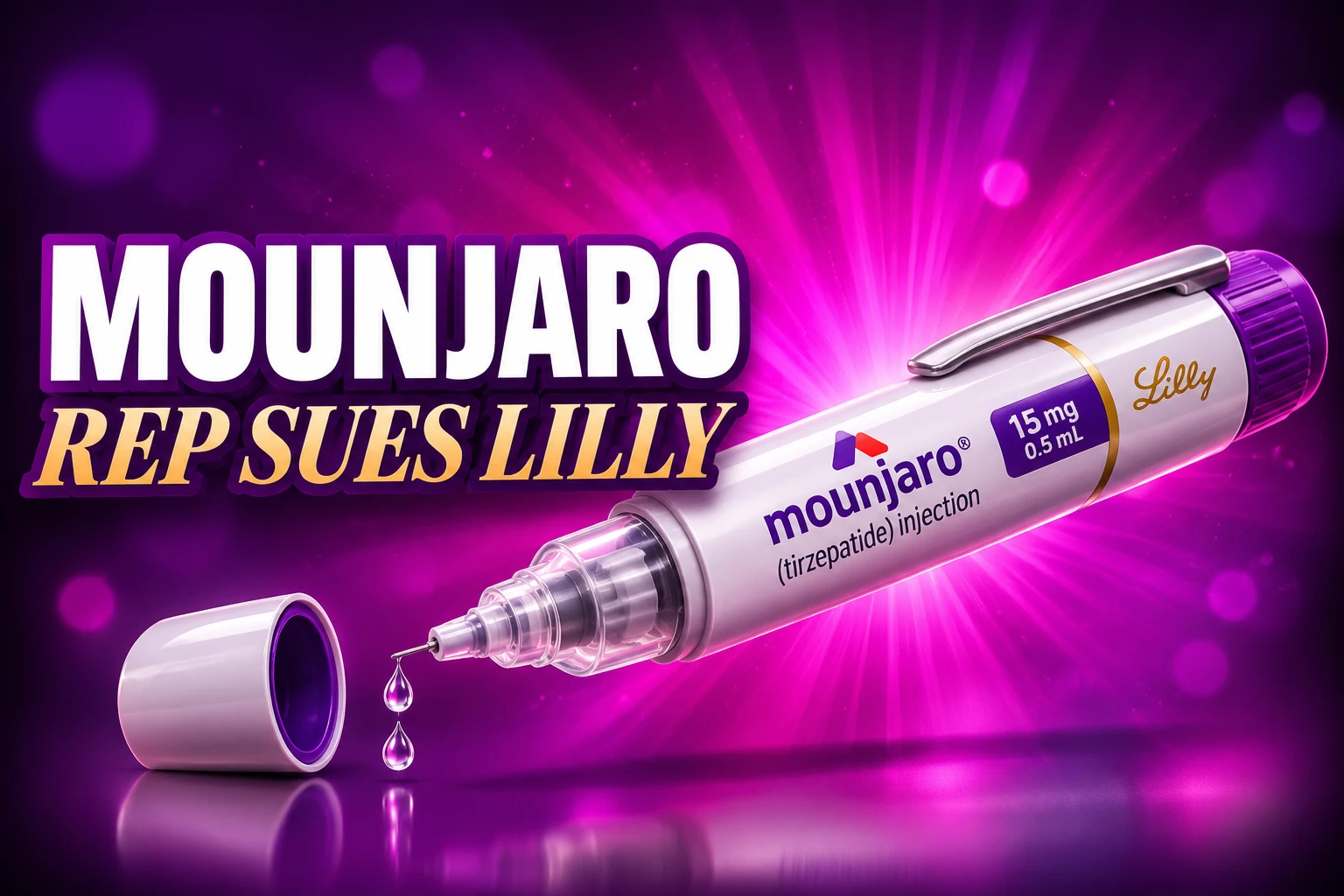
Jennifer Mansion says Lilly pushed Mounjaro for weight loss before Zepbound, and fired her the day after that approval. The company denies it.

A former Eli Lilly sales representative sued the company on Nov. 9, 2026, saying she was fired for objecting to off-label Mounjaro weight-loss pitches. Jennifer Mansion filed in Dallas federal court three years to the day after her firing, and Lilly has denied wrongdoing and asked the court to dismiss the claim.
The dates around that firing are the part the sales brief usually skips. The FDA cleared the same active drug, tirzepatide, for chronic weight management as Zepbound on Nov. 8, 2023. Lilly ended her job on Nov. 9, 2023.
A Dallas Rep Says Lilly Sold Mounjaro for Weight Loss
Mansion was hired on Oct. 3, 2022, as a senior territory manager in Lilly’s Dallas Diabetes Business Unit, covering Plano. Her bag included Mounjaro, Trulicity, and Jardiance. She also trained colleagues on Jardiance and served as the Dallas West District “culture champ.”
The 25-page complaint in Mansion v. Eli Lilly and Co., case 3:26-cv-03924, says she never drew a reprimand or a poor review. After her last evaluation she received a 6% raise and seven shares of Lilly stock. She reported to Dwanita Roquemore, senior business director for the Dallas West diabetes unit, in a district of six territories with two managers each.
Federal law lets a doctor prescribe an approved drug for a use the FDA has not cleared. A drugmaker may not market that use. Mansion says Lilly’s diabetes force crossed that line while Mounjaro’s only approved use was type 2 diabetes.
THE ALLEGED SALES PUSH
- March 21, 2023: On a field visit with Roquemore, Mansion said she told her boss that doctors should write Mounjaro for type 2 diabetes, the only cleared use, not obesity.
- May 4, 2023: She rode with Roquemore again the same day Lilly hosted a lunch speaker program on Mounjaro at Baylor Scott, where a physician touted the shot as a weight-loss option.
- Other reps: She says colleagues promoted the drug off-label to Texas clinicians on an ongoing basis, and that she refused to do the same.
- The warning: She later emailed human resources that Roquemore had threatened her, on a field ride, to stop raising the off-label issue.
She also claims that after she objected, Lilly left the practice in place and punished no one who had promoted the unapproved use.
Despite her objections, no changes were made to Lilly’s policy regarding the promotion of Mounjaro for off-label use, nor was anyone reprimanded for doing so.
Jennifer Mansion, complaint in the Northern District of Texas
Those are allegations in a civil complaint. Lilly’s position is that it did nothing wrong and that the Dallas case should not proceed. No court has found that the company ran an off-label campaign, and no court has found that her firing was retaliation.
The Diabetes Label and the Obesity Market
The FDA approved Mounjaro on May 13, 2022, as a once-weekly shot to improve blood sugar in adults with type 2 diabetes, used with diet and exercise. Lilly launched it in the United States in June 2022. The agency’s review rested on nine clinical trials of 7,769 patients with type 2 diabetes, 5,415 of whom received the drug.
Tirzepatide hits two gut-hormone receptors, GLP-1 and GIP, which is why people on the shot often lose weight even when the script is written for glucose. Lilly told investors it wanted obesity, heart failure, and sleep apnea uses, not only diabetes, and the FDA granted the obesity program Fast Track status in October 2022.
Demand showed up in the receipts long before a weight-loss brand existed. Lilly’s filings put U.S. Mounjaro sales at $97.3 million in the three months ending Sept. 30, 2022, then $536.4 million in first-quarter 2023 sales. By year end, Lilly reported worldwide Mounjaro revenue of $5.16 billion, with $2.21 billion of that in the fourth quarter alone, up from $279.2 million in the fourth quarter of 2022.
MOUNJARO SALES WHILE THE LABEL WAS DIABETES ONLY
| Period | FDA-approved use | Lilly-reported Mounjaro sales |
|---|---|---|
| Three months ending Sept. 30, 2022 | Type 2 diabetes only | $97.3 million (U.S.) |
| First quarter 2023 | Type 2 diabetes only | $536.4 million |
| Fourth quarter 2023 | Zepbound cleared Nov. 8 | $2.21 billion |
| Full year 2023 | Diabetes, then Zepbound late in the year | $5.16 billion |
The full-year figure mixes the diabetes-only months with the weeks after Zepbound’s approval, so it is not a clean measure of off-label volume. The early quarters are the ones that sat entirely inside the diabetes label, and they were already climbing fast.
She Was Fired the Day After Zepbound Was Approved
On Nov. 8, 2023, almost 18 months after the diabetes approval, the FDA approved Zepbound for chronic weight management in adults with a body mass index of 30 or higher, or 27 or higher with at least one weight-related condition, used with a lower-calorie diet and more activity. The active ingredient is tirzepatide, the same peptide in Mounjaro. The two brands are not interchangeable on paper. They are the same molecule with different approved uses, different names, and different insurance paths.
In the larger Zepbound trial, adults without diabetes started at an average 231 pounds. On the 15 milligram weekly dose they lost 18% of body weight over 72 weeks, versus placebo. Adults with type 2 diabetes started at 222 pounds and lost 12% on that dose. The trials enrolled 2,519 people on the drug and 958 on placebo. About 70% of American adults have obesity or overweight, the agency said in the same notice.
Lilly fired Mansion the next day. She had been in the job 13 months, all of it inside the diabetes-only window, and the complaint says she had been raising the off-label issue since March.
FROM HIRE TO THE TEXAS FILING
- October 3, 2022: Lilly hires Mansion in Dallas to sell diabetes drugs, including the new Mounjaro launch.
- March 21, 2023: She tells her director, on a field visit, that scripts should be for type 2 diabetes, not obesity.
- May 4, 2023: A second field visit falls on the same day as a Lilly-sponsored Mounjaro lunch program at Baylor Scott.
- November 8, 2023: The FDA approves Zepbound, giving tirzepatide a legal weight-loss brand.
- November 9, 2023: Lilly terminates Mansion.
- November 7, 2025: She sues in New Jersey federal court, case 3:25-cv-17282.
- August 28, 2026: Judge Michael A. Shipp dismisses that case without prejudice for lack of jurisdiction.
- November 9, 2026: She files the Dallas complaint, three years to the day after the firing.
The Texas suit asks for back pay, front pay, benefits, and compensatory and punitive damages under the federal False Claims Act’s anti-retaliation rule, 31 U.S.C. § 3730(h), the Texas Medicaid Fraud Prevention Act, and Texas public policy. It is assigned in the Northern District of Texas, Dallas Division, and she has asked for a jury.
What Off-Label Use Means for Patients and Drugmakers
Off-label prescribing is common in U.S. medicine. A doctor who thinks tirzepatide will help a patient lose weight may write Mounjaro for that purpose, even when the label says diabetes. The doctor is practicing medicine. The company is selling a product, and the Food, Drug, and Cosmetic Act treats promotion of an unapproved use as misbranding.
OFF-LABEL, IN THIS CASE
- Legal for the clinician: A physician may prescribe an approved drug for a use the FDA has not cleared, based on medical judgment.
- Illegal for the company to push: A manufacturer may not advertise or detail that unapproved use to drive sales.
- The insurance cut: Public programs such as Medicaid often pay only for on-label uses, which is why an off-label sales pitch can become a false-claims theory.
Mansion’s complaint says Lilly received substantial payments for Mounjaro through Texas government programs, including Texas Medicaid, and that she objected because sales staff were told to present the drug to physicians as a weight-loss treatment. That is how a sales-force dispute becomes a False Claims Act case: the theory is that marketing caused the state to pay for uses it does not cover.
Novo Nordisk has faced a similar claim from former sales representatives who said the company promoted Ozempic and Rybelsus to weight-loss doctors before a formal obesity brand was in place. The pattern is older than Mounjaro. What is new here is the speed of the money. A diabetes launch turned into a cultural weight-loss product in a year, and the sales team sat in the middle of that turn.
Diabetes Patients Faced Shortages as Demand Spiked
People who wanted the shot for pounds, not A1C, were not a side market. They were the reason pharmacies ran out. Lilly told investors it was seeing delays filling some Mounjaro doses because demand had outrun supply, and those delays showed up while the only U.S. label was still diabetes.
Then-finance chief Anat Ashkenazi said in late 2023 that manufacturing was ramping up each week and that the company could remain in a tight spot for some time given how large demand was expected to be. Lilly also asked doctors outside the United States to stop starting new patients on Trulicity, its older GLP-1, to protect supply.
For a person with type 2 diabetes, that squeeze was not abstract. A weekly pen that was supposed to lower glucose was being written, and filled, for a use the label did not name. When boxes were short, the patient with a diabetes indication was competing with the patient chasing weight loss, and the company was not yet allowed to advertise the second use.
Zepbound’s own label later warned against combining it with Mounjaro or another GLP-1, and it carries a boxed warning about thyroid C-cell tumors in rats. Nausea, vomiting, diarrhea, gallbladder problems, pancreatitis, low blood sugar when used with insulin, and kidney injury are on the list. Those risks applied to anyone on tirzepatide, including people whose Mounjaro was written off-label in 2022 and 2023.
New Jersey Dismissed Her First Case Over Venue
Mansion first sued in New Jersey on Nov. 7, 2025. The complaint there, captioned in the same dispute, pointed to Lilly manufacturing in Branchburg, a 250,000-square-foot plant the company uses for injectable diabetes drugs. Judge Shipp dismissed that filing on Aug. 28, 2026, without prejudice, because Lilly is an Indiana corporation headquartered in Indianapolis and the alleged harm was not tied to New Jersey in a way that gave the court power over the company.
The Dallas refile is the same fight in the state where she worked. Lilly employed her in Texas to detail Texas clinics. Venue is not a ruling on whether anyone promoted Mounjaro for weight loss. It is the reason the public is reading a Texas docket in November 2026 instead of a New Jersey one.
This case has not become a consumer safety fight, and that is not an accident. Vision-loss claims and a separate advertising war between Novo Nordisk and Lilly are the GLP-1 fights that pull in patients. A retaliation complaint asks a narrower question: what a sales manager was told to say, and why she lost her job. It will not, by itself, tell anyone whether tirzepatide was the right drug for them.
The Case Does Not Decide How Safe the Drug Is
Mansion wants a jury to find that she engaged in protected activity by objecting to off-label selling and that Lilly fired her because of it. Lilly wants the complaint thrown out. Until a judge or jury acts, the public record is a set of sworn claims and a denial.
WHAT WE KNOW
- The labels: Mounjaro was a type 2 diabetes drug from May 13, 2022, until Zepbound gave tirzepatide a weight-loss brand on Nov. 8, 2023.
- The job history: She was hired Oct. 3, 2022, fired Nov. 9, 2023, and she has now sued in the district where she worked.
- The company’s stance: Lilly denies wrongdoing and argues the Texas claim should be dismissed.
WHAT IS UNCONFIRMED
- Company policy: Whether Lilly directed its diabetes reps to sell Mounjaro as a weight-loss drug, or whether some reps improvised.
- The firing: Whether the Nov. 9, 2023, termination was retaliation for her complaints or a separate employment decision.
- Medicaid: Whether Texas paid for off-label Mounjaro use because of that sales activity, and in what amount.
Anyone who used Mounjaro for weight before Zepbound existed was in a medical gray zone created by a legal split: the doctor could write the pen, the company could not sell that story. The Dallas case puts that split on a docket. It does not reopen those prescriptions, and it does not decide whether the weight came off, or at what cost.
The next moves are ordinary civil procedure in Dallas, a motion to dismiss among them. Patients who are on tirzepatide now are on a drug with two brand names and a long list of labeled risks, and those facts do not wait on Jennifer Mansion’s lawsuit.
Disclaimer: This article is news reporting on a pending civil complaint and public regulatory records, and it is for information only. It is not legal advice, medical advice, or a recommendation to start, stop, or change any medicine, and it is not a finding that Eli Lilly or any clinician broke the law. Readers with questions about Mounjaro, Zepbound, or other GLP-1 drugs should talk with a licensed physician, and anyone who thinks they have a legal claim should consult a lawyer who handles employment or health-care fraud cases. Dates, dollar figures, and the status of Mansion v. Eli Lilly and Co. come from the court papers and company filings described above and may change as the case proceeds.

Falling Shot Rates Cost the U.S. Measles Elimination Status

NHS Record Snooping Gives Patients a Reason to Withhold

FDA Rejects Ivonescimab After the HARMONi Survival Miss

The Medicaid Work Delay Leaves January Checks Intact

Pelacarsen Cut Lp(a) 78%, and Heart Attacks Did Not Fall

Pennsylvania Measles Deaths Collide With Falling MMR Coverage

FDA Approves XFG COVID Vaccines While the Advice Panel Is Frozen

Progranulin and JAK2 Split the Macrophages That Heal

Alnylam Defends Amvuttra After Wainua’s ATTR-CM Trial Miss

Muscle-Boosting Drugs Near Approval for Children With SMA
-
 NEWS3 months ago
Pennsylvania Measles Deaths Collide With Falling MMR Coverage
-
 NEWS3 months ago
FDA Approves XFG COVID Vaccines While the Advice Panel Is Frozen
-
 NEWS3 months ago
Progranulin and JAK2 Split the Macrophages That Heal
-
 FITNESS3 months ago
Muscle-Boosting Drugs Near Approval for Children With SMA
-
 NEWS3 months ago
Alnylam Defends Amvuttra After Wainua’s ATTR-CM Trial Miss
-

 MENTAL HEALTH3 months ago
After the ADHD Invoice, GPs and Waiters Carry the Cost
-
 NEWS2 months ago
Rasonque’s List Price Shifts the Pancreatic Cancer Bill
-

 NEWS3 months ago
FDA Flagged This Sprout Plant 16 Months Before the Outbreak