
NEWS
Florida Confirms a Dengue Death as Tampa Bay Turns Hotspot
Florida confirmed a dengue death in Hillsborough County, where 134 of 152 local cases now sit in Tampa Bay rather than Miami-Dade.

Florida health officials confirmed a dengue death on Friday, Sept. 18, in Hillsborough County, where 134 of the state’s 152 locally acquired cases have been found. The Florida Department of Health finished its investigation that day and did not name the patient in its public note.
Family members identified her as Gay Small, 80, of Tampa, who died on Sept. 4 at Tampa General Hospital, on her birthday. A death certificate listed dengue infection, septic shock, and multi-organ failure. Her relatives said she had been otherwise healthy.
Florida Confirms a Dengue Death in Hillsborough County
Fourteen days passed between Small’s death and the state’s confirmation, a lag that left Tampa talking about a fatality while the weekly case file was already moving on. Health Department spokesperson Claire Maher, asked about the death, pointed residents back to bite prevention rather than to the patient’s chart.
We are reminding all residents and visitors throughout the state to take precautions from mosquito-borne illnesses by appropriately applying insect repellent, avoiding areas with high mosquito populations, draining any standing water, and wearing long pants and shirts when possible.
Claire Maher, spokesperson, Florida Department of Health
Doctors at Tampa General estimate they have treated more than 100 dengue patients in this wave, a hospital load that sits close to the county’s official case count and includes people who arrived in severe pain. County spokesperson Chris Wilkerson called the year “wildly unusual for us,” a line that fits a metro used to a handful of local infections, not a death.
Dengue is rarely fatal in Florida’s own description of the disease, which is why one confirmed death now carries more weight than the raw count. Severe disease can still end in bleeding, shock, and organ failure, the same cluster written on Small’s certificate.
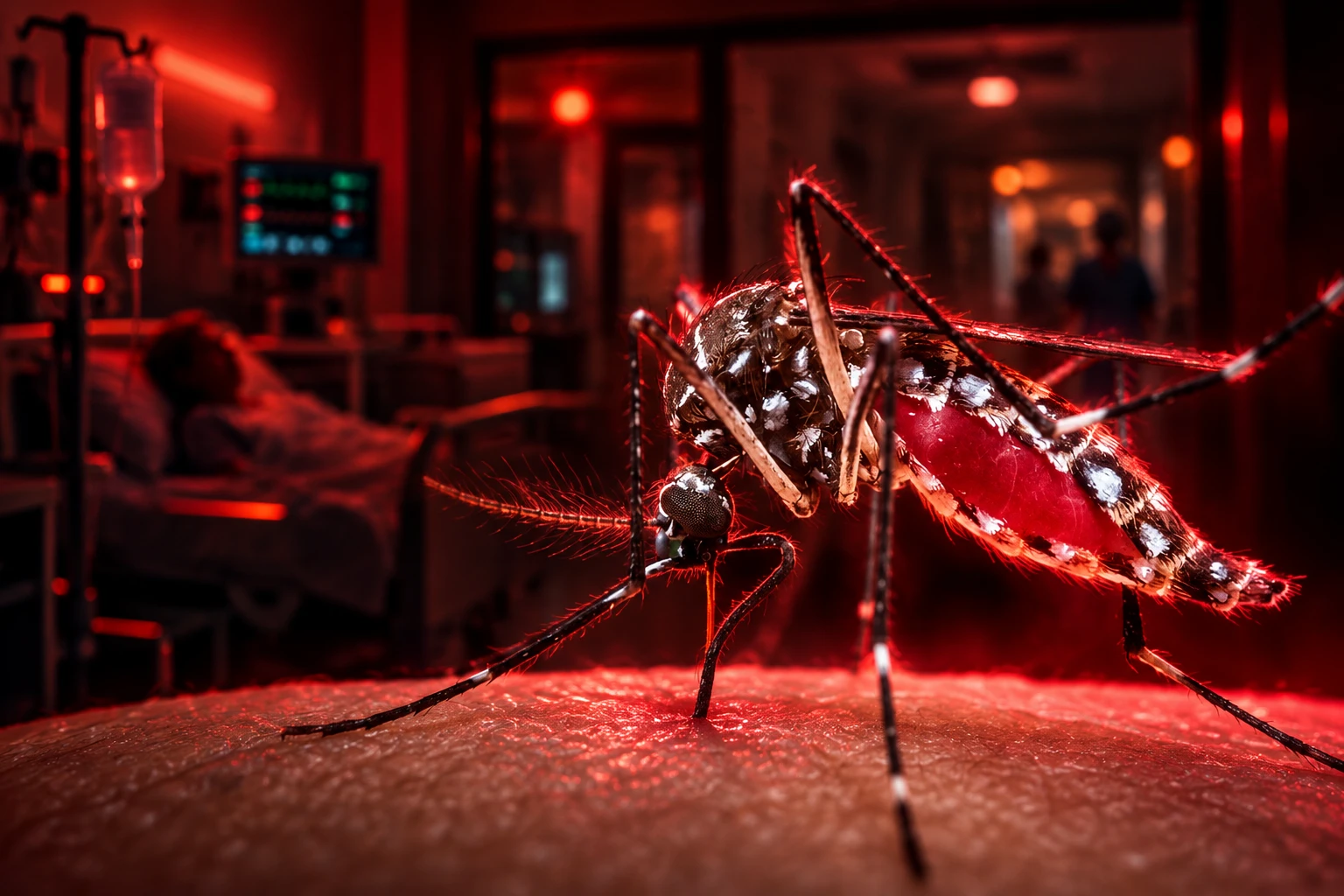
How Hillsborough Became Florida’s Dengue Center
The state’s 152 locally acquired dengue cases through the week of Sept. 6 through 12 are not spread across South Florida. Hillsborough, home to Tampa, holds 134 of them, or 88 percent. Pinellas and Miami-Dade have seven each. Pasco has two. Orange and Palm Beach have one apiece in that file.
LOCALLY ACQUIRED DENGUE BY COUNTY, WEEK 36
| County | Local cases | DENV-2 | DENV-3 | Unknown |
|---|---|---|---|---|
| Hillsborough | 134 | 120 | 0 | 14 |
| Miami-Dade | 7 | 4 | 2 | 1 |
| Pinellas | 7 | 7 | 0 | 0 |
| Pasco | 2 | 2 | 0 | 0 |
| Orange | 1 | 1 | 0 | 0 |
| Palm Beach | 1 | 1 | 0 | 0 |
| State total | 152 | 135 | 2 | 15 |
That map would have looked inverted in 2023, when Florida logged 199 locally acquired infections, the modern high. A research analysis of introductions and climate suitability found 173 locally acquired cases in Miami-Dade that year, with Hillsborough among the counties that did not drive the total. In 2024 the state recorded 93 local cases and Hillsborough reported seven. In 2025 the state total fell to 62.
So the 2026 death is not a Keys story and not a Miami story. It is a Gulf-coast metro story, in a county that usually sees a handful of local infections and now accounts for almost nine in ten of them. On Sept. 18, after that weekly file closed, Orange County health officials said they had confirmed two more local cases in the Apopka area, bringing that county to three and raising a mosquito-borne illness alert there. Those two cases sit outside the 152-count snapshot.
A July Bite Opened a Countywide Outbreak
Hillsborough’s first locally acquired case of 2026 was confirmed in late July. The county health department posted a mosquito-borne illness alert in late July after a second local infection, the threshold that moves a county from a quiet watch to active control. From there the onset dates stacked in one hot month.
HOW THE TAMPA OUTBREAK BUILT
- Late July 2026: Hillsborough confirms its first locally acquired dengue case of the year, then a second, and posts an alert.
- July onsets: 21 locally acquired cases statewide, the first cluster.
- August onsets: 124 locally acquired cases, the month that made the year.
- Sept. 4, 2026: Gay Small dies at Tampa General Hospital.
- Sept. 6 through 12: 41 new local cases enter the weekly file, 39 of them in Hillsborough and two in Pinellas.
- September onsets in that file: seven locally acquired cases, a slower start to the month than August.
- Sept. 18, 2026: the state confirms the Hillsborough death; Orange County reports two additional local cases in Apopka.
Travel still feeds the state. The same weekly report lists 186 travel-associated dengue cases, 148 of them with Cuba as the country of exposure, and Miami-Dade as the county that reports most of those imported infections. Local chains start when a traveler is bitten at home by Aedes aegypti or Aedes albopictus, both established in Florida, and the next mosquito picks the virus up. University of Florida associate professor Michael von Fricken has described that handoff as the usual spark. Hillsborough’s volume says the spark caught.
135 of 137 Typed Cases Are DENV-2
Of the 137 locally acquired infections typed by PCR, 135 are dengue virus serotype 2. Only two are DENV-3, both in Miami-Dade. Hillsborough’s 134 cases include 120 typed as DENV-2 and 14 still untyped. That is one virus, in one metro, moving through a population that has not been living with annual local dengue.
People can get sick from dengue more than once if a different serotype infects them later, a fact the CDC stresses when it talks about shots that work better after a first infection. A Tampa Bay cohort this large, almost all DENV-2, is now marked by one strain. A later season that arrived with DENV-1 or DENV-3 would not be a repeat of the same cold. It would be a new infection in people who already met the virus.
Sixteen mosquito pools in Florida have tested positive for dengue this year, spread across the six counties in the local-case table. In the Sept. 6 through 12 week, no new pool came back positive, a lab finding that matches what field crews have been saying about the virus in recent traps.
What Dengue Does After the Fever Breaks
The CDC says about one in four people infected with dengue will get sick, which means the 152 confirmed local cases are a floor, not a census. Fever is the common lead symptom, often with pain behind the eyes, muscle and joint pain, nausea, vomiting, or a rash. The pain is bad enough that clinicians still use the old name breakbone fever. Symptoms typically last 2 to 7 days, and most people recover after about a week.
About 1 in 20 people who do get sick develop severe dengue, which can become life-threatening within a few hours and often needs hospital care. Warning signs tend to show up in the 24 to 48 hours after the fever goes away, which is the window families miss if they treat the illness like a short flu.
WARNING SIGNS THAT NEED EMERGENCY CARE
- Belly pain: Pain or tenderness in the abdomen after the fever eases.
- Repeated vomiting: At least three episodes in 24 hours.
- Bleeding: Nose or gum bleeding, vomiting blood, or blood in the stool.
- Collapse signs: Extreme tiredness, restlessness, or irritability that comes on fast.
A blood test is the only way to confirm dengue, though clinicians may treat on symptoms alone. There is no specific antiviral for it. Care is rest, fluids, and staying off certain pain medicines that can worsen bleeding, with hospital support if warning signs appear.
North of Tampa, Crews Still Spray After Dark
The outbreak’s center is just north of Tampa, and Hillsborough County Mosquito Management Services has been running trucks and helicopters on larvae and adult mosquitoes, including aerial passes over Seminole Heights, Ybor City, West Tampa, and Palma Ceia. Workers have been checking yards for standing water, including water in tires, the small pools Aedes uses to breed. Paolo Pecora, a senior environmental scientist with the county program, said recent mosquito sampling has not been finding the virus, a sign that the chance of new infections is fading even as the death news lands.
That fade is visible in the same weekly report that still shows 152 local cases: no positive mosquito pool in that seven-day window. Brian Gentry, a mosquito-control pilot in the Tampa Bay area, said he did not think the region had seen a local dengue year like this one. Neighboring Pasco sent emergency alerts asking residents to cut bites as regional activity rose. Orange County Mosquito Control manager Steve Harrison said his crews were going beyond targeted CDC-style treatment because of the load elsewhere in the state.
As of the week 36 file, seven counties sat under a mosquito-borne illness advisory and four under an alert, 11 in all. The alert list was Duval, Hillsborough, Miami-Dade, and Pinellas. The advisory list was Alachua, Brevard, Leon, Orange, Palm Beach, Pasco, and Walton. Local talk has stayed on spraying schedules and yard water, which is the work that actually breaks a chain once a traveler has already seeded a neighborhood.
The CDC’s 2026 dengue file, updated Sept. 16, shows 1,927 cases across 40 U.S. jurisdictions when travel and local infections are counted together, with Puerto Rico reporting 907. Florida’s local 152 is a small slice of that national total and a large event for one county that spent the last record year on the sideline.
No Licensed Dengue Shot on U.S. Shelves
Bite prevention is the whole playbook because the CDC says there are currently no dengue vaccines available in the United States. Dengvaxia, a three-dose live shot once recommended only for children 9 to 16 with a documented prior infection in endemic areas, was discontinued by Sanofi-Pasteur in 2024 for lack of global demand. Qdenga, a two-dose Takeda shot used in more than 40 countries, had its U.S. Food and Drug Administration application withdrawn by the manufacturer in 2023 and is not recommended here.
TV003, a single-dose candidate from the National Institutes of Health, has been licensed to Merck in the United States and to Instituto Butantan in Brazil, where a related product was approved in December 2025 for ages 12 to 59, then temporarily suspended in June 2026 while Brazil’s health ministry looked at adverse-event reports. None of that puts a vial in a Tampa clinic this month. Residents still have repellent, long sleeves at sunrise and sunset, screens, and emptying standing water, including a teaspoon of it.
Von Fricken has said he thinks recurring local dengue is going to be somewhat the new normal in Florida, given how common the vector already is. Hillsborough’s 134 cases and one confirmed death are what that looks like when the virus sets up in a Gulf metro instead of the Keys. The traps have gone quiet for now. The people who already had DENV-2 this summer will still be here when the next mosquito season starts.
Disclaimer: This article is news reporting on a confirmed dengue death and an active Florida outbreak. It is for information only and is not a diagnosis, a treatment plan, or personal medical advice. Anyone with fever, severe pain, bleeding, repeated vomiting, or other warning signs should contact a licensed physician or go to an emergency department rather than rely on this article. Case counts, county alerts, and clinical guidance reflect the Florida Department of Health and CDC sources cited here and can change as new weekly files are posted.

Europe’s Heat Killed 50,391 in Cities Official Counts Still Miss

Caesarean Surge Puts 20 England Maternity Units at Risk

The Protective Ring Around Care Homes Never Existed

Cooper Prioritises Children’s Corridor Care Without an Age Count

Oxford’s Ebola Vaccine Reaches Uganda as Doses Sit Unused

Pennsylvania Measles Deaths Collide With Falling MMR Coverage

FDA Approves XFG COVID Vaccines While the Advice Panel Is Frozen

Muscle-Boosting Drugs Near Approval for Children With SMA

Progranulin and JAK2 Split the Macrophages That Heal

After the ADHD Invoice, GPs and Waiters Carry the Cost
-
 NEWS2 months ago
Pennsylvania Measles Deaths Collide With Falling MMR Coverage
-
 NEWS2 months ago
FDA Approves XFG COVID Vaccines While the Advice Panel Is Frozen
-
 FITNESS2 months ago
Muscle-Boosting Drugs Near Approval for Children With SMA
-
 NEWS2 months ago
Progranulin and JAK2 Split the Macrophages That Heal
-
 MENTAL HEALTH2 months ago
After the ADHD Invoice, GPs and Waiters Carry the Cost
-

 NEWS2 months ago
Rasonque’s List Price Shifts the Pancreatic Cancer Bill
-
 NEWS2 months ago
Pennsylvania’s Two Measles Deaths Follow a Long Coverage Slide
-

 NEWS2 months ago
FDA Flagged This Sprout Plant 16 Months Before the Outbreak