
NEWS
Medicare’s $50 GLP-1 Deal Leaves Sicker Patients Paying More
Medicare’s GLP-1 Bridge sells Wegovy and Zepbound for $50, then routes sleep apnea and diabetes patients back to Part D copays of hundreds of dollars.

Medicare’s $50 GLP-1 Bridge program bars anyone with type 2 diabetes, sleep apnea, or fatty liver disease from the discount. Jeff La Marca, 68, hit that wall in Basking Ridge, New Jersey, when his sleep apnea diagnosis blocked a Zepbound fill he could not otherwise afford.
He has a BMI of 42, a quadruple heart bypass, prediabetes, and stroke risk. In January the cash price was $750 a month. The new federal path still said no.
Jeff La Marca’s Sleep Apnea Closed the $50 Door
La Marca has tried diets and exercise for years. When Medicare opened the Bridge on July 1, he thought the math had finally changed. “I thought, ‘Thank God, there’s a path,’” he said. The application came back denied, with no reason on the notice. He believes the sleep apnea diagnosis is what did it, the same condition that helps prove he needs the drug.
I’m obese, morbidly obese, BMI 42. I had quadruple heart bypass surgery. I’m at risk for stroke. I’m prediabetic. And yet I can’t get it. I’m livid.
Jeff La Marca, Medicare enrollee, Basking Ridge, N.J.
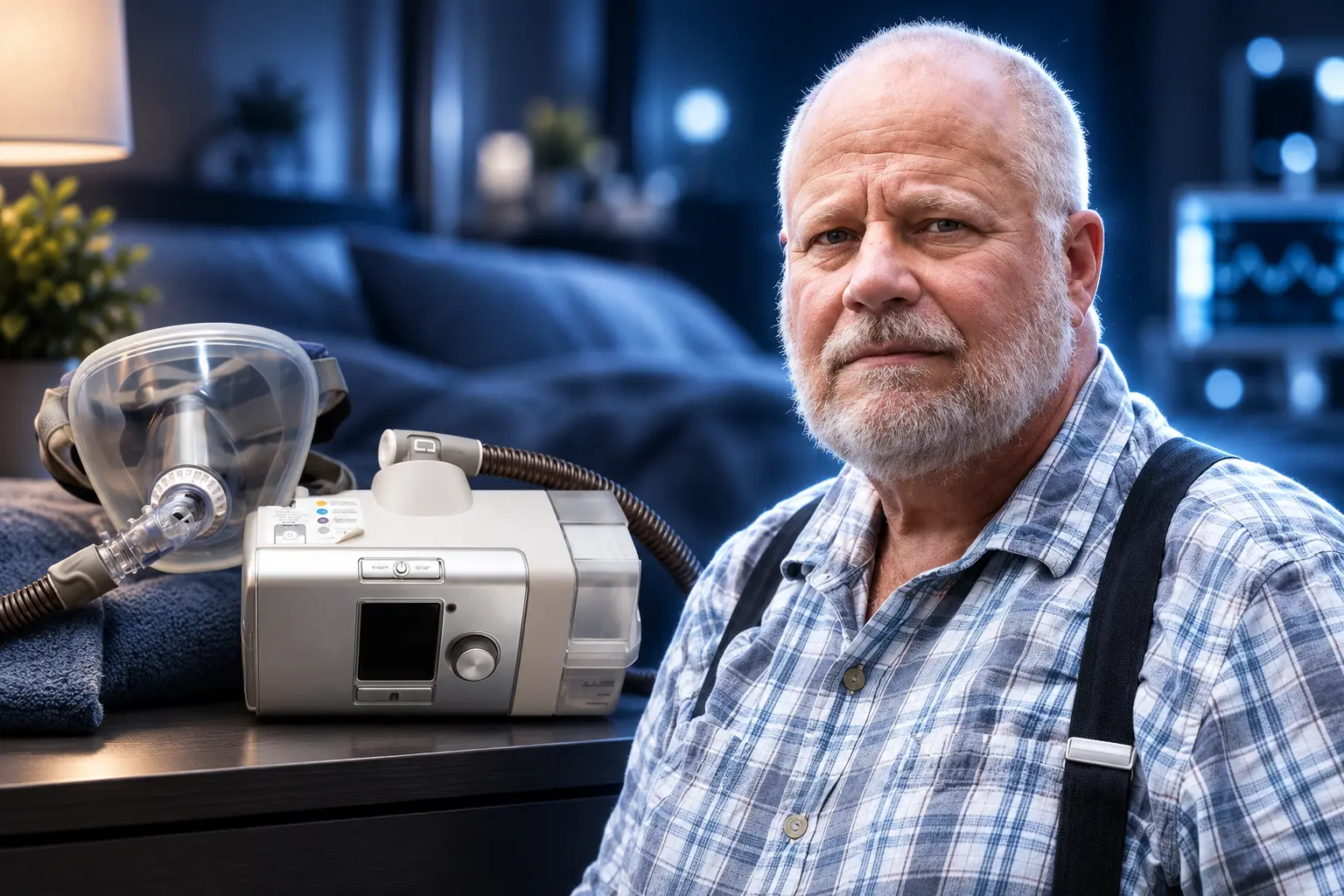
He uses a machine that adjusts his breathing with every breath. That device, and the diagnosis behind it, is exactly the kind of record Bridge is built to reject. His insurer declined to discuss his case. The Zepbound prescription is still unfilled.
Taylor Lacy, a primary care physician at Sunflower Medical Group in Roeland Park, Kansas, called herself a “big proponent” of GLP-1 drugs and still sees the same trap in clinic. “Coverage doesn’t always mean ‘affordable,’” she said. Many of her Medicare patients spend months on prior authorization and cheaper step-therapy drugs, then learn at the counter that the copay is $200 to $600 a month.
CMS Wrote the Exclusion Into the Experiment
The Centers for Medicare & Medicaid Services did not hide the design. Bridge is a short-term demonstration, run outside Part D under Section 402 of the Social Security Amendments of 1967, to test whether covering GLP-1 drugs for weight management saves Medicare money. It runs from July 1, 2026, through December 31, 2027. Humana, which already runs the Limited Income Newly Eligible Transition program, is the central processor for prior authorization, claims, and pharmacy payment.
A June 10 memo to Part D sponsors is blunt about who the test includes. The program is limited to people prescribed a GLP-1 for weight management “who would not otherwise have access through Part D.” Eligibility is irrespective of any cost sharing differential between a Part D plan and Bridge. If a doctor attests to moderate to severe obstructive sleep apnea, type 2 diabetes, or noncirrhotic metabolic dysfunction-associated steatohepatitis with moderate to advanced liver scarring, the Bridge request is denied.
The same memo closes a second door. Anyone who received a GLP-1 through Part D in calendar year 2026 stays out of Bridge, even if they later want the drug only for weight. CMS said it will look for fills of Zepbound, Mounjaro, Foundayo, Rybelsus, Ozempic, Wegovy, Saxenda, Victoza, and Trulicity. A short, failed, or unaffordable try still counts.
WHAT STILL BLOCKS THE $50 PRICE
- An approved disease: Type 2 diabetes, moderate to severe sleep apnea, or MASH with advanced fibrosis routes the claim to Part D, not Bridge.
- A 2026 Part D fill: One covered GLP-1 claim this year blocks Bridge even if the patient stopped the drug.
- A plan that will not pay: CMS said a sleep apnea or diabetes diagnosis still bars Bridge when the Part D plan does not cover a GLP-1 for that use.
- The wrong injector: Only the Zepbound KwikPen is in Bridge. Single-dose vials and pens are out.
That last exclusion is the one that turns a coverage hole into a cash bill. A person can hold an FDA-labeled disease, watch Part D refuse the drug, and still be ineligible for the $50 path because the disease exists on the chart.
Who Qualifies for the $50 GLP-1 Price
The people who do get through meet a weight rule and a purpose rule. The drug must be prescribed to cut excess weight and keep it off, with diet and activity, matching the FDA label. Medicare’s published weight-loss drug rules list three BMI gates, all measured at the start of therapy, for adults 18 and older.
BRIDGE VERSUS PART D
| Path | Who it is for | Monthly patient cost | Counts toward the Part D cap |
|---|---|---|---|
| GLP-1 Bridge | Weight loss only, BMI 35 or higher, or lower BMI with listed heart, kidney, blood pressure, prediabetes, stroke, or artery disease, and no Part D-covered GLP-1 disease | $50, any covered dose | No |
| Part D plan | Type 2 diabetes, moderate to severe sleep apnea, MASH, or a heart-risk use such as Wegovy after cardiovascular disease | Often $200 to $600, set by the plan | Yes |
The BMI 30 gate requires heart failure with preserved ejection fraction, blood pressure still above 140 systolic or 90 diastolic on two drugs, or chronic kidney disease at stage 3a or higher. The BMI 27 gate requires prediabetes, a prior heart attack, a prior stroke, or symptomatic peripheral artery disease. Covered products are Foundayo tablets, Wegovy injections and tablets, and Zepbound KwikPen. Pharmacies collect $50 and bill Humana. Fills are a single 28- or 30-day supply. Sixty- and 90-day supplies are not allowed.
Juliette Cubanski, who directs the Program on Medicare Policy at KFF, has described the intent in those same terms. “The Bridge program was designed to target those people who can’t get GLP-1 coverage through Part D but would benefit from taking one for weight loss,” she said. The target is the coverage gap, not the copay gap.
The $50 Copay Never Counts Toward the Drug Cap
Manufacturers sell Bridge drugs to the government at a $245 net price per monthly supply. After the $50 copay, Medicare’s net cost is $195 a fill. Because the claim sits outside Part D, none of that $245 counts toward gross covered drug costs, and none of the $50 counts toward true out-of-pocket costs.
HOW BRIDGE MONEY MOVES
- Patient copay: $50 each month, frozen through every Part D benefit phase.
- Federal net: $195 after that copay, on a $245 manufacturer price.
- The annual cap: The $50 does not count toward the $2,100 out-of-pocket maximum in 2026, or the $2,400 cap in 2027.
- Extra Help: Low-income cost-sharing subsidies do not reduce the $50, and Bridge fills cannot go on the Medicare Prescription Payment Program.
For someone whose other drugs would already hit the cap by summer, staying on a Part D-covered use can be cheaper by December, because those fills chip away at the cap and Bridge fills do not. Cubanski has also noted that $50 a month is still heavy on a small Social Security check. KFF polling found 56% of GLP-1 users say the drugs are hard to afford, including one in four who say they are very hard to afford.
Chris Bond, a spokesperson for the insurer trade group AHIP, pointed at list prices “which they alone set and they alone can lower.” Part D plans are told they do not have to match the $50 copay for the uses they already cover, and CMS said it will watch for plans that try to shove patients onto Bridge to dodge their own coverage duties.
5.9 Million Patients Stay on High Part D Copays
KFF’s June analysis of 2023 claims is the only public headcount CMS has not matched with its own. Among 47.5 million Part D enrollees that year, more than 13 million met BMI thresholds for obesity or overweight. A smaller group, 9.7 million, met Bridge’s clinical rules. Only 3.8 million Part D enrollees, 39% of that clinical group and 8% of Part D, also lacked type 2 diabetes, sleep apnea, or MASH and had no Part D GLP-1 fill. The other 5.9 million met the weight and disease gates and were still routed out.
Those 3.8 million are the test population. If 10% enroll in July and fill every month for 18 months, KFF puts Medicare’s cost at $1.3 billion. A 25% take-up is about $3.3 billion. At 50% the bill is $6.7 billion, and at 75% it reaches $10 billion. Expanding the same $50 deal to the 5.9 million already “covered” by Part D would add billions more, which is the political reason they were left out.
The agency is not starting from zero on these drugs. Gross Part D spending on GLP-1s hit $27.5 billion in 2024, on 21.8 million claims, mostly for diabetes brands such as Ozempic and Mounjaro. Wegovy’s heart-risk label and Zepbound’s sleep apnea label, added in 2024, are what moved some obesity patients onto Part D in the first place. Bridge now asks Medicare to learn whether paying for weight loss in people without those labels cuts later spending, while the people who already have the labels keep paying plan copays.
WHERE EXPERTS DISAGREE
- Cubanski: Bridge is a patch for people who cannot get a GLP-1 through Part D at all, not a copay-relief program for people who already have a covered use.
- Lacy: The same rule leaves behind patients with the greatest medical need, who still face $200 to $600 monthly copays after they clear prior authorization.
- Bond: Insurers did not set the list prices, and manufacturers can cut them.
CMS has not published its own enrollment or cost forecast. In July, spokesperson Timothy Foster said most prior authorization requests were finished in under 12 hours and that thousands of eligible people were already filling at pharmacies.
Pharmacies Fill Fast for People Who Clear the Filter
The BMI-only line is not theoretical. By mid-August, CVS said it had filled more than 100,000 Bridge prescriptions. Walgreens reported around 100,000 of its own. Rick Gates, Walgreens’ chief pharmacy officer, said the chain had stocked extra Wegovy, Zepbound, and Foundayo ahead of the July launch. “We expected there would be uptake,” he said.
Those fills are prescriptions, not a unique-patient census, and two chains are not the whole market. They are still a different scale from the early “thousands” line, and they show the $50 door works when the chart is clean. Some patients on that path describe the usual early GLP-1 effects, quieter food noise and a first-month drop on the 2.5 mg Zepbound start. The Obesity Action Coalition, which backs broader obesity treatment, has warned that a paper pathway is not the same as access that works in a clinic.
The quieter failure is the person who already used a GLP-1 this year for a heart-risk, sleep, or diabetes label, stopped because the copay was impossible, and now cannot switch to Bridge. Endocrinologists walking patients through the forms have started to treat a 2026 Part D fill as a tripwire, not a past chapter. CMS also said Bridge approvals last through December 31, 2027, and that a new prior authorization is needed only if the patient changes drugs.
For too long, many Americans have been unable to access these treatments because of cost. The Medicare GLP-1 Bridge creates a new pathway for eligible beneficiaries to afford GLP-1 medications.
Dr. Mehmet Oz, CMS Administrator, July 1 launch statement
Eligible is doing a lot of work in that sentence. The launch notice itself said people who already get a GLP-1 through Part D, or who are eligible for Part D coverage, will not qualify.
A 2003 Ban Still Splits the Same Drug Into Two Prices
Part D was written, from the start, to refuse drugs used for weight loss. The Medicare Prescription Drug, Improvement, and Modernization Act of 2003, which created the benefit in 2006, put agents used for anorexia, weight loss, or weight gain on a short exclusion list. That is why Ozempic could flow through Part D for type 2 diabetes while Wegovy for obesity could not, even when both were semaglutide.
FDA labels later punched holes in that wall without repealing it. Wegovy gained a use to cut major heart events in adults with cardiovascular disease and obesity or overweight. Zepbound gained a use for moderate to severe obstructive sleep apnea in adults with obesity. Those uses are coverable under Part D. Obesity alone is not, unless a demonstration like Bridge is running.
HOW THE TWO-PRICE SYSTEM WAS BUILT
- 2003: Federal law bars Medicare from covering drugs used for weight loss, a rule that still sits in Part D.
- March 2024: Wegovy’s heart-risk label opens a Part D path for some people with obesity and established cardiovascular disease.
- December 2024: Zepbound’s sleep apnea label opens a Part D path for moderate to severe OSA with obesity.
- April 21, 2026: CMS delays the BALANCE model in Part D after weak plan sign-up and extends Bridge through the end of 2027.
- July 1, 2026: Bridge starts selling Foundayo, Wegovy, and Zepbound KwikPen for $50 to people who cannot use those Part D paths.
- December 31, 2027: Bridge is scheduled to end, with no promised Part D replacement if BALANCE stays delayed.
BALANCE was supposed to let Part D plans opt into obesity coverage with manufacturer lifestyle programs attached. CMS said it wanted more Bridge use data before asking plans to take the risk. Until that model, or a statute change, arrives, the same molecule has two prices on Medicare: $50 if the chart shows weight only, and whatever the plan charges if the chart shows the diseases weight is already causing.
La Marca still talks about the unfilled Zepbound script as the last tool he has not been allowed to use. “This is now my quest, because it’s my only chance to improve my health,” he said. “It’s the only thing left. I’ve tried everything.” The savings test that was sold as a way to learn whether these drugs cut later Medicare costs is gathering that data on the slimmer slice of the obesity population, and the clock on that test runs to December 31, 2027.
Disclaimer: This article is news reporting on a federal drug-coverage pilot and is for information only. It is not medical advice, insurance counseling, or a decision about any person’s Medicare eligibility or pharmacy bill. Talk with your own clinician and with your Part D plan or 1-800-MEDICARE before starting, stopping, or paying cash for a GLP-1 drug. Program rules, copays, and the figures cited here reflect CMS documents and published claims analyses as of September 2, 2026, and both the pilot and Part D cost sharing can change.

Europe’s Heat Killed 50,391 in Cities Official Counts Still Miss

Caesarean Surge Puts 20 England Maternity Units at Risk

The Protective Ring Around Care Homes Never Existed

Cooper Prioritises Children’s Corridor Care Without an Age Count

Oxford’s Ebola Vaccine Reaches Uganda as Doses Sit Unused

Pennsylvania Measles Deaths Collide With Falling MMR Coverage

Muscle-Boosting Drugs Near Approval for Children With SMA

FDA Approves XFG COVID Vaccines While the Advice Panel Is Frozen

Progranulin and JAK2 Split the Macrophages That Heal

After the ADHD Invoice, GPs and Waiters Carry the Cost
-
 NEWS2 months ago
Pennsylvania Measles Deaths Collide With Falling MMR Coverage
-
 FITNESS2 months ago
Muscle-Boosting Drugs Near Approval for Children With SMA
-
 NEWS2 months ago
FDA Approves XFG COVID Vaccines While the Advice Panel Is Frozen
-
 NEWS2 months ago
Progranulin and JAK2 Split the Macrophages That Heal
-
 MENTAL HEALTH2 months ago
After the ADHD Invoice, GPs and Waiters Carry the Cost
-
 NEWS2 months ago
Rasonque’s List Price Shifts the Pancreatic Cancer Bill
-
 NEWS2 months ago
Pennsylvania’s Two Measles Deaths Follow a Long Coverage Slide
-

 NEWS2 months ago
FDA Flagged This Sprout Plant 16 Months Before the Outbreak